Utrecht attack: The Erdogan connection?

Turkey's President Recep Tayyip Erdogan addresses the supporters of his ruling Justice and Development Party during a rally in Antalya, Turkey, on March 17, 2019. (Presidential Press Service via AP, Pool)
Updated 19 March 2019
Follow

Utrecht attack: The Erdogan connection?

  • Saturday, 4 p.m.: Turkish president uses footage of Christchurch massacre to inflame election supporters
  • Monday, 11 a.m: Turkish gunman in Netherlands shoots three people dead in rampage on tram

ANKARA: Turkish President Recep Tayyip Erdogan was heavily criticized on Monday for using the New Zealand mosque terrorist’s video footage to inflame his supporters at election rallies.

After Erdogan spoke, a Turkish gunman in the Netherlands shot three people dead on a tram. Gokmen Tanis, 37, was arrested on Monday night after an eight-hour manhunt in the Dutch city of Utrecht. Police said initially the incident was a terrorist attack, but they have not ruled out a family dispute.

The Turkish leader used the video footage, filmed by Brenton Tarrant as he killed 50 people in two mosques in Christchurch on Friday, at a series of election rallies the following day. He said Tarrant’s manifesto was to keep Turks from Europe.
As the footage of Friday’s attack played on a screen, Erdogan said: “What does it say? That we shouldn’t go west of the Bosphorus, meaning Europe. Otherwise, he would come to Istanbul, kill us all, drive us out of our land.”

Erdogan’s use of the video footage, which social media companies have been trying to block from their sites, was condemned in both New Zealand and Turkey. New Zealand Foreign Minister Winston Peters raised the issue on a visit by Turkish Foreign Minister Mevlut Cavusoglu.


“Anything of that nature that misrepresents this country … imperils the future and safety of the New Zealand people and our people abroad, and it’s totally unfair,” Peters said.

“We had a long dialogue on the need for any other country, or Turkey for that matter, to ensure that our country, New Zealand, was not misrepresented.”

Turkey’s main opposition CHP party spokesman Faik Oztrak, said: “Is it worth showing this bloody massacre in order to gain a few more votes?”

In Utrecht, the man arrested for shooting dead three people on a tram had been detained previously on suspicion of being connected to Daesh, after he went to Chechnya to fight.

Gokmen Tanis, 37, is from Turkey’s central Yozgat province, the scene of several anti-Daesh operations in recent years. He has lived in the Netherlands since 1993.

Tanis was known to police for both minor and major crimes, including a shooting in 2013.
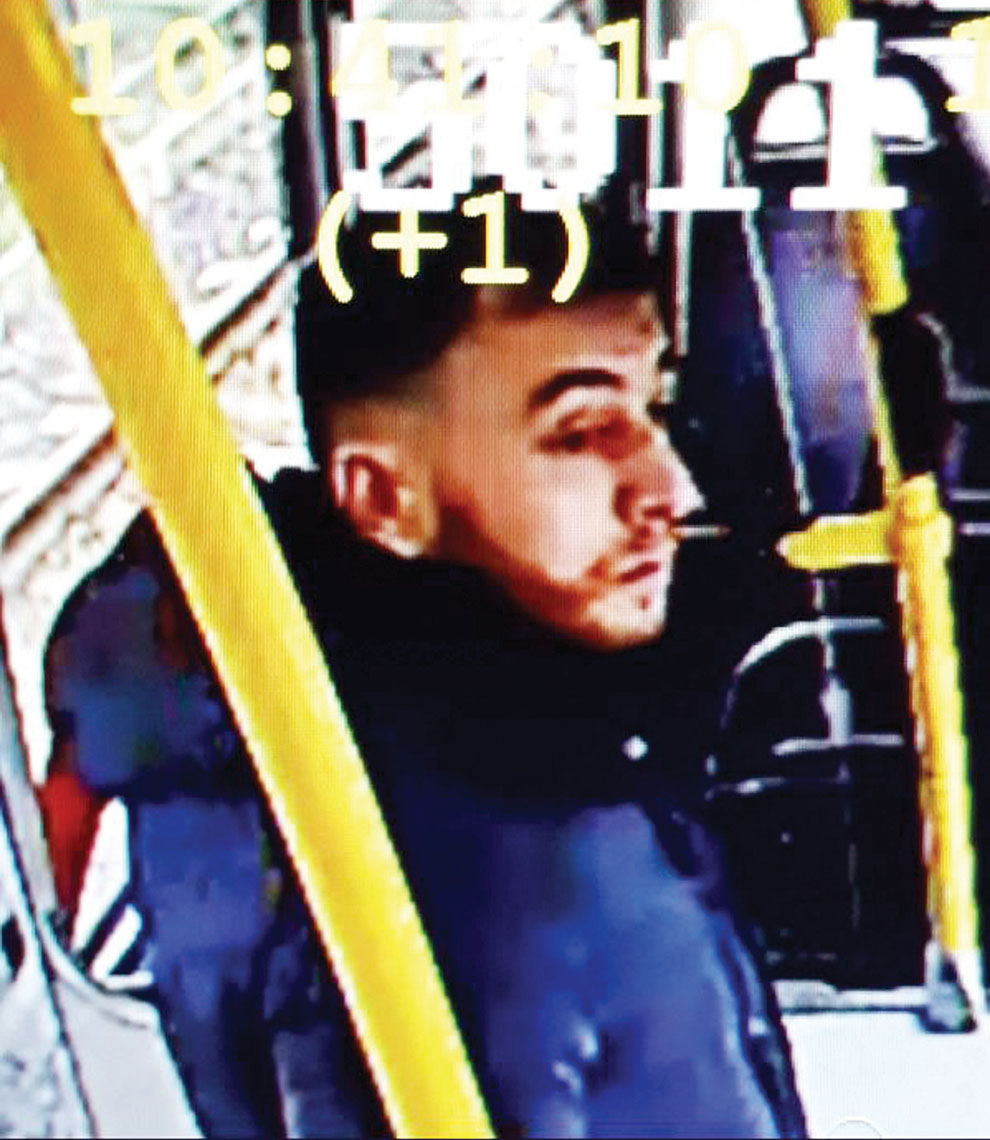


Suspect Gokmen Tanis is from Turkey’s Yozgat province, the scene of several anti-Daesh operations in recent years. AFP

The shooting took place in Kanaleneiland, a quiet residential district on the outskirts of Utrecht with a large immigrant population.

Dutch Prime Minister Mark Rutte convened crisis talks immediately after the incident. 

“Our country has today been shocked by an attack in Utrecht. A terrorist motive cannot be excluded,” he said.

Dutch police issued an image of Tanis and warned the public not to approach him. 

“It’s frightening that something like this can happen so close to home,” said Omar Rahhou, whose parents lived on a street cordoned off by police. “These things normally happen far away but this brings it very close, awful.” 


Duterte killed thousands, ICC prosecutors say

Updated 3 sec ago
Follow

Duterte killed thousands, ICC prosecutors say

  • His defense team countered that Duterte had murdered no one and that the prosecution’s argument was based on “hearsay” and “conjecture“
  • “He’s proud of his killings. He wants to be remembered for them,” said Julian Nicholls, summing up for the prosecution

THE HAGUE: Rodrigo Duterte killed thousands during his anti-drug campaign, an International Criminal Court prosecutor alleged Friday, as the crimes against humanity hearing against the former Philippines president wrapped up.
His defense team countered that Duterte had murdered no one and that the prosecution’s argument was based on “hearsay” and “conjecture,” falling far short of the bar needed to confirm the charges against him.
“He’s proud of his killings. He wants to be remembered for them,” said Julian Nicholls, summing up for the prosecution.
“Decades of murdering his own people, murdering the children of the Philippines, and he claims that he did it all for his country. He doesn’t deny it.
“He ran a death squad in Davao (city) that he created. He ran it for over 20 years before he became president. His promise was to kill thousands and he did.”
Throughout the week, a panel of three judges has heard from the prosecution, defense, and victims’ representatives as they weigh whether to proceed to a full trial.
Duterte has not been in the courtroom. The defense says he is too ill to attend. Victims say he does not want to face the loved ones of those he killed.
He faces three counts of crimes against humanity over his so-called “war on drugs” when he was mayor of Davao City and then as president of the Philippines.
The prosecution has put forward 76 cases of alleged murder, which they say is an “emblematic fraction” of those killed, which rights groups say number thousands.
Duterte’s defense lawyer Nicholas Kaufman, summing up his case, said that if his client could be faulted for anything, it was his “inappropriate choice of language.”
“But he murdered nobody,” Kaufman told the court.
He urged the judges not to confirm the charges and to free Duterte to “live out the rest of his days in peace” in the Philippines.
He said that during a visit to explain proceedings to his client, he “lost the desire to follow me within a minute.”
However, he cited the former leader as asking how the prosecutors could prove that he murdered anyone, again denying the charges against him.
Gilbert Andres, a lawyer representing victims, summed up by saying that his clients experienced defense rebuttals “like their murdered loved-ones are being murdered again.”
He called on the court to confirm the charges so that the victims can be “reintegrated into their communities.”
Following the hearing, judges will have up to 60 days to issue a written verdict.
They can confirm all of the charges and proceed to trial, throw out some of the charges, or reject the case outright, in which case Duterte would walk free.