


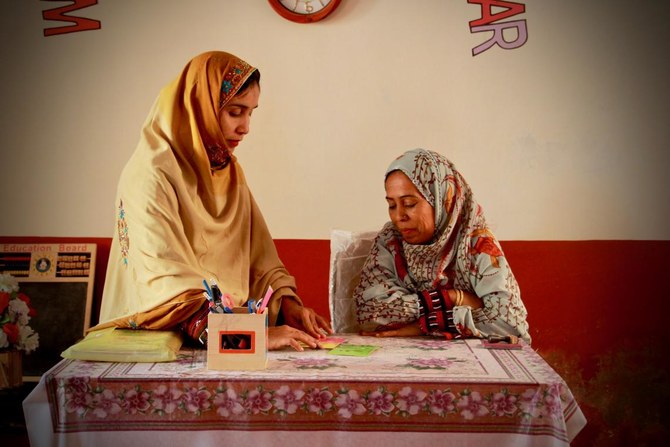
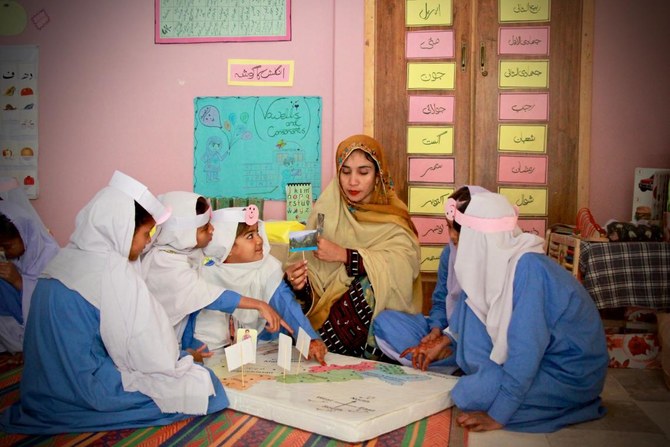

KARACHI: The United Nations International Children's Emergency Fund (Unicef), in collaboration with the Education Department of Balochistan, has initiated a training program for teachers in the province, which experts say “will improve the quality of education, increase the literacy ratio and, most importantly, help one million children return to schools.
A ‘Continuous Professional Development’ (CPD) program has been initiated for the purpose.
“This in-service teacher training, funded by the European Union, is being implemented in 11 districts of the province to build the capacities of primary and middle school teachers,” excerpts from Unicef's report read.
The training program, it added, seeks to enhance teachers’ knowledge in key subjects such as English, Mathematics and Science, while also equipping them with innovative and child-friendly teaching methods. “This not only helps improve teaching standards, but strengthens school management, too," it read.
Highlighting the critical role played by teachers in shaping the future of children in the province, the education advisor to Chief Minister Balochistan, Muhammad Khan Lehri told Arab News: "The government of Balochistan has planned to bring one million Out-of-School Children to schools for which we have been working independently and with international partners and donors."
Lehri rued the fact that Balochistan's previous governments had neglected the education sector which has eventually led to complex problems in the province. However, the incumbent regime, he claimed, has made it a part of its vision to ensure a “peaceful and educated Balochistan”.
The province which occupies 44 percent of the country's land, has only 11,272 primary, 1,300 middle and 1,007 high schools, he said.
"The gap between primary and high schools is huge, although the number of primary schools itself is insufficient to cover this largest province where means of transportation are limited,” Lehri said, adding that most of the students prefer to drop out of school after primary grades. “Both the number of drop outs and out-of-school children is very high,” Lehri said.
“We are going to build a school for boys and one for girls in each of the district's headquarters, where modern techniques and technology will be used for educating students,” Lehri said.
“Through these initiatives, including building new schools and hiring qualified teachers followed by their in job training, we are not only striving to improve the standard of education but also trying to bring out-of-school children back to school,” the provincial advisor said.
Baela Raza Jamil, an education expert, said that the initiative was a step in the right direction.
“One of the major reasons for students to opt out of school was the old teaching methods and incorrect attitude,” she said, agreeing with Lehri that the Unicef’s initiative will help improve education and increase the literacy rate in the educationally-backward province.
“There should be modern methods with good feedback to the children’s responses and flexible class periods,” she said. “When there is enabling environment, the students will better understand the lessons and take interest in the class,” he said.
According to Unicef, in the past year, about 70 master trainers have attended a 15-day training program supported by the global body. “They will in turn train a total of 3,000 teachers to the benefit of many more girls and boys in Balochistan,” the report said.
Gwadar, one of the districts where the program has been implemented, is a port city located along the coastline of Balochistan. Less than half of the primary schoolchildren are enrolled either in primary education (56 percent boys and 35 percent girls), which is far below the national average of 77 percent (83 percent boys and 71 percent girls).
Moreover, nearly half of the primary schools are managed by a single teacher which leads to a multi-grade system in which classes are combined and children of different grades can be taught simultaneously.


