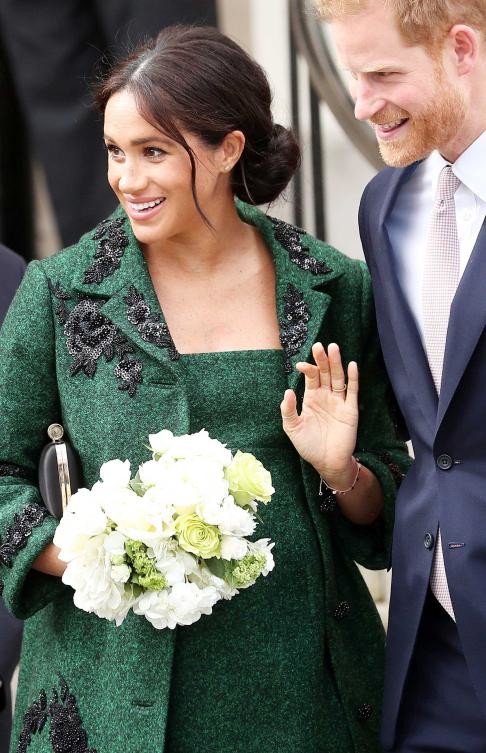
LONDON: Her jackets and jeans, bangles and bags can instantly send tongues wagging and designers’ sales soaring.
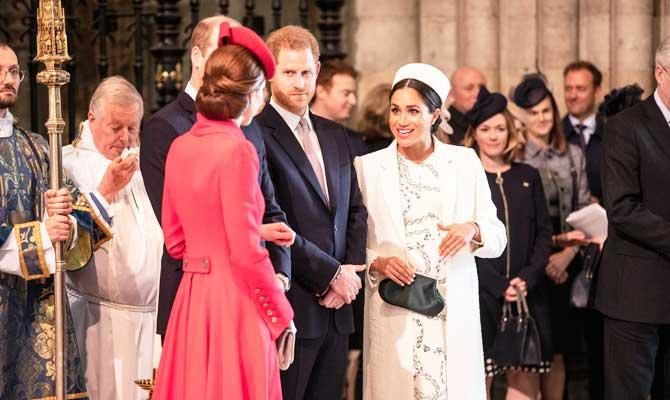
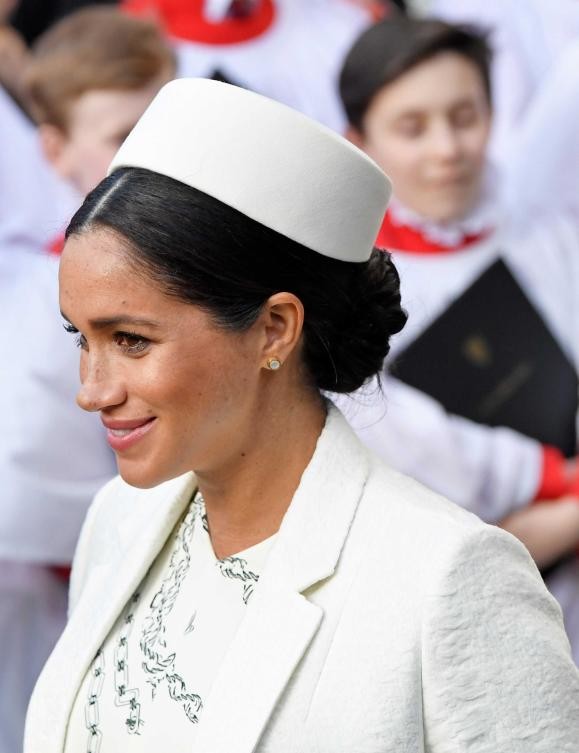
Since being catapulted into the global spotlight as Prince Harry’s girlfriend in 2016, Meghan’s outfits have been scrutinized and copied, often crashing websites selling her apparel.
Fashion blogs and social media accounts dedicated to the American’s style have mushroomed, just as they sprang up for her sister-in-law Kate, Prince William’s wife, allowing followers to comment on her latest sleek looks usually in a monochrome palette.
“The Meghan effect is this economic phenomenon similar to the Kate effect...where if she wears it, it turns to gold,” said Christine Ross, co-editorial director of Meghan’s Mirror fashion blog, describing Meghan’s style as “very on trend and modern.”
Almost everything she wears up to and around the $300 or 300 pound-mark, a pretty high price point, sells out, she added.
Designer dresses, luxury handbags and stylish stilettos are the fashion dream of many women, but for a young royal they are the staple of an everyday wardrobe.
For her busy royal diary, the now Duchess of Sussex usually wears expensive labels, namely French couture house Givenchy whose British artistic director Clare Waight Keller designed Meghan’s wedding dress.
Dior, Ralph Lauren, Carolina Herrera and Oscar de la Renta are among other formal and eveningwear go to brands.
“Meghan’s wardrobe is really unique because there are so many bespoke pieces in it and we’ll really never know how much those cost,” Ross said.
She estimates her wardrobe at about 500,000 pounds ($657,750) a year.
“STYLE MUSE“
While becoming a trendsetter, Meghan, named 2018’s best dressed woman by People magazine, has stayed loyal to smaller brands she wore before her global fame.
The 37-year-old, who used to film drama “Suits” in Toronto, has worn Canadian labels Mackage, Aritzia and Line the Label.
For casualwear, she has worn J.Crew and brands known for their environmental and social credentials: a Reformation dress, Veja sneakers, Outland Denim jeans and jewelry made from recycled metal.
“Meghan carved this niche for supporting these sustainable fashion brands,” Holly Rains, digital editor at magazine Marie Claire UK, said. “People are now going to Meghan as a style muse...She crashes sites.”
It is particularly her more affordable accessories that are snapped up by consumers.
“The jewelry, the bags, the belts is where we can dip in and get that kind of Meghan touch to our outfits,” Rains said.
Ross said Meghan’s casual jean looks proved popular with readers. Her maternity wear as she awaits her first child is also eagerly followed.
“She’s done a lot of bespoke pieces, a lot of customization pieces that aren’t maternity at all and it’s really been a difference,” Ross said.
Royal fashion expert Michael Talboys said he hoped to see Meghan wear more British labels. She has worn items from UK brands Victoria Beckham, Strathberry, Marks & Spencer and her second wedding gown was a halterneck dress by Stella McCartney.
“She should, as an English duchess, really be patronizing English designers and promoting them in the eyes of the world,” he said.
Kate frequently wears British high street dresses.
On the streets of London, student Savanah Edwards said Meghan’s “classic” style was having an impact.
“I personally cannot afford anything that she wears but it does influence me to try new pieces,” she said.
($1 = 0.7602 pounds)


‘Style muse’: Meghan’s rise to a royal fashionista

‘Style muse’: Meghan’s rise to a royal fashionista
- “Meghan carved this niche for supporting these sustainable fashion brands,” Holly Rains, digital editor at magazine Marie Claire UK, said


Israa Allaf on her Saudi fashion brand The Untitled Project
- ‘It’s a fusion culture that really represents Saudi,’ creative director and founder tells Arab News
DUBAI: In 2018, when Israa Allaf launched her Saudi fashion brand The Untitled Project, “it was really hard to find something that really represented individuality,” she tells Arab News. “I really wanted to create something unique — something that felt Westernized yet at the same time felt Arab, and that you could wear as a cover-up.”
At the time, modest fashion often left little room for self-expression. “The abaya, for example, was always worn closed, and we wanted to showcase how you can incorporate it and style it within your own clothing and have something that’s really unique to you, that you really won't find anywhere else,” Allaf says.
In a Saudi fashion scene that has become increasingly polished and trend-driven, The Untitled Project stands out for its flowing cover-ups, richly layered prints and experimental silhouettes.

Allaf, who studied marketing, began by designing the pieces herself before stepping into the role of creative director and building a team around her.
“That’s why you can also see with the designs that we have many different themes. We have different artists from all around the world creating something — it’s a bit more of a fusion culture that really represents Saudi, but shows a different type of craft,” she explains.
That idea of fluidity is also built into the brand’s name. “I actually came up with the name before even (thinking about starting the company),” Allaf says, adding that she wanted to avoid the rigid associations that come with most labels. “Brand names really put you in a box… and we didn’t want that. A woman has layers. She’s not one thing.”
That philosophy shapes who she designs for: two main types of women. One who leans into statement pieces, another who dresses according to the occasion.
Though Allaf is now based in Riyadh, her company’s soul remains deeply tied to Jeddah, especially the city’s beach culture and relaxed aesthetic.

“In Riyadh, they like to wear their abayas long. In Jeddah, they like to wear them short. They like their slippers. They like their ankle-length pieces, or even shorter pieces, and we really embody the Jeddah girl brand,” Allaf says. “We’d say we’re more colorful — having, like, seven-plus colors in one piece and making it still look beautiful on a woman.”
Behind every item of The Untitled Project’s clothing — all of which are produced in Saudi Arabia — is a meticulous process that can stretch over months, sometimes focusing on just a single print or a single abaya, Allaf says. Her goal is always to ensure each design reaches its strongest possible version before it is ever released.
The clothes are created using only silk, linen and cotton, chosen for their natural feel and their ability to showcase the brand’s intricate prints.
Sustainability is also central to the brand’s identity, with organic materials and a strong focus on reusing fabric. Leftover textiles, embroidery and archived materials from previous collections are redesigned and reworked into new garments, allowing older pieces to take on a new life instead of being discarded.
Small-batch production supports that approach. “Why make hundreds of a piece when we don’t know the demand? We’ll create a smaller batch and test it out on the market,” says Allaf, adding that doing so leaves “room for experimentation.”
Even the brand’s packaging is designed with reuse in mind. After customers began repurposing the original boxes — often as makeshift homes for their cats — the brand leaned into the idea, redesigning the packaging to encourage customers to reuse it for storage and everyday needs rather than throwing it away.
“We intentionally wrote on the backs that they can be cat-house boxes. We wanted the customers to also reuse,” Allaf says.
One of The Untitled Project’s most meaningful designs is “Scene Leaving the Corniche.”
“I love it so much. It just looks great on all skin tones. It has symmetry and it has asymmetry as well,” says Allaf. With butterflies, flowers and palm motifs, it captures the brand’s identity.
“That is going to be the new brand staple print,” she says. “It represents the brand’s personality the best.”
Through fabric, form and community projects, Allaf continues to push the idea that fashion can be thoughtful, expressive and adaptable — just like the women she designs for.


