SHAH ALAM, Malaysia: An Indonesian woman held two years on suspicion of killing the North Korean leader’s half brother was freed from custody Monday after prosecutors unexpectedly dropped the murder charge against her.
Siti Aisyah cried and hugged her co-defendant, Doan Thi Huong from Vietnam, before leaving the courtroom. She told reporters she had only learned that morning that she would be freed. “I am surprised and very happy. I didn’t expect it.”
The two young women were accused of smearing VX nerve agent on Kim Jong Nam’s face in an airport terminal in Kuala Lumpur on Feb. 13, 2017. They have said they thought they were taking part in a prank for a TV show. They had been the only suspects in custody after four North Korean suspects fled the country the same morning Kim was killed.
The High Court judge discharged Aisyah without an acquittal after prosecutors said they wanted to withdraw the murder charge against her. They did not give a reason.
Prosecutor Iskandar Ahmad said the discharge not amounting to acquittal means Aisyah can be recharged but there are no such plans for now.
Aisyah was quickly ushered out of the court building in an embassy car. Her lawyers said she is heading to the Indonesian Embassy and expected to fly to Jakarta soon.
Huong’s murder trial was put on hold after the surprise development. She was to have begun giving her defense in Monday’s court session, after months of delay.
“I am in shock. My mind is blank,” a distraught Huong told reporters through a translator after Aisyah left.
Indonesian Ambassador Rusdi Kirana said he was thankful to the Malaysian government. “We believe she is not guilty,” he said.
Huong’s Lawyer, Hisyam Teh Poh Teik, said they will seek to postpone the trial. He said Huong was distraught and felt Aisyah’s discharge was unfair to her as the judge last year had found sufficient evidence to continue the murder trial against them.
A High Court judge last August had found there was enough evidence to infer Aisyah, Huong and the four missing North Koreans had engaged in a “well-planned conspiracy” to kill Kim Jong Nam. The defense phase of the trial had been scheduled to start in January but was delayed until Monday.
Salim Bashir, a lawyer for Huong, said previously she was prepared to testify under oath for her defense.
“She is confident and ready to give her version of the story. It is completely different from what the prosecutors had painted. She was filming a prank and had no intention to kill or injure anyone,” he told the AP.
Lawyers for the women have previously said they were pawns in a political assassination with clear links to the North Korean Embassy in Kuala Lumpur, and that the prosecution failed to show the women had any intention to kill. Intent to kill is crucial to a murder charge under Malaysian law.
Malaysian officials have never officially accused North Korea and have made it clear they don’t want the trial politicized.
Kim Jong Nam was the eldest son in the current generation of North Korea’s ruling family. He had been living abroad for years but could have been seen as a threat to North Korean leader Kim Jong Un’s rule


![]()
![]()
![]()

Malaysia court frees Indonesian in Kim Jong Nam murder case
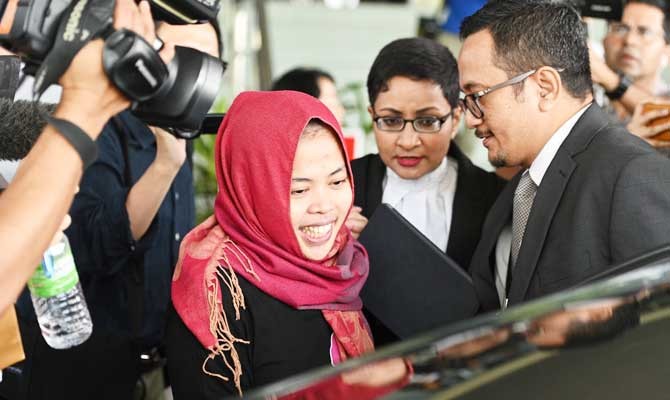


Malaysia court frees Indonesian in Kim Jong Nam murder case
- Indonesian ambassador to Malaysia Rusdi Kirana told reporters: "We are pleased with the court decision. We will try to fly Siti back to Indonesia today or as soon as possible"


Latest updates


© 2026 SAUDI RESEARCH & PUBLISHING COMPANY, All Rights Reserved And subject to Terms of Use Agreement.