KARACHI: It was a step forward in making Afghan refugees a more inclusive part of Pakistani society.
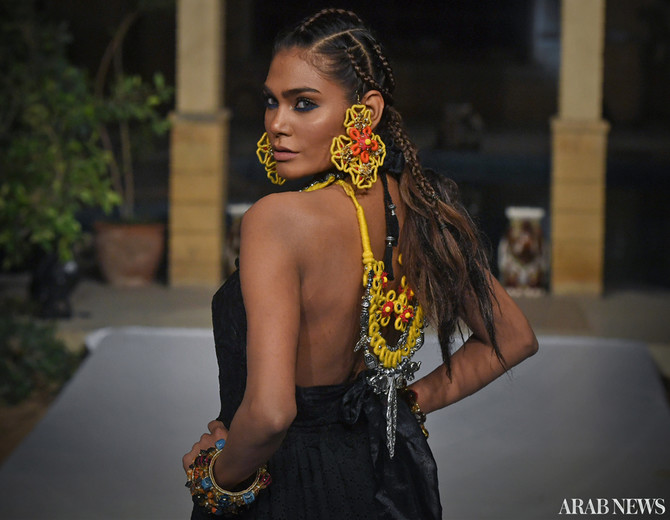
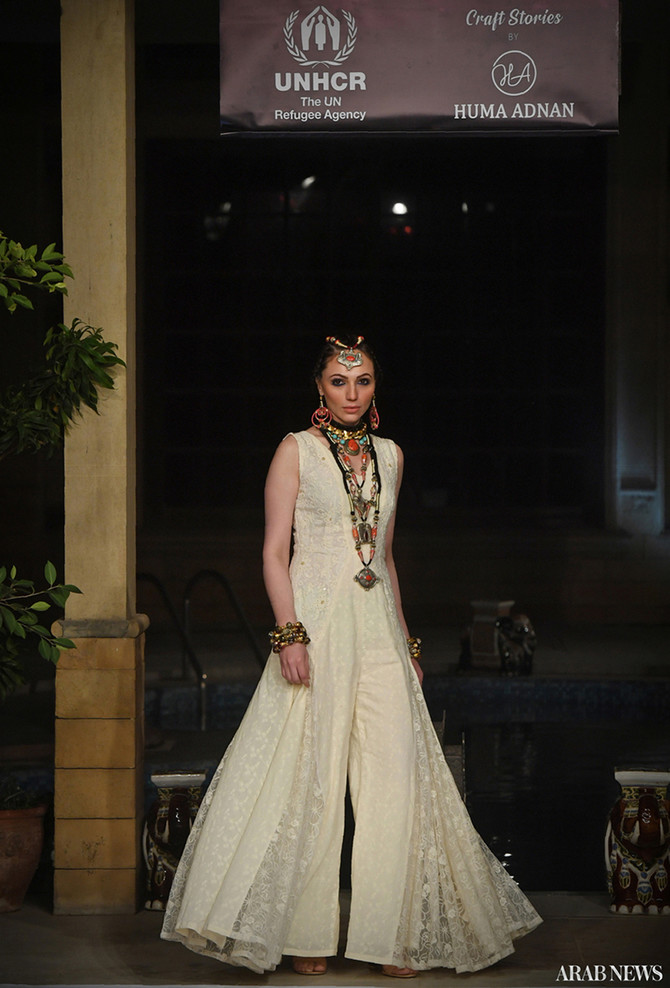
On Monday evening, Pakistan’s top models displayed stunning jewelry made by women from Afghanistan, as they took to the ramp in the seaside metropolis of Karachi.
On display were necklaces, earrings and bangles — each more unique than the other and each telling a different story.
“[These pieces tell] a story of those women who were displaced from the places they were born in...[and] suffered a lot. This is the story of refugees who have now become artisans,” Sidra Iqbal, who was the host of the show, said.
Iqbal added that the aim of the program – initiated by the United Nations High Commission for Refugees (UNHCR), in collaboration with Craft Stories and Aik Hunar Aik Nagar [One skill, one neighborhood] – was to provide a sustainable means of living to as many refugee woman as possible.
“The jewelry we saw today has been made by Afghan refugees over the last three months,” Huma Adnan, a fashion designer and head of Craft Stories, said.
She added that with “more than half of the world’s population uprooted,” the least that “we can do is to make them a part of the economic cycle via their crafts.”
Starting from a price range of Rs2,500 upwards, Adnan said that thee quality and precision of the product, along with the design details, determines the cost, with some taking more than eight months to create.
The materials used in making the jewelry include metallic silk threads, gold wires, glass micro cut beads, pearls, metal accessories, stones, and lamb suede backing.
It was 40 years ago when the first Afghan refugee stepped foot on Pakistani soil, Ruvendrini Menikdiwela, a UNHCR representative in Pakistan, told Arab News, adding that “today, four decades have passed: Four decades of isolation, dependence, and continuous struggle.”
She added that the jewelry-making skills that they’ve acquired is “a passport to come out of the vicious circle of poverty.”
“Once fully skilled and having gone back to their country, they are likely to contribute to the economic development of the war-torn state of Afghanistan,” she said.
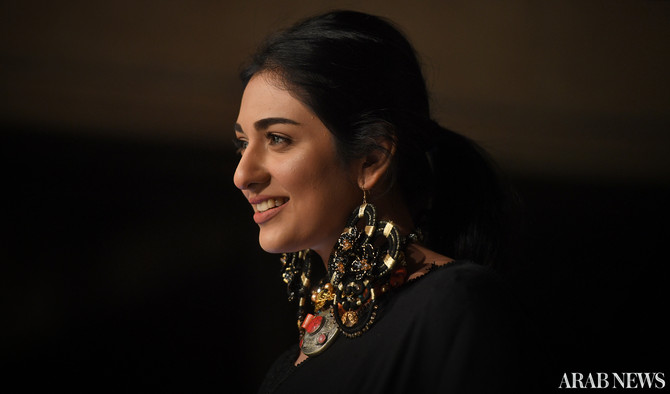
Sara Khan, a Pakistani TV actress who walked the ramp, said she was happy to be a part of the cause. “It’s the proudest moment for me,” she told Arab News, adding that for all “women, whether they are moms raising their children or refugees going through tough times, [such opportunities] can help them prove themselves if given a chance.
“I am proud of these women,” she said.
Afghanistan is grateful
Hamidullah Tarin, the Afghan Consul General in Karachi, said he was indebted to Pakistan, the UNHCR and Adnan for directing Afghan women toward a path of self-reliance.
“The Afghan refugees are faced with serious financial hardships. The government of Pakistan has been taking care of them for the last four decades. We are thankful for this great hospitality. But this unique idea of helping them with constant and sustainable source of livelihood is great. This pilot project should be converted into a large scale program,” Tarin told Arab News.
Appreciating Prime Minister Imran Khan’s gesture to allow registered Afghan refugees to open a bank account, Tarin said by doing so, he has “also made it possible for these people to benefit his country’s economy.”
He added that there had been several incidents in the past of Afghan refugees — who had set up their own businesses but had been robbed off their money — simply because they couldn’t partake in the financial dealings through an official banking channel money.
“I am also happy to see the beautiful crafts made by Afghan women. This will show a path of progress to other Afghan women as well,” Tarin said.
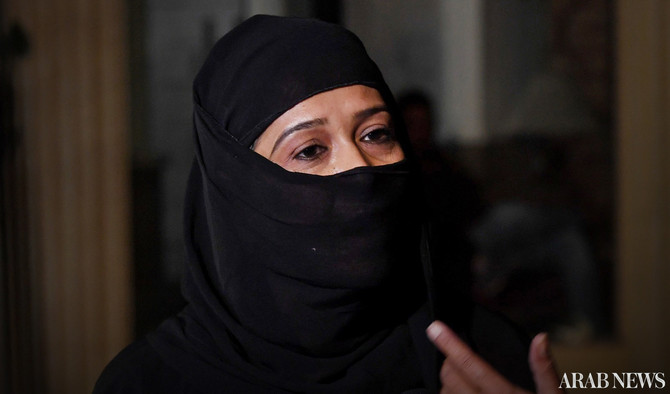
One among these women is 36-year-old Shareefa Bibi, a widow who hails from Afghanistan’s southern Kandahar province.
“I will now stop cleaning dishes for other people. I have started earning enough for my children. But it is not this handsome earning that matters,” Bibi told Arab News.
Instead, Bibi is “happy to become a part of the world that looked so inaccessible in the past.”
“I am happy to learn that an independent woman can respectfully survive and live a better life,” she said, adding that despite the future looking promising, her past continued to haunt her.
“Six years ago my husband died and my son went missing. I came to know that he was in a seminary in Helmand. His captors told me that I could get him back if I paid them 300,000 Afghanis. I borrowed the amount from someone but I could not return the money. This made the moneylender come to my house and demand my 14-year-old daughter’s hand in marriage for his mentally challenged son who could not even eat his own meals. It was unacceptable, so I ran away and came to Karachi,” she said before wiping away her tears.
This did not work and the man tracked her down and appeared at her place of residence in Karachi one day. Some of her neighbors asked her to file a police complaint. However, Bibi was also mistreated by the authorities who used inappropriate language while dealing with her.
“I came home and let them take my daughter,” she sobbed. “I don’t even know how she is now. When Huma Madam took me to the stage today at the end of the show, that ugly moment flashed in front of my eyes when I knew no one who could help me.”
“For me, today is my day. Today I tell all women that they can live their lives with dignity through their hard work. I would never have let them take my innocent daughter, had I been told how to live my life.”
“Today, I have learned to stand for myself,” Bibi said.


![]()
![]()
![]()
![]()
![]()
![]()
![]()
![]()
![]()
![]()
![]()
![]()
![]()
![]()
![]()

Pakistani models walk ramp with jewelry made by Afghan refugees




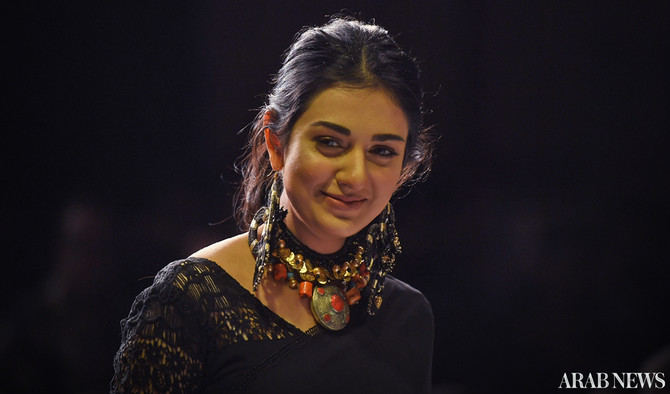
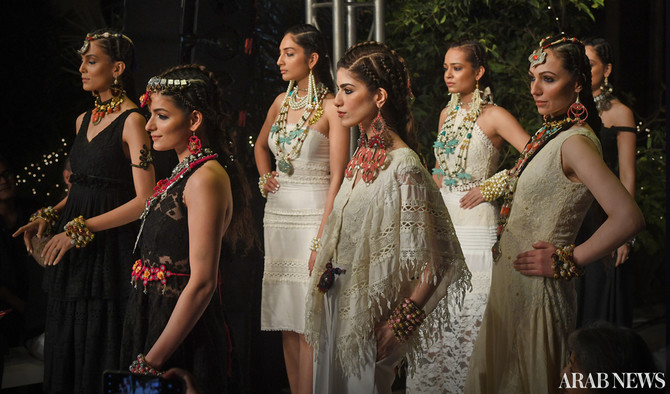
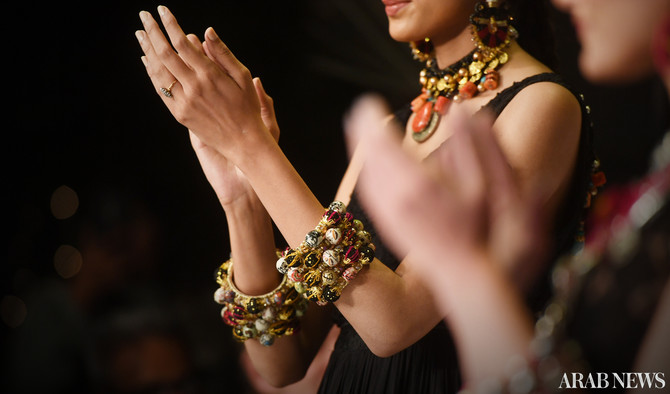
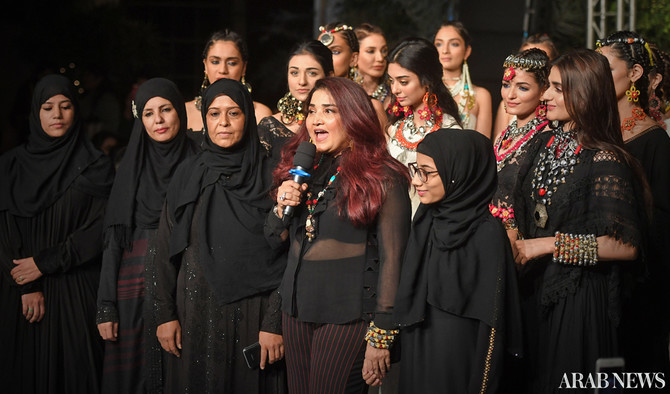


Pakistani models walk ramp with jewelry made by Afghan refugees
- Collection follows training of 25 women in the craft by a fashion designer
- UNHCR representative says skills acquired are a “passport to get out of poverty”
Latest updates


Recommended


© 2026 SAUDI RESEARCH & PUBLISHING COMPANY, All Rights Reserved And subject to Terms of Use Agreement.