



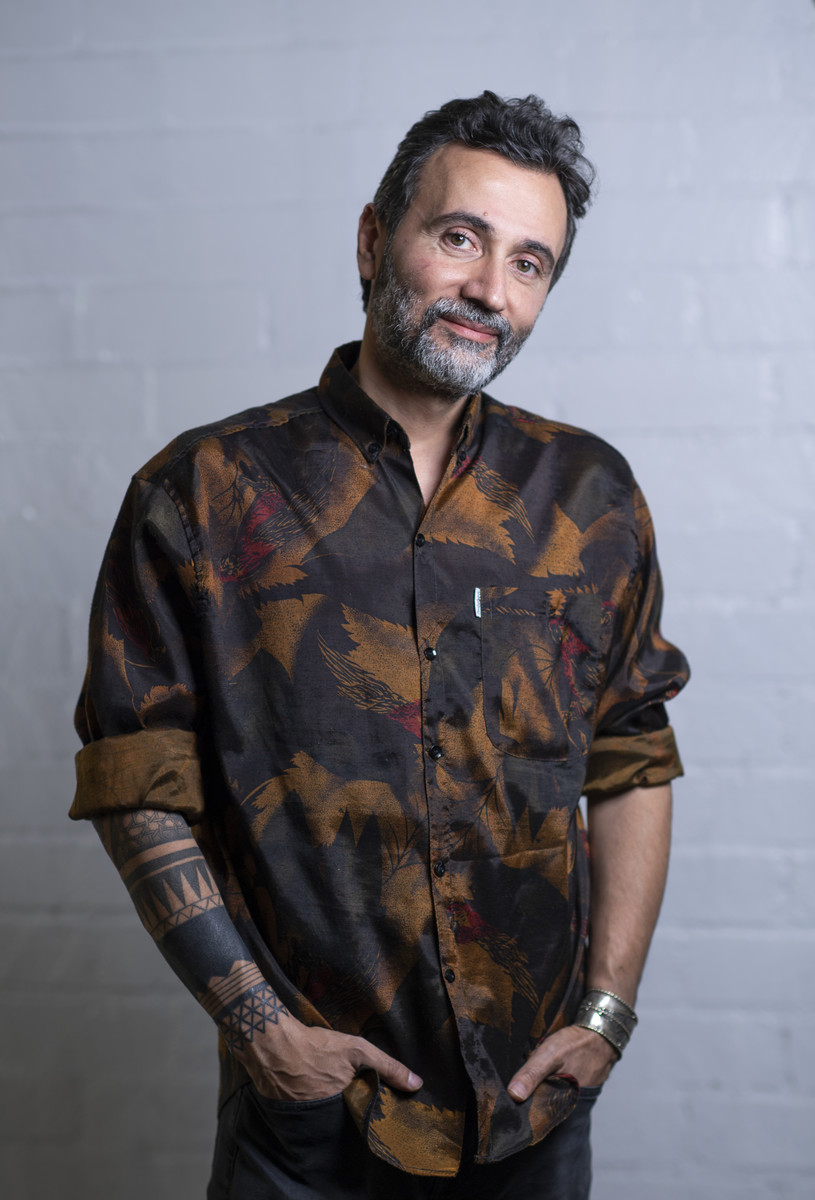
DUBAI: Of all the achievements of Arab filmmakers in recent times, Talal Derki’s “Of Fathers and Sons” may be the most stunning. The only non-American film nominated for Best Documentary at the 91st Academy Awards, which take place this Sunday, “Of Fathers and Sons” is the kind of film one might imagine making, but never believe could actually be made. It’s a story that Derki risked his life to tell.
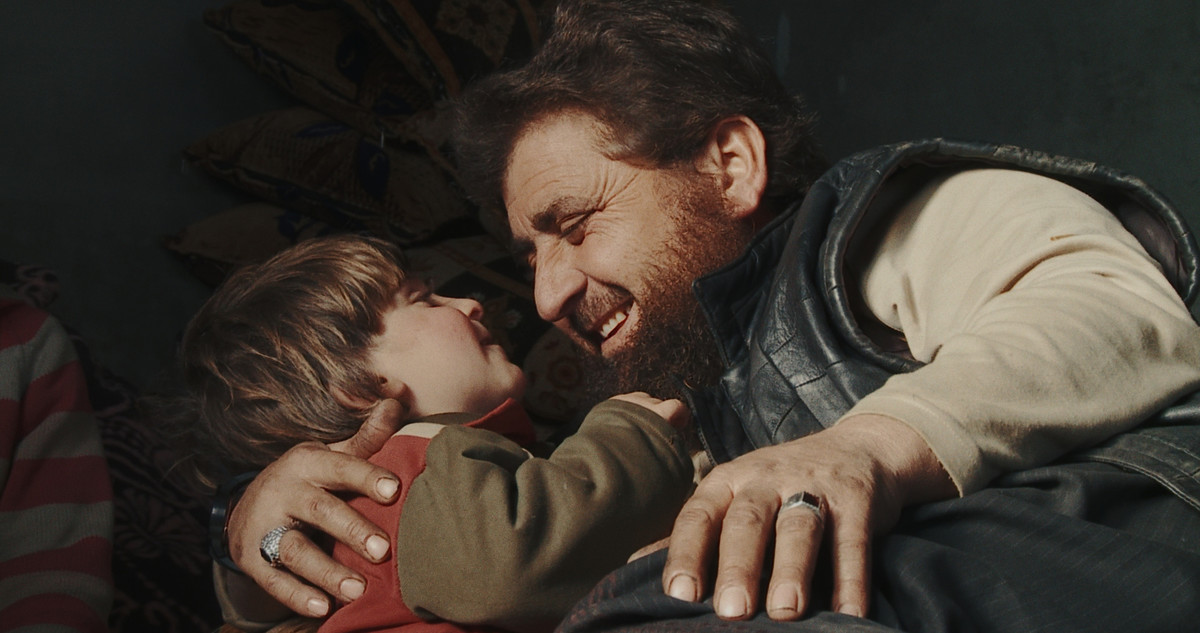
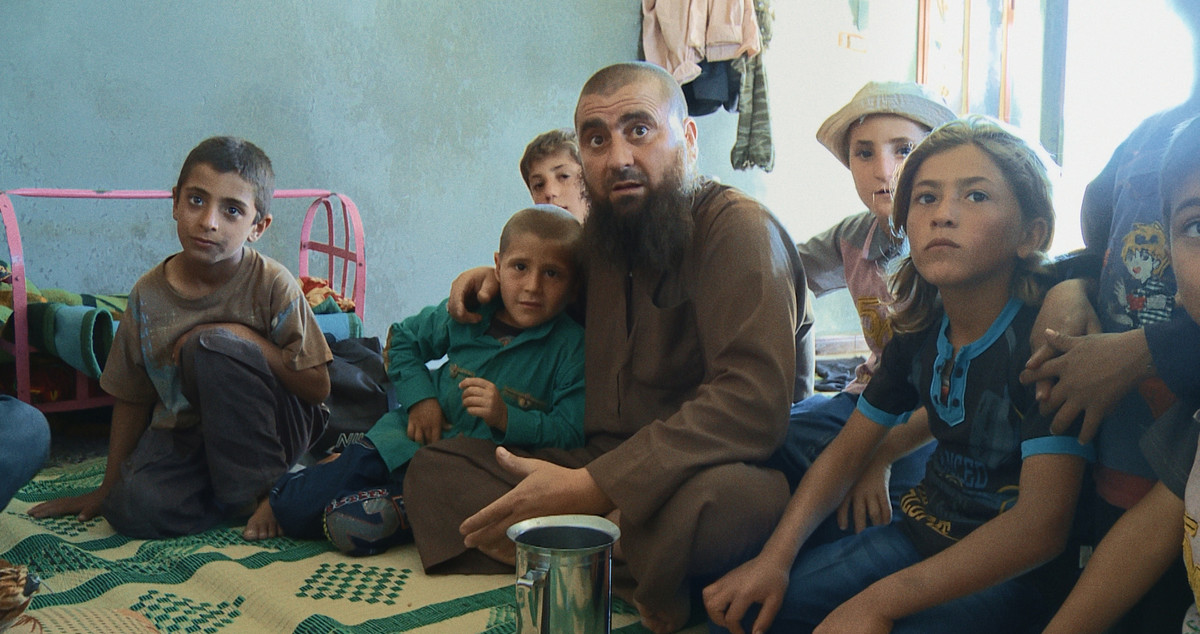
For two and a half years, the Syrian filmmaker lived in northern Syria with Abu Osama, a member of the Al-Nusra Front (also known as Al-Qaeda in the Levant), and his family. There, he pretended to be sympathetic to their cause so that he could film them in an attempt to learn, first-hand, how young men become radicalized. Focusing on a father and his sons, the film lays bare in terrifying detail how young boys with kindness in their hearts find themselves in an Al-Qaeda training camp at a tender young age, all to gain the approval of their beloved patriarch.
“The idea started with my previous film,” Derki tells Arab News. “After the siege of Homs in my last film, ‘Return to Homs,’ after all the massacres, a lot of people on the ground moved to be more radical. It’s a war, but I started wondering how this movement managed to brainwash and bring all these people (over) to their side, and how they gained their trust. I saw a lot of kids with their fathers involved in fights. All these things put questions in my mind. I’m not a part of this, but I also have to understand.”
Derki didn’t want to make a film about the Syrian war or about violence. He wanted to examine life behind closed doors, focusing on the generation of young Syrian men raised in wartime. To do so, he had to go deep undercover.
After starting research for the film at the end of 2013, Derki used many ‘fixers’ to help him work his way into this close-knit community, gain people’s trust, and identify his subjects. He settled on Abu Osama and his sons. He convinced them that he was on their side, and was given intimate access to their lives in return — all the time aware that he could not let them know what kind of film he was actually making.
“Abu Osama wasn’t well known. He’s not the leader. What attracted me to him is how strongly he believed in what he was doing, in the ideology. When you look at him, he looks like a normal father, a lovely father,” says Derki. “This paradox between these two faces — between a lovely father and the father who is ready to sacrifice his kids in order to (realize) his ideology — this is part of my cinematic vision. If I went to a regular cliché jihadist, people would not watch the film. People would leave the cinema after five minutes, believe me.”
Though Derki managed to gain the trust of the family and the Al-Nusra Front, he was always conscious that no matter how friendly they were with him, he was never really creating a true connection with anyone he was filming. And he was powerless to create positive change while he was there.
“I was undercover as a sympathizer,” he says. “This is how they know me. I couldn’t be more than an observer. Sometimes, if I could, I would act as a merciful guy with the kids so they would not get punishment. I played that role. But in a big-topic issue, you couldn’t do anything but make your own film out of this chaos.
“I was connected to them only as a filmmaker, because, at the end of the day, if they knew I had a different purpose than what they thought, I would lose my life,” he continues. “When I had a good moment to film, I was satisfied and happy. As time passed, I had to accept all these things — all these ideas, all this behavior — without any (question). My mission there was to make a film.”
“Of Fathers and Sons” is purely observational. Derki keeps himself out of the story as much as possible, zooming in on a father and his son in everyday moments, in order to see how they interact, the love and trust they build, and the ways that a son’s dedication to his father is twisted to dark ends.
“The knowledge I got from this experience is about the roots of violence — the circle of violence — and the eternal relationship between the dictatorial father and his son; the masculine power that destroys our society,” Derki explains. “All of these things gave me more understanding that it all starts from childhood. Why does someone like me decide not to carry a weapon? If you grow up in a society in which your father, your teacher, are harming you, and punishing you by hitting you, and you’re used to receiving violence, then when you grow up you are very capable of carrying weapons and killing someone for any idea you start to believe in.”
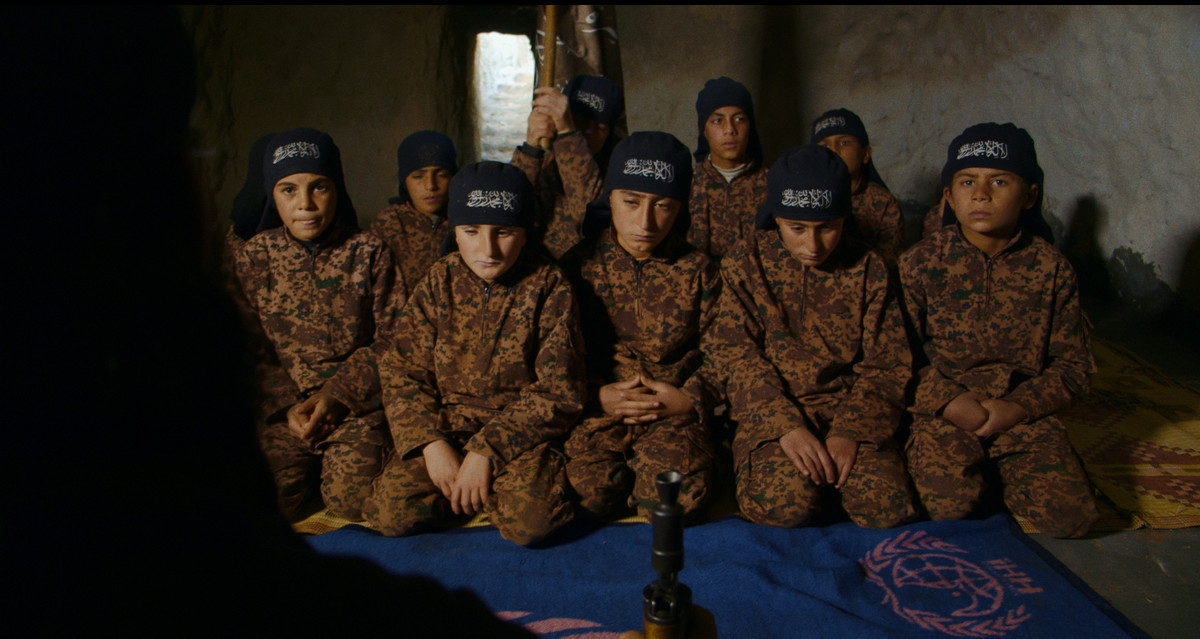
By the second half of the film, the eldest son of Abu Osama is participating in an Al-Qaeda training camp. In one harrowing scene, the young boys are told to lie still on the ground while bullets are shot next to their heads and feet in order to teach them to lose their fear. Even now, years on from filming, Derki thinks about Abu Osama’s young children, hoping they can escape from the fate that already killed their father, who Derki says died at the end of 2018.
“Emotionally, I feel sad for the kids. They are still around 12 years old, it’s still possible to take them out of this and start a new life. Even in the moment when I was there, it was still possible,” he says. “They appreciate life. (But) in this ideology, they appreciate death. Death is their request — not life. Not humanity.”
Derki is speaking to Arab News from Los Angeles, ahead of Sunday’s Oscars ceremony. While there, Derki has had the chance to celebrate with the other Arab nominees, Egyptian-American actor Rami Malek and Lebanese filmmaker Nadine Labaki.
“It was great to meet them and to have some conversation — to be three nominees from the Arab world at the biggest global celebration. It’s very intense,” he says. “I hope that, in the upcoming year, this will bring more success for Arab filmmakers.
“Nadine said she liked it so much. And I liked her film,” Derki continues. “I really want to work with Rami in the future, he’s a very talented actor.”
Whatever happens at the Oscars, Derki hopes the attention his film has received will ultimately be a force for good in the Arab world.
“It’s about how we can protect the new generation in the other Muslim countries,” he explains. “What can we do to build a generation without violence, to focus more on life, love, and communicating with other cultures, instead of building walls around us?”


