

Saudi Arabia aims to achieve e-payment target of 70%

An illustration of how cashless payment works. (Courtesy of sadad.com.)
Updated 22 February 2019
Follow

Saudi Arabia aims to achieve e-payment target of 70%

  • Reform plan seeks cashless society
  • E-payments could exceed $22bn in next four years

RIYADH: Saudi Arabia wants to achieve an e-payment target of 70 percent by 2030, a banking official told Arab News on Thursday, as the country moves toward becoming a cashless society.

Talat Hafiz, from the Media and Banking Awareness Committee for Saudi Banks, said online or cashless transactions were part of the Vision 2030 reform plan.

The Financial Sector Development Program (FSDP) was one of the initiatives to support the economic growth goals of Vision 2030, he added.

“Basically it is to transfer Saudi society from being heavily cash dependent in buying goods and services to a cashless society using digital and electronic payment,” he told Arab News. “One of the FSDP’s main targets is to increase and improve the percentage of non-cash utilization, from 18 percent in 2016 to 28 percent in 2020. However, the goal will increase of course with the target to 70 percent by 2030.”

Hafiz, in an Arab News column published earlier this month, said the Saudi Arabian Monetary Authority (SAMA) had been encouraging electronic payments and settlements in order to reduce the reliance on cash.

SAMA had introduced a number of e-payment systems in the last two decades to help consumers and institutions, he wrote, such as the Saudi Arabian Riyal Interbank Express and the online bill payment portal SADAD.

Earlier this week Apple Pay was launched in the Kingdom, joining the cashless roster of payment methods available to Saudi consumers.

A cashback service operated by credit card companies, where a percentage of the amount spent is paid back to the cardholder, was introduced last year in Saudi Arabia.
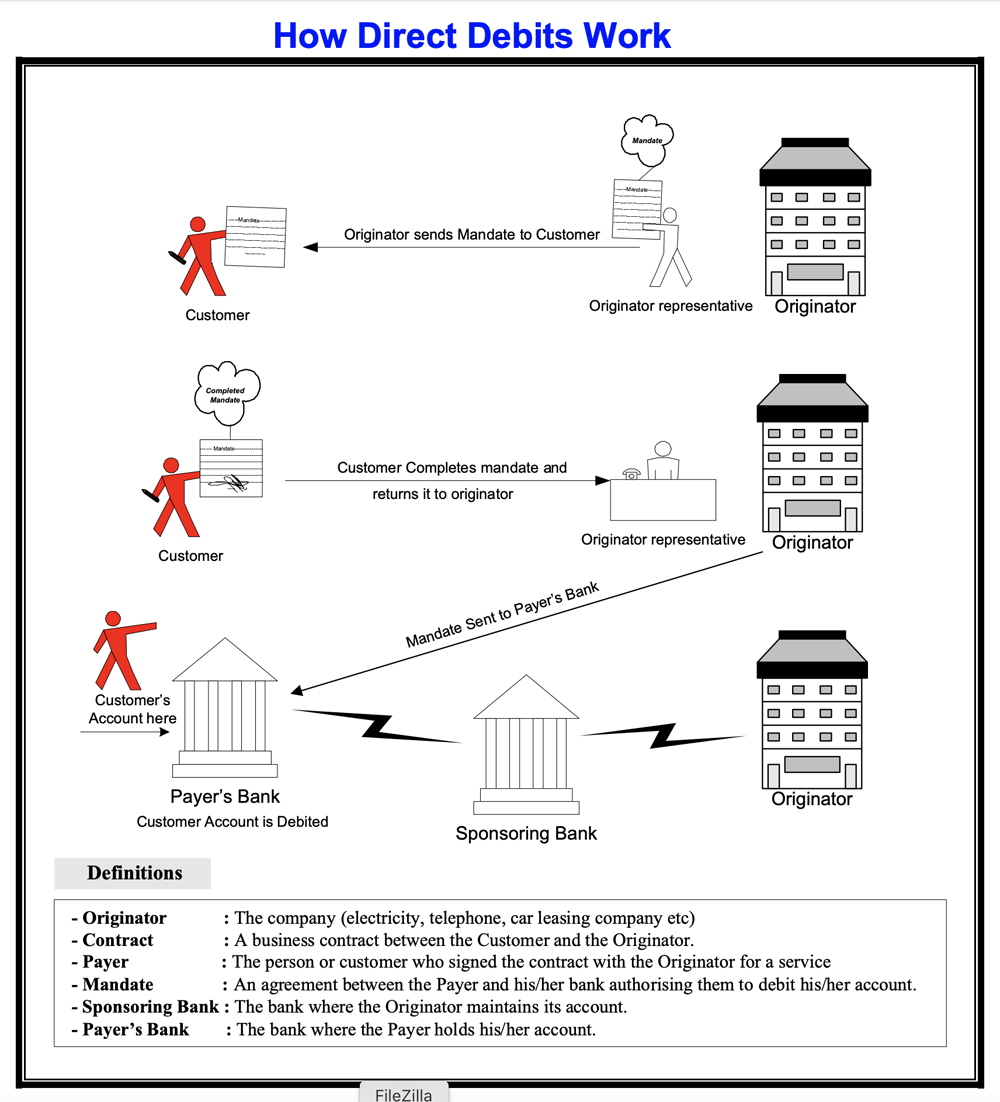


An illustration of how direct debit works, courtesy of the Saudi Arabian Monetary Authority (SAMA).

“All of these efforts collectively from the SAMA side are to reach the ambitious goal of the FSDP.”

Hafiz explained that e-payments saved time and effort and allowed people to access service and goods around-the-clock. 

“This is basically why SAMA is very active and now we see SAMA and the National Payment System are responsible and leading (the country) toward a cashless society by achieving the target set by 2030.”

Last February the Amazon-owned Payfort online payments service registered a new company in Saudi Arabia.

According to the “Payfort State of Payments 2017” report, Saudi Arabia and the UAE are the fastest growing markets in the region for electronic payments.

The report estimates that Saudi Arabia conducted $8.3 billion of payment transactions in 2016, showing 27 percent year-on-year growth.

E-payments in the Kingdom are expected to double over the next four years to reach more than $22 billion, the report added.


Diriyah Co. partners with Midad to develop Four Seasons hotel in Diriyah 

Updated 07 January 2026
Follow

Diriyah Co. partners with Midad to develop Four Seasons hotel in Diriyah 

RIYADH: Saudi Arabia’s sovereign wealth fund-backed developer, Diriyah Co., has signed a joint development agreement with Midad Real Estate Investment and Development Co. to construct the Four Seasons Diriyah Hotel and private residences. 

The partnership will strengthen collaboration between the two companies through the development of the luxury Four Seasons Diriyah, which will feature 159 rooms, alongside private Four Seasons residences, spanning approximately 235,000 sq. meters within Diriyah’s master plan. 

The project’s total value is projected at SR3.1 billion (approximately $827 million), encompassing both land acquisition and construction expenses. 

Midad is one of the Kingdom’s leading real estate developers, expanding its portfolio of high-end projects and maintaining numerous strategic partnerships with prominent global brands, reinforcing its reputation as a trusted name in luxury residential and hospitality development across Saudi Arabia. 

This partnership marks the first major collaboration between Diriyah Co. and Midad, supporting Diriyah’s plans to develop 40 luxury hotels across its two main projects: the 14-sq.-km Diriyah Project and the 62-sq.-km Wadi Safar Project, a premium destination that blends lifestyle, culture, and entertainment. 

Commenting on the agreement, Minister of Tourism and Secretary-General of Diriyah Co., Ahmad Al-Khatib, said: “The Kingdom continues to set new standards in developing tourism destinations, with Diriyah at the forefront.” 

He added that such partnerships enhance the world-class experiences Saudi Arabia offers and strengthen the Kingdom’s position as a leading destination in this sector. 

Diriyah Co. CEO Jerry Inzerillo commented that the Four Seasons Diriyah Hotel and Residences will be one of the Kingdom’s largest luxury hotels. 

“We are proud to announce this joint development with Midad, one of Saudi Arabia’s top real estate developers. This agreement reflects our ongoing commitment to enabling Saudi partners to contribute to Diriyah’s transformative journey and confirms Midad’s confidence in the opportunities the project presents,” Inzerillo added. 

Midad CEO Abdelilah bin Mohammed Al-Aiban said: “This project is a pivotal milestone for our company, allowing us to bring the Four Seasons experience to one of the Kingdom’s most prominent heritage destinations.” 

He added: “We are excited to deliver a project that embodies design excellence, world-class service, and sustainable value, while contributing meaningfully to Saudi Arabia’s tourism, cultural, and economic ambitions.” 

The collaboration comes amid rapid progress on the SR236 billion Diriyah project, which has awarded construction contracts worth more than SR101.25 billion to date. 

Diriyah is expected to contribute approximately SR70 billion directly to the Kingdom’s gross domestic product, create more than 180,000 jobs, accommodate 100,000 residents, and host around 50 million annual visitors. 

The development will feature contemporary office spaces accommodating tens of thousands of professionals across technology, media, arts, and education, complemented by museums, retail destinations, a university, an opera house, and the Diriyah Arena.  

It will also offer a diverse selection of restaurants and cafes, alongside nearly 40 world-class resorts and hotels distributed across its two primary master plans.