


DUBAI: Five things we learned at Carpet Oasis, the annual festival in Dubai.
The biggest carpet on the planet
No surprise that the world’s largest carpet was created in Iran — Persian rugs are widely regarded as the global benchmark for excellence. No surprise either that it’s installed at the Sheikh Zayed Grand Mosque in the UAE — a country with a hunger for breaking ‘world’s biggest …’ records that is probably record in itself. The big rug’s dominant color is green (Sheikh Zayed’s favorite, apparently, and — handily — the color generally associated with Islam). It consists of 2.2 billion hand-tied knots and 38 tons of cotton and wool, and was constructed by a team of 3,000 workers.

The most expensive carpet ever sold
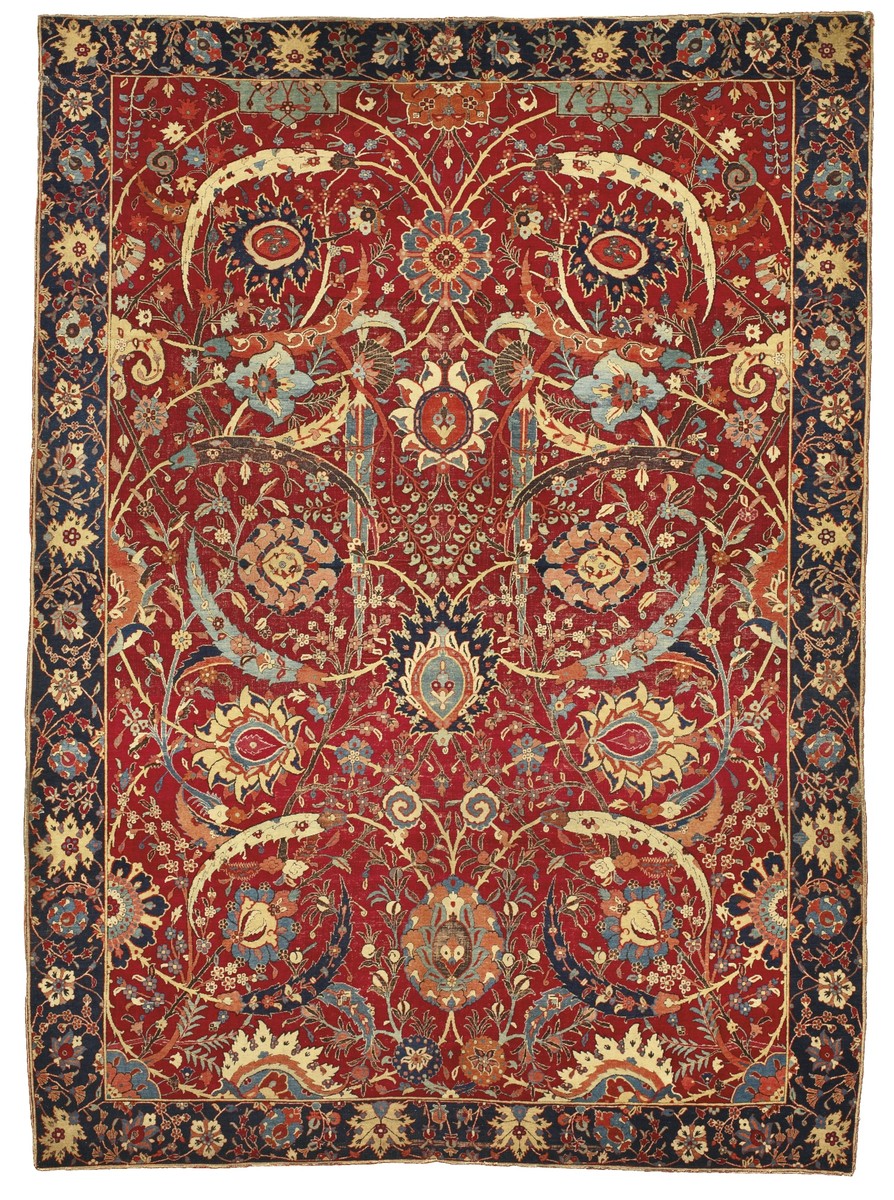
In 2013, an anonymous buyer — believed to be from the Middle East — paid $33.8 million for this sickle-leaf carpet, believed to have been created in the early 17th century in Persia. The price was completely unexpected. Sotheby’s, the auction house, had estimated a sale of around $7 million for the relatively small (2.67 by 1.96 meters) ‘vase-techinque’ carpet from the William A. Clark Collection. But the phone buyer refused to concede, sending the price spiralling to more than three times the previous record.
The oldest carpet known to man
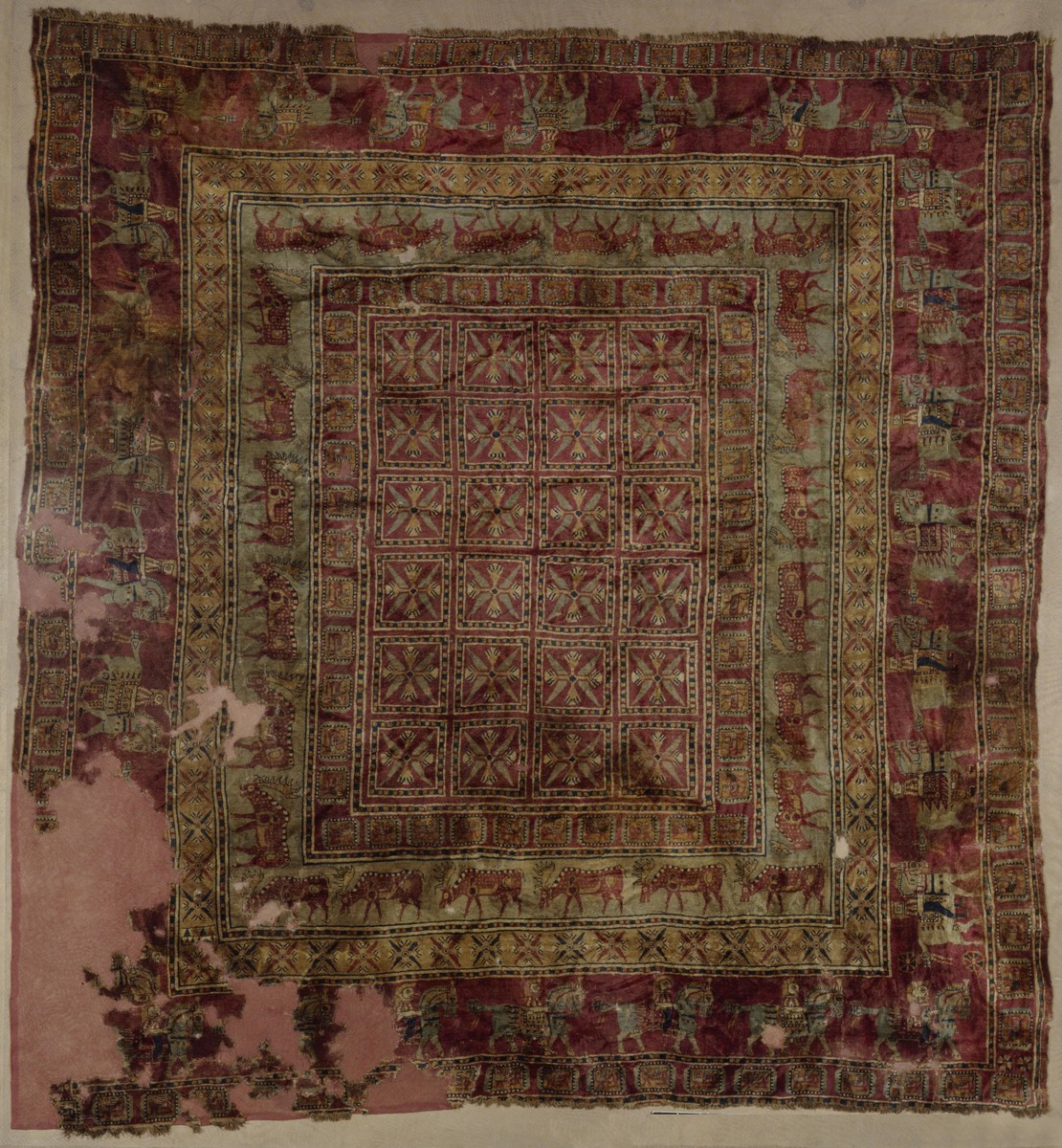
This Russian pile carpet survived from, at least, the 4th century BCE until it was discovered well over 2000 years later in the tomb of a Siberian prince. Who clearly didn’t have cats. As was customary at the time, the prince was buried with his most treasured possessions, the majority of which were stolen by grave robbers at some point over two millennia. But the hole they left behind allowed snow to pile up inside, helping to preserve the carpet until the tomb was found again in 1948. The carpet is now in the State Hermitage Museum in St Petersburg.
The alpha-carpet
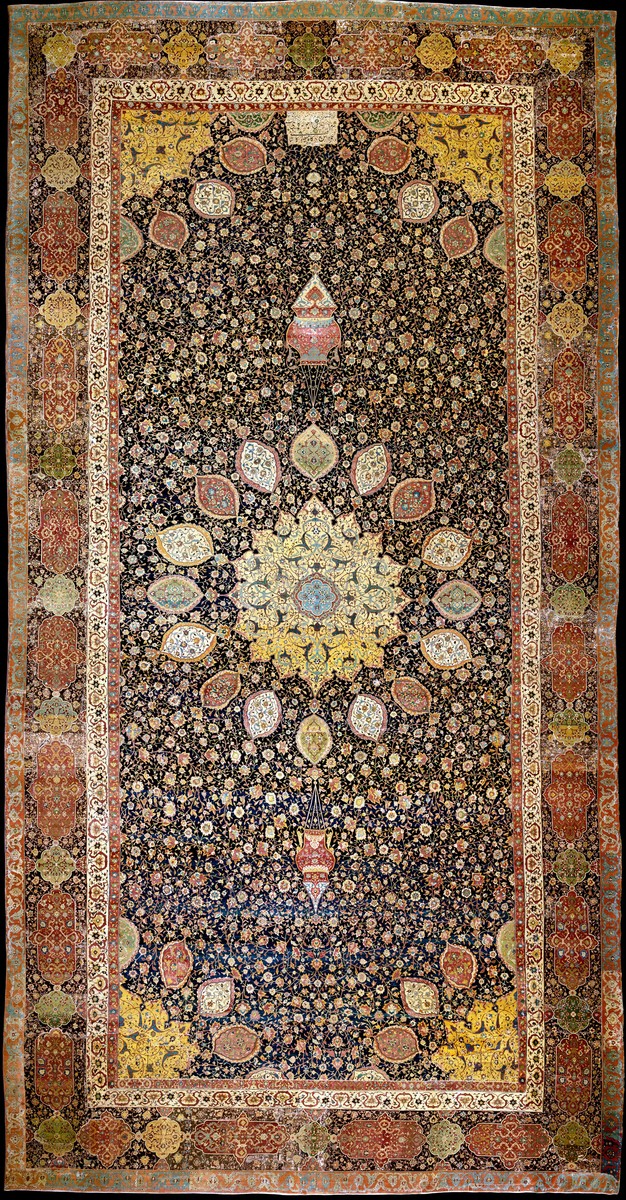
Described at Carpet Oasis as ‘The World’s Most Famous Carpet’ — which is tricky to verify given most people can’t name a carpet besides “my living room one” — the Ardabil Carpet is actually one of a pair of silk-and-wool Persian rugs currently belonging to London’s Victoria and Albert Museum and the Los Angeles County Museum of Art. They were created in the mid-16th century and come with an inscription from the work of Persian poet Hafiz Shirazi and the central design is based on the interior of the dome of the Sheikh Lotfollah Mosque in Isfahan.
The eyesore
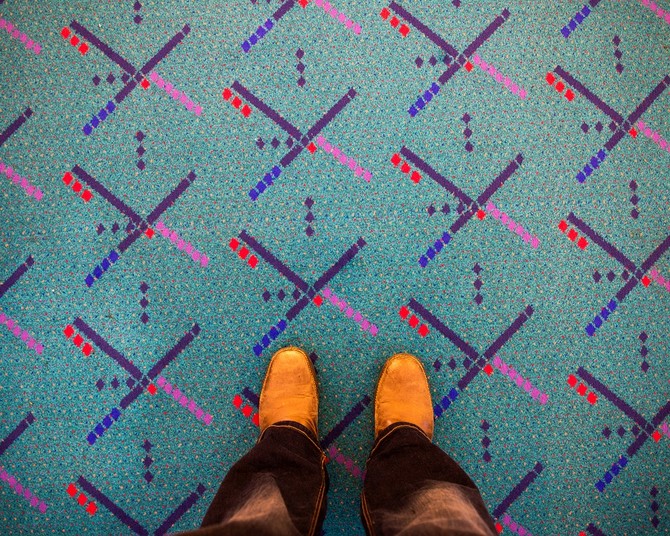
Billed as ‘The World’s Ugliest Carpet’ — a claim that would surely be hotly contested by anyone growing up in the West in the Seventies — this monstrosity from Portland Airport in Oregon, USA has become something of an ironic hipster icon, its hideous pattern (based on the airport’s runways) and color scheme replicated on socks, hats and bicycle helmets. The carpet has its own website and social media accounts (yes, it’s more popular than you…) When the airport announced it was going to be replaced, online outrage ensued, and it was recycled into wall hangings and door mats. Rest easy though, its replacement is almost equally aesthetically offensive.


