WARSAW: Israeli Prime Minister Benjamin Netanyahu met Oman’s foreign minister on the sidelines of a US-sponsored Middle East conference in Warsaw on Wednesday and hinted that other Arab countries represented there were engaging with Israel.
“Many are following this (Omani) lead, and may I say, including at this conference,” a video released by Netanyahu’s office showed him telling Yousuf bin Alawi bin Abdullah, whose Gulf state hosted the Israeli leader in October.
Oman does not formally recognize Israel. Nor do Saudi Arabia and the UAE, which share Israel’s concerns about Iranian actions in the region and also sent envoys to Warsaw.
Speaking to Netanyahu, bin Alawi said: “People in the Middle East have suffered a lot because they have stuck to the past. Now we say, this is a new era, for the future.”
The US hopes the Warsaw gathering will ratchet up pressure against Iran despite concerns among major European countries about heightened tensions with Tehran.

Israel’s Netanyahu meets Oman’s foreign minister in Warsaw
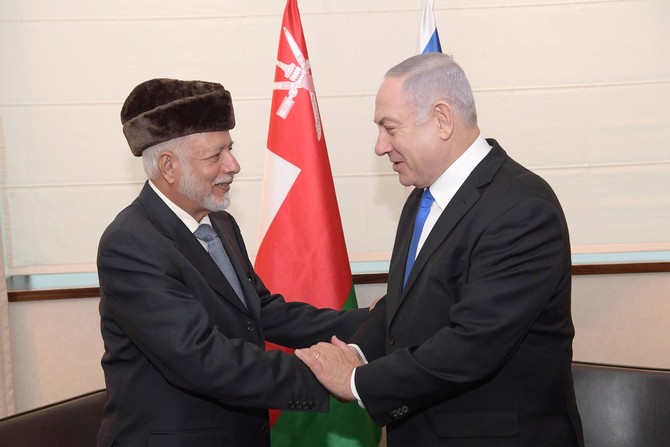
- Alawi said: “People in the Middle East have suffered a lot because they have stuck to the past. Now we say, this is a new era, for the future”
Turkiye’s foreign minister says the US and Iran showing flexibility on nuclear deal, FT reports
- Hakan Fidan: “It is positive that the Americans appear willing to tolerate Iranian enrichment within clearly set boundaries”
- Washington has until now demanded Iran relinquish its stockpile of uranium enriched to up to 60 percent fissile purity
The United States and Iran are showing flexibility on a nuclear deal, with Washington appearing “willing” to tolerate some nuclear enrichment, Turkish Foreign Minister Hakan Fidan told the Financial Times in an interview published Thursday.
“It is positive that the Americans appear willing to tolerate Iranian enrichment within clearly set boundaries,” Fidan, who has been involved in talks with both Washington and Tehran, told the FT.
“The Iranians now recognize that they need to reach a deal with the Americans, and the Americans understand that the Iranians have certain limits. It’s pointless to try to force them.”
Washington has until now demanded Iran relinquish its stockpile of uranium enriched to up to 60 percent fissile purity, a small step away from the 90 percent that is considered weapons grade.
Iranian President Masoud Pezeshkian has said Iran would continue to demand the lifting of financial sanctions and insist on its nuclear rights including enrichment.
Fidan told the FT he believed Tehran “genuinely wants to reach a real agreement” and would accept restrictions on enrichment levels and a strict inspection regime, as it did in the 2015 agreement with the US and others. US and Iranian diplomats held talks through Omani mediators in Oman last week in an effort to revive diplomacy, after President Donald Trump positioned a naval flotilla in the region, raising fears of new military action. Trump on Tuesday said he was considering sending a second aircraft carrier to the Middle East, even as Washington and Tehran prepared to resume negotiations.
The Turkish foreign minister, however, cautioned that broadening the Iran-US talks to ballistic missiles would bring “nothing but another war.”
The US State Department and the White House did not respond to a request for comment outside regular business hours.
“It is positive that the Americans appear willing to tolerate Iranian enrichment within clearly set boundaries,” Fidan, who has been involved in talks with both Washington and Tehran, told the FT.
“The Iranians now recognize that they need to reach a deal with the Americans, and the Americans understand that the Iranians have certain limits. It’s pointless to try to force them.”
Washington has until now demanded Iran relinquish its stockpile of uranium enriched to up to 60 percent fissile purity, a small step away from the 90 percent that is considered weapons grade.
Iranian President Masoud Pezeshkian has said Iran would continue to demand the lifting of financial sanctions and insist on its nuclear rights including enrichment.
Fidan told the FT he believed Tehran “genuinely wants to reach a real agreement” and would accept restrictions on enrichment levels and a strict inspection regime, as it did in the 2015 agreement with the US and others. US and Iranian diplomats held talks through Omani mediators in Oman last week in an effort to revive diplomacy, after President Donald Trump positioned a naval flotilla in the region, raising fears of new military action. Trump on Tuesday said he was considering sending a second aircraft carrier to the Middle East, even as Washington and Tehran prepared to resume negotiations.
The Turkish foreign minister, however, cautioned that broadening the Iran-US talks to ballistic missiles would bring “nothing but another war.”
The US State Department and the White House did not respond to a request for comment outside regular business hours.
© 2026 SAUDI RESEARCH & PUBLISHING COMPANY, All Rights Reserved And subject to Terms of Use Agreement.


