Hyatt House debuts in KSA with Jeddah hotel

1 / 2
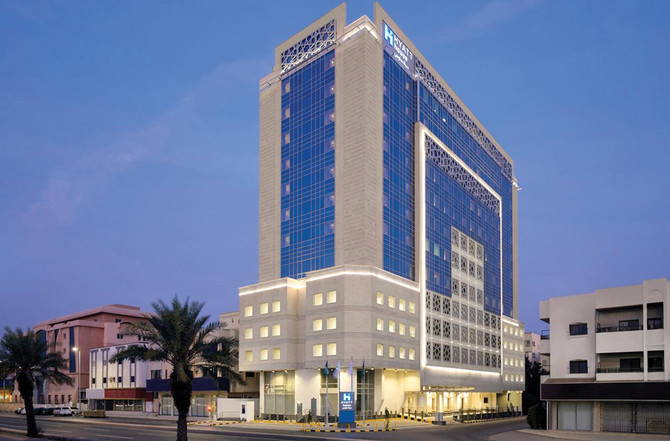
The guest rooms at Hyatt House Jeddah Sari Street range from spacious studios to one-bedroom kitchen suites with fully equipped kitchens.
2 / 2
The guest rooms at Hyatt House Jeddah Sari Street range from spacious studios to one-bedroom kitchen suites with fully equipped kitchens.
Updated 12 February 2019
Follow

Hyatt House debuts in KSA with Jeddah hotel

The Hyatt House brand has entered into the Middle Eastern market with the opening of Hyatt House Jeddah Sari Street in the Kingdom. The opening of the Hyatt House hotel is seen as a significant step toward increasing Hyatt’s brand footprint in the extended stay segment and growing Hyatt’s brand presence in the Middle East with innovative hospitality offerings in key locations and gateway cities. 

“We are excited to announce the opening of Hyatt House Jeddah Sari Street, marking the Hyatt House brand’s arrival to the region,” said Zulkifl Bhatti, general manager of Hyatt House Jeddah Sari Street. “Our aim is to offer guests and families a comfortable stay in the heart of charming Jeddah and to provide the high-quality service standards for which the Hyatt House brand is known.”

The Hyatt House brand launched in 2012 and is located in more than 85 locations throughout the US, China, Germany, Mexico, Turkey and Puerto Rico. The brand is rooted in extensive customer insights which indicate that guests seek casual and authentic hospitality, with purposeful service and seamless experiences that accommodate their lifestyles and familiar routines. 

Hyatt House Jeddah Sari Street is located in the Al-Salamah District, in close proximity to Madinah and Tahlia streets, which connect to the Corniche, Jeddah’s coastal resort area. The hotel comprises 102 residentially inspired upscale guest rooms, studio and one-bedroom kitchen suites, along with restaurant, fitness center and prayer rooms. Some of the features of the hotel are:

• Gathering rooms with more than 50 square meters of flexible meeting spaces.

• Free Wi-Fi throughout the hotel and guest rooms.

• H Lounge, a cozy space featuring a selection of comfort food.

• Omelet Bar, a full breakfast served daily for guests from chef-inspired options that rotate daily.

• The H Market meets the everyday needs of guests, from snacks and sundries to freshly prepared salads and sandwiches.

• A 24-hour workout room equipped with TechnoGym cardio and strength training equipment, including treadmills, ellipticals, stationary bikes and free weights.

• An outdoor, temperature-controlled rooftop swimming pool with stunning views of Jeddah.

• A 24-hour business center equipped with computer work stations with wired and wireless internet access, as well as printers.

• A game room available for all guests with different activities such as foosball, pool table and video games.

• Three floors of shaded parking space dedicated to hotel guests. 


World Defense Show 2026: KPMG highlights human capital as strategic defense asset

Updated 03 February 2026
Follow

World Defense Show 2026: KPMG highlights human capital as strategic defense asset

KPMG published a series of four white papers as official knowledge partner for the World Defense Show 2026, reinforcing its commitment to supporting Saudi Arabia’s Vision 2030 and the Kingdom’s ambition to build a sovereign, future-ready defense ecosystem grounded in integrated capability development, localization, and digital readiness.

As global defense priorities evolve from procurement-led models toward capability-driven ecosystems, one of the papers in the defense integration series highlights a clear inflection point for the sector. According to KPMG analysis, defense localization in Saudi Arabia has increased from around 4 percent in 2018 to 24.9 percent in 2024, with the Kingdom targeting 50 percent localization by 2030. At the same time, local content across the defense sector has reached 40.7 percent, up from 38.4 percent in 2023, reflecting deeper integration across procurement, industrial participation, technology adoption, and workforce development.

KPMG’s findings emphasize that modern defense power is no longer defined by platforms and equipment alone, but by the ability to design, operate, integrate, and sustain advanced systems at scale. While technology, infrastructure, and capital investment remain critical enablers, the firm’s WDS position paper highlights that defense transformation has a significant human-capital focus, recognizing that skills, data literacy, and local expertise are essential to maximizing the performance, resilience, and sovereignty of advanced defense capabilities.

Christopher Moore, head of defense and security, said: “Saudi Arabia’s defense transformation has a significant human-capital focus, alongside major investments in technology, equipment, and industrial capacity. The progress we are seeing in localization and local content demonstrates that the Kingdom is not only acquiring advanced systems, but also building the skills, institutions, and operating models required to sustain them. Through our partnership with the World Defense Show, KPMG is proud to contribute insight and frameworks that help translate Vision 2030 ambition into operational readiness.”

This human-capital perspective forms part of a broader KPMG defense thought-leadership series developed for WDS 2026, which examines defense transformation through multiple, interconnected pillars. These include accelerating sovereign defense ecosystems, integrating business and technology infrastructure, financing future deterrence through public-private partnerships, strengthening industrial and technological autonomy, and building a future-ready defense workforce — reflecting KPMG’s holistic view of defense as an integrated national ecosystem.

KPMG’s research also situates Saudi Arabia’s progress within a global economic context. International benchmarks cited in the firm’s WDS analysis show that every $1 billion in defense manufacturing output in the US supports approximately 5,700 jobs, while the UK defense sector contributes around £25 billion ($34.2 billion) to GDP and sustains 260,000 skilled jobs. Across the EU, defense industries employ more than 1.6 million people and generate approximately 70 billion euros ($82.9 billion) in annual value. KPMG notes that similar dynamics are beginning to emerge in Saudi Arabia as localization accelerates and private-sector participation expands.

To support measurable progress, KPMG has proposed a Defense Workforce Capability Index — a framework that links workforce outcomes directly to operational readiness. The index tracks localization rates, technical qualification levels in advanced and digital systems, and the share of maintenance and sustainment conducted domestically, aligning human-capital metrics with broader defense performance objectives.

Taking place in Riyadh from Feb. 8 to 12, the World Defense Show will bring together senior government leaders, defense manufacturers, and technology innovators from around the world. The other three papers in the defense integration series focus on sovereignty, financing and technology.