

‘Teacher-less’ classrooms defy conventions of education

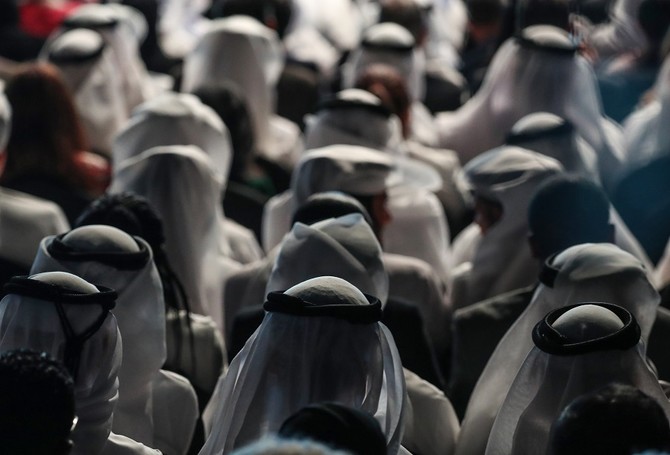
The World Government Summit in Dubai is held at the Madinat Jumeirah. (AFP)
Updated 11 February 2019
Follow

‘Teacher-less’ classrooms defy conventions of education

  • A school in Bali has created a classroom with no walls, “which provides an incredible environment for growth”
  • Another one in Paris gathers students in “a building with no supervision”

DUBAI: Unconventional schooling models including classrooms with no teachers or walls are defying the conventions of education, the World Government Summit was told on Sunday.

A Bali school founded by Canadian entrepreneurs John and Cynthia Hardy are conducting lessons in classrooms made entirely of bamboo, utilizing the impact of nature and environment in the students’ education.

“Green School is like no other. It has no walls, and the children are happy. This provides an incredible environment for growth,” John Hardy said, adding how “giving children freedom from boundaries teaches them to solve problems and think critically in ways we had never imagined possible.”

Another school with an unconventional model is Ecole 42 in Paris, where students work in “a building with no supervision.”

“Learning by rote is dangerous and makes you stupid. Information is freely available on the internet. What we need in today’s world is the ability to create new stuff out of this knowledge by working together,” said founder Nicolas Sadirac who initially designed the program for poor children and school dropouts.

“It’s all about creating a safe place, and then providing an environment of trust. It helps to gamify the experience to make it fun. Then you step aside and watch the kids flourish,” Sadirac added.

Both models were presented to a group of educators attending the World Government Summit in Dubai, where a session about the future of education was organized.

“You are going to have to change your old thinking,” a clinical psychologist said at the end of the session.


Arts festival’s decision to exclude Palestinian author spurs boycott

Randa Abdel Fattah. (Photo/Wikipedia)
Updated 12 January 2026
Follow

Arts festival’s decision to exclude Palestinian author spurs boycott

  • A Macquarie University academic who researches Islamophobia and Palestine, Abdel-Fattah responded saying it was “a blatant and shameless act of anti-Palestinian racism and censorship,” with her lawyers issuing a letter to the festival

SYDENY: A top Australian arts festival has seen ​the withdrawal of dozens of writers in a backlash against its decision to bar an Australian Palestinian author after the Bondi Beach mass shooting, as moves to curb antisemitism spur free speech concerns.
The shooting which killed 15 people at a Jewish Hanukkah celebration at Sydney’s Bondi Beach on Dec. 14 sparked nationwide calls to tackle antisemitism. Police say the alleged gunmen were inspired by Daesh.
The Adelaide Festival board said last Thursday it would disinvite Randa ‌Abdel-Fattah from February’s ‌Writers Week in the state of South Australia because “it ‌would not ​be ‌culturally sensitive to continue to program her at this unprecedented time so soon after Bondi.”

FASTFACTS

• Abdel-Fattah responded, saying it was ‘a blatant and shameless act of anti-Palestinian racism and censorship.’

• Around 50 authors have since withdrawn from the festival in protest, leaving it in doubt, local media reported.

A Macquarie University academic who researches Islamophobia and Palestine, Abdel-Fattah responded saying it was “a blatant and shameless act of anti-Palestinian racism and censorship,” with her lawyers issuing a letter to the festival.
Around 50 authors have since withdrawn from the festival in protest, leaving it in doubt, local media reported.
Among the boycotting authors, Kathy Lette wrote on social media the decision to bar Abdel-Fattah “sends a divisive and plainly discriminatory message that platforming Australian Palestinians is ‘culturally insensitive.'”
The Adelaide Festival ‌said in a statement on Monday that three board ‍members and the chairperson had resigned. The ‍festival’s executive director, Julian Hobba, said the arts body was “navigating a complex moment.”

 a complex and ‍unprecedented moment” after the “significant community response” to the board decision.
In the days after the Bondi Beach attack, Jewish community groups and the Israeli government criticized Prime Minister Anthony Albanese for failing to act on a rise in antisemitic attacks and criticized protest marches against Israel’s war in ​Gaza held since 2023.
Albanese said last week a Royal Commission will consider the events of the shooting as well as antisemitism and ⁠social cohesion in Australia. Albanese said on Monday he would recall parliament next week to pass tougher hate speech laws.
On Monday, New South Wales state premier Chris Minns announced new rules that would allow local councils to cut off power and water to illegally operating prayer halls.
Minns said the new rules were prompted by the difficulty in closing a prayer hall in Sydney linked to a cleric found by a court to have made statements intimidating Jewish Australians.
The mayor of the western Sydney suburb of Fairfield said the rules were ill-considered and councils should not be responsible for determining hate speech.
“Freedom ‌of speech is something that should always be allowed, as long as it is done in a peaceful way,” Mayor Frank Carbone told Reuters.