


ISLAMABAD: The Afghan Taliban and the United States have formed joint working groups to finalize details of a draft agreement, including the withdrawal of foreign troops from Afghanistan and a guarantee that Afghanistan would not be used against the U.S. and its allies, a senior Taliban official said on Saturday.
Marathon peace negotiations between the United States and the Taliban in Qatar last month ended with signs of progress toward the withdrawal of thousands of foreign troops from Afghanistan and an end to more than 17 years of war. This week, Russia hosted peace talks in Moscow between the Taliban and opposition Afghan politicians.
Suhail Shaheen, the spokesman for the Taliban’s political office in Qatar, told Arab News the working groups would meet in a week or two to prepare reports for the next round of talks in Doha, to be held later this month.
The outgoing head of the Taliban political office, Sher Abbas Stanekzai, has said the next meeting is scheduled for February 25.
“We have been demanding complete withdrawal of all foreign forces, which was an important issue for us,” Shaheen said. “The second issue was related to American concerns that Afghan soil should not be used for terrorism against them in future.”
“Both sides agreed to form joint working groups. So we are satisfied about the outcome of the talks in the sense as we will be working on the two issues – troops withdrawal and to counter terrorism threat in future – and the committees will draft the agreement and explore ways for implementation of the agreements,” he added.
The Taliban ruled most of Afghanistan from 1996 until late 2001 but were ousted by Afghan opposition forces, backed by U.S. forces, for harbouring al Qaeda leader Osama bin Laden, weeks after the Sept. 11, 2001, attacks.
They have since been fighting to drive out foreign forces and defeat what they consider to be a foreign-backed government in Kabul. Over the years, fighting has spread to most regions of the country and many thousands of people are killed every year.
Asked why the Taliban were not accepting calls for ceasefire, Shaheen said the issue of ceasefire and establishing sustainable peace were a part of the negotiations but “we are now discussing withdrawal of foreign troops. We have not yet reached any understanding on this issue. Other issues will be discussed after we reached agreement on the withdrawal of the foreign troops.”
“When we decide the external aspect of the problem, then we will focus on other issues,” said Shaheen.
The Taliban reiterated last week their long-held demand that all foreign troops get out of Afghanistan, rejecting a suggestion by U.S. President Donald Trump of a lingering U.S. focus on counter-terrorism after troops are drawn down.
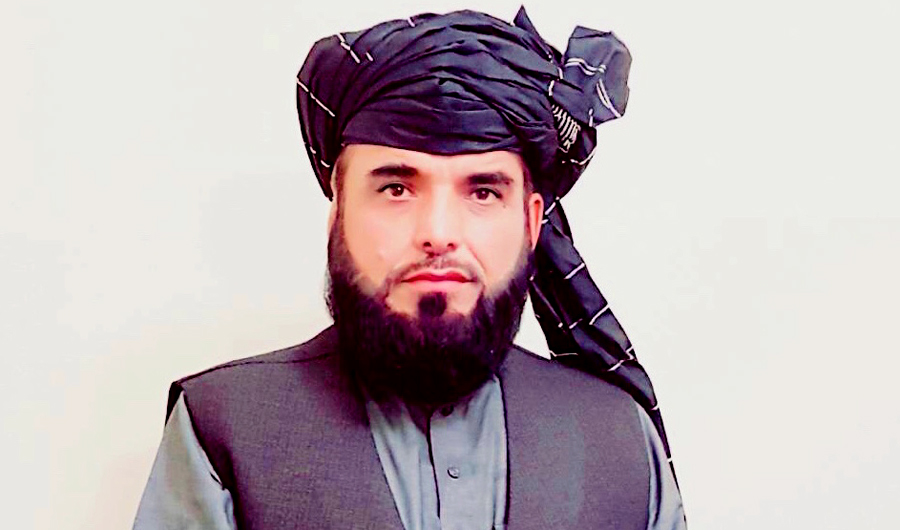
Suhail Shaheen, the spokesman for the Taliban’s political office in Qatar, told Arab News on Saturaday the working groups would meet in a week or two to prepare reports for the next round of talks, to be held later this month. (Photo/Supplied)
“We have clearly stated in our meetings that all troops, which means all categories and under any name, stationed in Afghanistan, will leave,” Shaheen said.
The Taliban spokesman clarified remarks by senior Taliban negotiator Abdul Salam Hanafi that the U.S. had agreed to call back half of its 14,000 troops from Afghanistan by the end of April, and said there was no agreement on a time-frame for the withdrawal.
He said Hanafi had been merely referring to American media reports which suggested that half of the troops would be withdrawn by April.
“There is no agreed timetable for the withdrawal of the American forces. It depends on the U.S. side whether it withdraws or not,” Shaheen said. “No agreement has yet been agreed upon but we are working on options to agree on a time-table. We will work on it in the near future and we will determine a time table.”
Shaheen also said the Taliban do not intend to abolish Afghan security forces like the national army or police but would reform them so they could defend and protect the nation.
When asked about the remarks by the Taliban chief negotiator to abolish the constitution, Shaheen said:
“Our opinion is that the constitution was drafted and approved under the shadow of the American B-52 bomber planes. So we want a constitution drafted in an environment of freedom. All Afghan ulema and scholars should debate and finalize a draft and the constitution should be Islamic as we are 100 percent Muslims in Afghanistan so we will keep in mind its Islamic and Afghan values which reflect values of our society.”
“We do not say that we do not accept the constitution. Our opinion is that the constitution is a necessity for the society and we accept its importance and it should be [drafted] in an environment of freedom.”
About the Moscow conference this week, he said all participants had unanimously called for the withdrawal of the foreign forces and agreed that the system in Afghanistan should be Islamic.
“The conference was important in the sense that the participants collectively made these two demands so I consider it an important development,” Shaheen said. “This is also important that all Afghans agreed on important issues only in two days.”


