

First Indian film museum opens in home of Bollywood

1 / 4
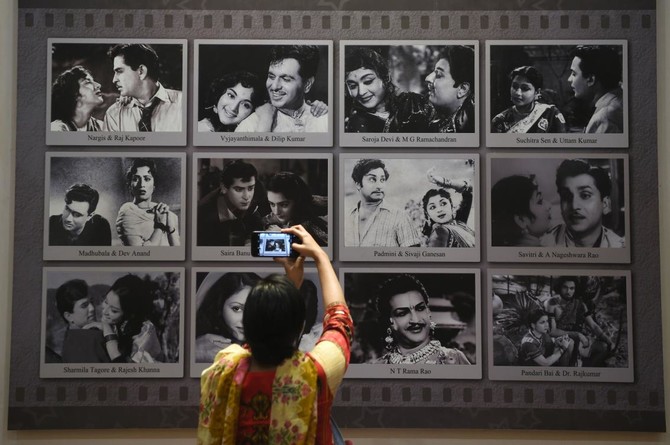
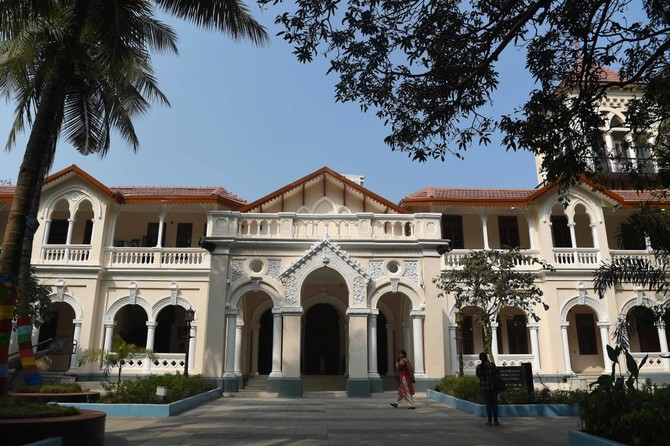
The India’s first national film museum is spread across a stylish 19th-century bungalow and a modern five-story glass structure in south Mumbai. (AFP)
2 / 4
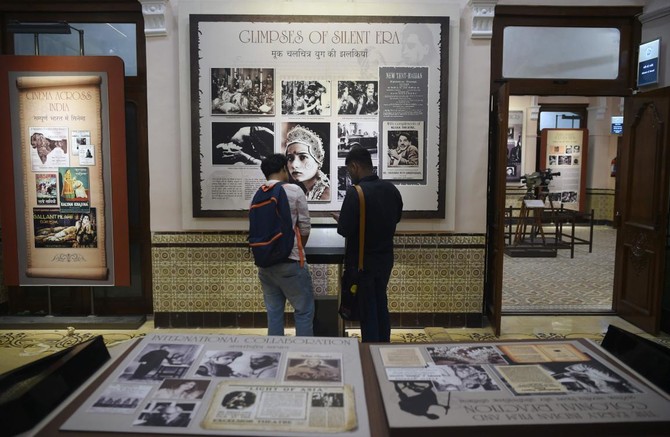
The National Museum of Indian Cinema (NMIC) is the country’s first museum showcasing the history of its film industry. (AFP)
3 / 4
The museum costs 1.4 billion rupees (19.6 million USD). (AFP)
4 / 4
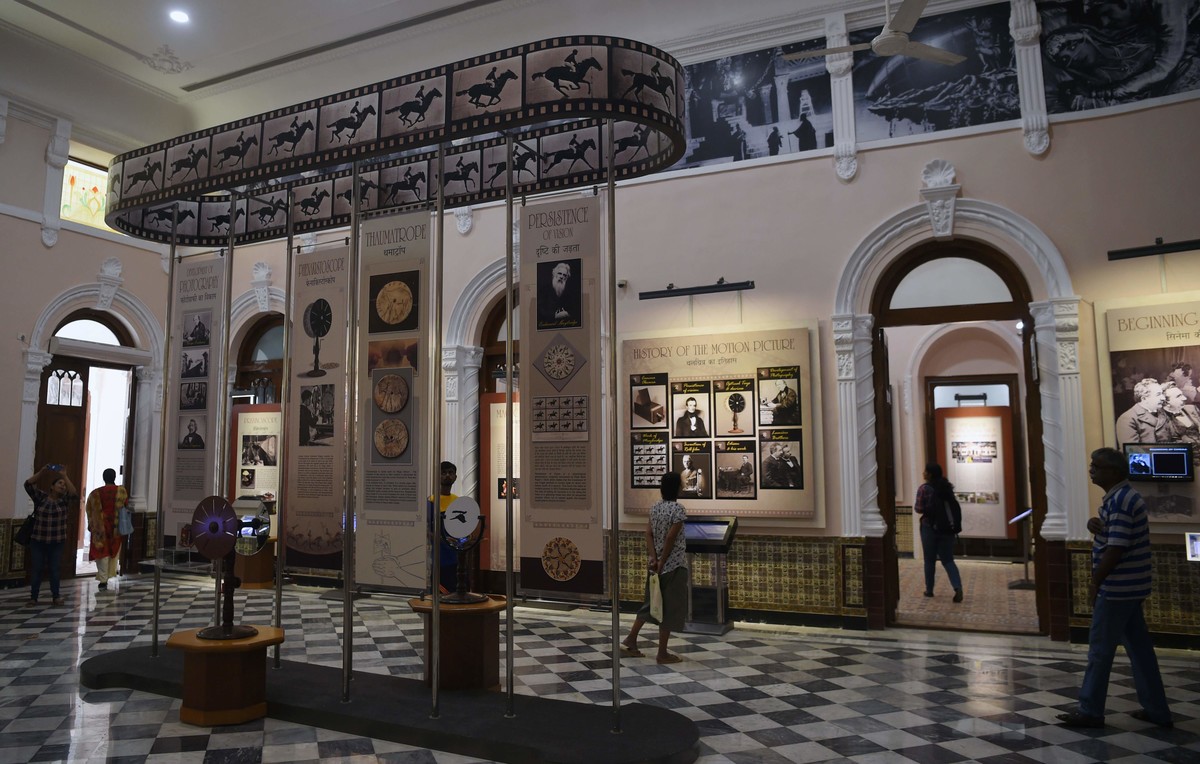
The new museum traces the evolution of Indian cinema, in the home of Bollywood in Mumbai. (AFP)
Updated 30 January 2019
Follow

First Indian film museum opens in home of Bollywood

  • Movie-mad India today produces around 1,500 films a year, dwarfing even Hollywood’s output
  • The government-funded museum boasts stacks of memorabilia, recordings and film-making tools as well as interactive touch screens

MUMBAI: From silent black-and-white films to colorful blockbusters bursting with song and dance, the evolution of Indian cinema is traced by a new museum in the home of Bollywood.
Costing 1.4 billion rupees ($19.6 million), India’s first national film museum is spread across a stylish 19th-century bungalow and a modern five-story glass structure in south Mumbai.
“It showcases to the world outside what Indian cinema has achieved in its entirety over more than 100 years,” Amrit Gangar, a consulting curator on the project, told AFP.
Movie-mad India today produces around 1,500 films a year, dwarfing even Hollywood’s output.


It is located in South Mumbai. (AFP)


The government-funded National Museum of Indian Cinema (NMIC) boasts stacks of memorabilia, recordings and film-making tools as well as interactive touch screens where visitors can watch clips from memorable movies.
Movie buffs can learn about India’s first full-length feature film, the 1913 Dadasaheb Phalke-directed “Raja Harishchandra,” and listen to recordings of K. L. Saigal, considered the first superstar of Hindi-language cinema.
They are also able to view hand-painted movie posters, including for internationally acclaimed director Satyajit Ray’s 1955 hit “Pather Panchali,” and click selfies beside a statue of Bollywood icon Raj Kapoor.
The museum takes visitors through “the journey of Indian cinema, from silent films to ‘talkies’ to the studio era to the new wave,” Prashant Pathrabe, director general of the Indian government’s film department, told AFP.
Bollywood is a nickname for the Hindi-language film industry that is based in Mumbai, formerly known as Bombay.
The museum celebrates not just Bollywood but also the movies made in the various regions and languages across India.
“Films are made in about 25 different regional languages in India and all are included here so that the entire country, irrespective of which part you come from, can enjoy this museum,” said Pathrabe.
The museum also hosts replicas of the Mutoscope, the camera used by the Lumiere Brothers, and the Praxinoscope — a spinning cylindrical animation device invented in France in the 1870s.
The idea for the museum was first mooted in 2006 and it was due to open in 2014 when the exhibition rooms housed in the 6,000 square foot heritage building were declared ready.
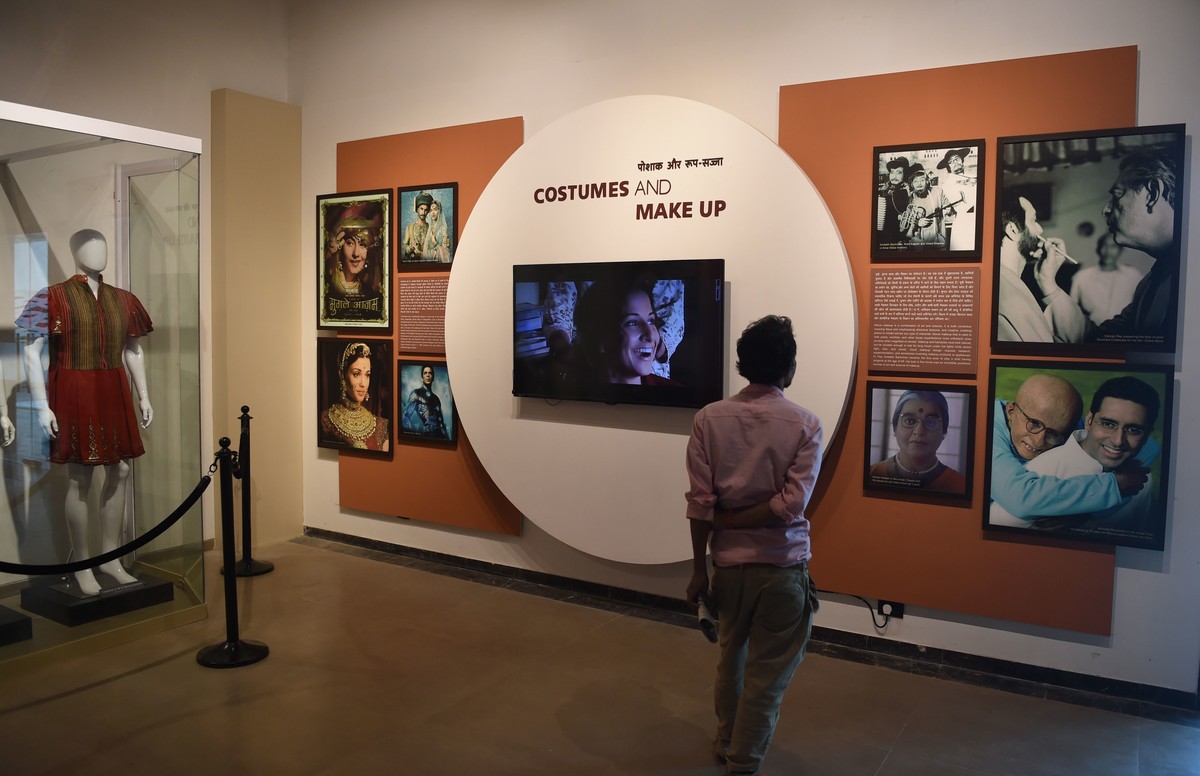


Visitors can learn more about the first ever Bollywood movie at the museum. (AFP)


However the opening was delayed after the government decided to build the new wing, which includes a section exploring the impact independence hero Mahatma Gandhi had on cinema around the world, including on Charlie Chaplin.
“This is the first time I have seen such a huge museum about cinema,” said Maria Jones, who had traveled from her home in the southern India state of Kerala, to visit the museum.
“I’m really happy and excited to see the history of Indian cinema until now. The different cameras have been fascinating for me. The first cameras were really huge,” she told AFP.
The museum does contain some gaps though as many of India’s early films were never preserved while other artefacts have been damaged over the years.
For example, the last remaining print of India’s first “talkie,” the 1931 “Alam Ara” (The Light of the World), was destroyed in a fire in 2003.
Still, officials expect the museum to be a hit with fans.
“It’s an education in cinema,” said Pathrabe.


Art Cairo spotlights pioneering artist Inji Efflatoun

Updated 23 January 2026
Follow

Art Cairo spotlights pioneering artist Inji Efflatoun

CAIRO: Art Cairo 2026 returned to Egypt’s bustling capital from Jan. 23-26, with visitors treated to gallery offerings from across the Middle East as well as a solo museum exhibition dedicated to pioneering Egyptian artist Inji Efflatoun.

While gallery booths hailed from across the Arab world, guests also had the chance to explore the oeuvre of the politically charged artist, who died in 1989.

Many of the pieces in the 14-work exhibition were drawn from the collection of the Egyptian Museum of Modern Art and cover four main periods of the artist’s work, including her Harvest, Motherhood, Prison and Knoll series.

While gallery booths hailed from across the Arab world, guests also had the chance to explore the oeuvre of the politically charged artist, who died in 1989. (Supplied)

Efflatoun was a pivotal figure in modern Egyptian art and is as well known for her work as her Marxist and feminist activism.

“This is the third year there is this collaboration between Art Cairo and the Ministry of Culture,” Noor Al-Askar, director of Art Cairo, told Arab News.

“This year we said Inji because (she) has a lot of work.”

Born in 1924 to an affluent, Ottoman-descended family in Cairo, Efflatoun rebelled against her background and took part heavily in communist organizations, with her artwork reflecting her abhorrence of social inequalities and her anti-colonial sentiments.

Many of the pieces in the 14-work exhibition were drawn from the collection of the Egyptian Museum of Modern Art and cover four main periods of the artist’s work, including her Harvest, Motherhood, Prison and Knoll series. (Supplied)

One untitled work on show is a barbed statement on social inequalities and motherhood, featuring a shrouded mother crouched low on the ground, working as she hugs and seemingly protects two infants between her legs.

The artist was a member of the influential Art et Liberte movement, a group of staunchly anti-imperialist artists and thinkers.

In 1959, Efflatoun was imprisoned under Gamal Abdel Nasser, the second president of Egypt. The artist served her sentence for four years across a number of women’s prisons in the deserts near Cairo — it was a period that heavily impacted her art, leading to her post-release “White Light” period, marked dynamic compositions and vibrant tones.

Grouped together, four of the exhibited works take inspiration from her time in prison, with powerful images of women stacked above each other in cell bunkbeds, with feminine bare legs at sharp odds with their surroundings.

Art Cairo 2026 returned to Egypt’s bustling capital from Jan. 23-26. (Supplied)

The bars of the prison cells obstruct the onlooker’s view, with harsh vertical bars juxtaposed against the monochrome stripes of the prison garb in some of her works on show.

“Modern art, Egyptian modern art, most people, they really don’t know it very well,” Al-Askar said, adding that there has been a recent uptick in interest across the Middle East, in the wake of a book on the artist by UAE art patron Sultan Sooud Al-Qassemi.

“So, without any reason, all the lights are now on Inji,” Al-Askar added.

Although it was not all-encompassing, Art Cairo’s spotlight on Efflatoun served as a powerful starting point for guests wishing to explore her artistic journey.