LAHORE: Last December, Pakistan’s passionate kite-flyers rejoiced when officials announced that the boisterous spring festival of Basant, banned almost a decade and a half ago, would be celebrated once more this February.
But their excitement was snuffed out last week when the government gave up on plans to organize the springtime celebration, admitting that it needed more time to clampdown on manufacturers who lace string with chemicals and glass that makes its deadly.
Ironically, it is Pakistan’s kite-makers who have lobbied the government not to lift the ban on the kite carnival.
Kite-flying has long been a passion in South Asia and for decades, Basant would transform Pakistan’s skies into a glittery kaleidoscope of hundreds of thousands of kites to commemorate the advent of spring. But in 2005, the Supreme Court banned the celebration after 19 people died from decapitation by stray strings. In that year alone, kites and string worth over Rs.1 billion were sold on Basant day just in the eastern city of Lahore, whose ancient walled enclave is the epicenter of the festival.
Many kite-flyers indulge in kite duels, flying with thick strings or razor-sharp ones reinforced with glass and chemicals so that they can better attack the opponent’s kites and slice their strings. Stray strings have been known to knock out power lines and in some cases tangle around a human neck or limb and cut it.
“The government came to me for recommendations about opening Basant and I told them that first there should be a crackdown against those who are producing the prohibited thread,” Muhammad Siddique Papa, who comes from a long line of famous kite-makers, told Arab News outside what used to be his kite shop in Lahore’s ancient Mochi Darwaza. The store is now a warehouse rented out to local businesses.
“This thread is unbreakable and cuts like a sword,” Papa said. “I had recommended that the government should not allow Basant unless the production of this dangerous thread can be controlled. That has so far proved very difficult.”
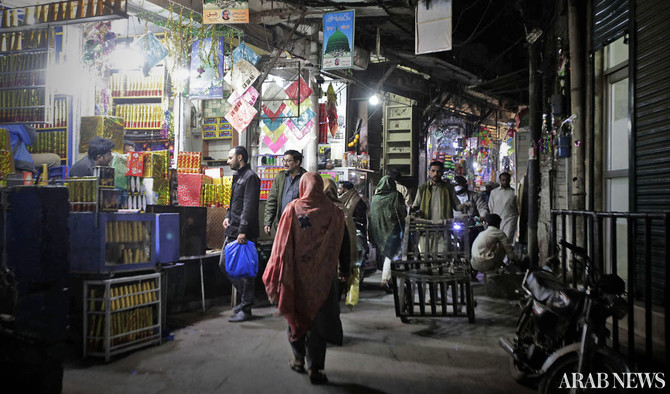
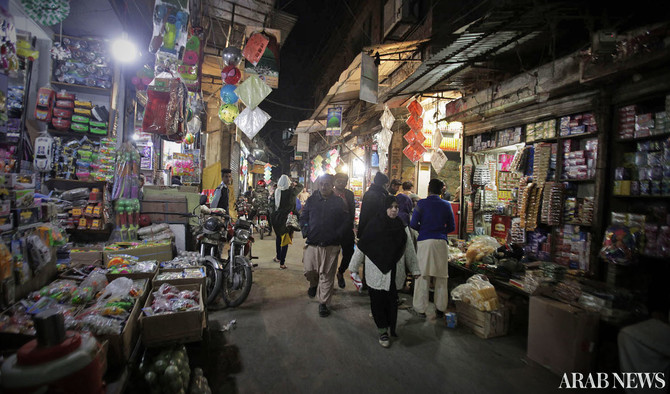
Mochi Darwaza used to be a block-long market of tiny kite shops but since 2005, many of the kite sellers have shut down their stores or moved to selling grocery and toys.
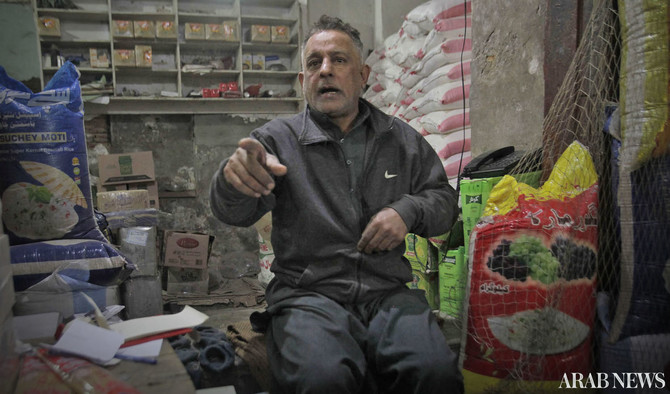
Imran Butt, a former kite maker who now owns a grocery store in the walled city, said he had also recommended to the government that the ban on the festival should not be lifted.
“The government cannot ban the killer strings because black sheep of the thread industry will keep producing it,” he said as he poured rice into a bag for a customer. “I would not want Basant to open for the next thousand years because the government can’t control string makers for the next thousand years. They don’t have the capacity.”
Punjab information Minister Fayyaz ul Hasan Chohan admitted that rogue string manufacturers were the problem and said they produced the dangerous string “underground” and were not easy to identify.
“Some incidents of throat-cutting by kite-flying have occurred in different parts of the province in recent weeks and we felt that we need to prepare well to celebrate Basant,” Chohan said. “Preparations require a comprehensive strategy including new legislation and further training of police, which would take months. That’s the reason we have shelved the plan of celebrating Basant this year.”
Last week, the government had announced that it needed at least four to six months to prepare for a “safe Basant” and develop a mechanism to register all kite and string manufacturers.
“Strict action is required against the use of chemical and metallic twine,” Aleem Khan, provincial minister for local government, had said during a press conference.
But thread manufacture Muhammad Munir defended his industry, saying thick thread was made for industrial purposes but some string-makers misused it.
“Most of them import nylon thread from China or develop it at their own small home-based factories,” he said, adding that the government needed to crackdown on manufacturers from the city of Faisalabad, a popular Basant destination, who produced the dangerous thread and supplied it to the rest of the country.
“We have arrested dozens of string producers, sellers and kite-flyers only during the last two months and burnt thousands of spools of the banned string and hundreds of kilograms of confiscated thread,” Rashid Mehmood, a senior police officer in the city of Faisalabad, said.
On Lahore’s famed Lawrence Road, Shahbaz Butt sat at the shop of his late father Pervaiz Ahmad Butt, a legendary kite-flyer who won the 1979 All Pakistan Kite-Flying Tournament at the iconic Minto Park. Every Friday for decades, the city’s kite aficionados would head to the park to see Butt duel his rivals from around the country, knocking their kites down to the ground by slicing through their string.
“After the government stopped kite-flying, my father became a victim of depression and anxiety; his food habits changed and he lived the rest of his life between his home and our store,” Butt’s son said. The sign-board outside the car battery shop is shaped like a kite. “I believe if kite-flying had not been banned,my father would have been alive today.”
Octogenarian Hafeez Butt, who flew kites for 55 years and won several contests, said it took him years to get over the Basant ban.
“Kite-flying is a sport but greedy traders and unprofessional flyers turned it into an ugly hobby,” he lamented. “String-sellers are a mafia and the government cannot do anything against them. They should go after them instead of depriving us. They need to lift this ban.”
But Khawaja Basharat, who used to be the president of the now disbanded Pakistan Kite-Sellers Association, said he was relieved the ban had been extended.
“Criminal elements producing thick and killer thread have given us [kite flyers and makers] a bad name,” he said.
“I welcome the government’s decision of not celebrating Basant until they can eliminate the thread mafia,” he added. “When the government contacted me for help in reviving Basant, I told them, ‘I am no longer in this business’.”


![]()
![]()
![]()
![]()
![]()
![]()
![]()
![]()

No-Kite-Fly Zone: Pakistan’s kite-makers pushed to have Basant canceled




No-Kite-Fly Zone: Pakistan’s kite-makers pushed to have Basant canceled
- Festival too dangerous until government can crackdown on manufacturers of knife-sharp strings, say kite-makers
- Basant was banned by the Supreme Court in 2005 after stray strings killed 19 people
Latest updates



Recommended


© 2026 SAUDI RESEARCH & PUBLISHING COMPANY, All Rights Reserved And subject to Terms of Use Agreement.