

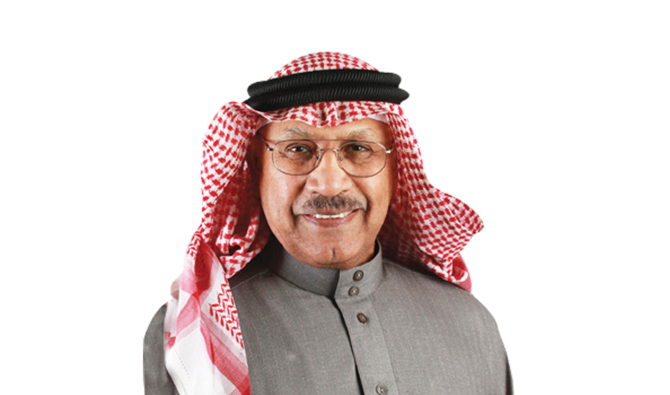
FaceOf: Abdallah S. Jum’ah, chairman of the Saudi Investment Bank

Abdallah S. Jum’ah
Updated 23 January 2019
Follow

FaceOf: Abdallah S. Jum’ah, chairman of the Saudi Investment Bank

  • Jum’ah worldwide business experience includes former memberships of JPMorgan Chase International Council and Halliburton’s board of directors
  • Jum’ah has been on the board of trustees at the American University in Cairo since 1998

Abdallah S. Jum’ah is co-chair of the US-Saudi Arabian Business Council (USSABC) and has been chairman of the Saudi Investment Bank since 2010.

He was CEO of Saudi Aramco between 1995 and 2008 and, in 2003, was selected by Fortune magazine as one of the most influential business people in the world.

Jum’ah has been on the board of trustees at the American University in Cairo since 1998, also serving as vice chairman of the international advisory board at King Fahd University of Petroleum and Minerals between 2007 and 2009. He was patron of the IFP School, Paris, for one academic year.

His worldwide business experience includes former memberships of JPMorgan Chase International Council and Halliburton’s board of directors.

Jum’ah is also a former member of the International Business Council of the World Economic Forum (WEF). He was appointed energy community leader by the WEF in 2005.

He holds a bachelor’s in political science from the American University of Beirut, and completed a management development program at Harvard Business School while working for Saudi Aramco.

Jum’ah was awarded an honorary doctorate by Seoul’s Hankuk University of Foreign Studies in 2007.

A report published earlier this month by the USSABC said the Kingdom’s defense sector would experience strong growth over the next decade and that it would contribute SR231.27 billion ($61.6 billion) to the national gross domestic product by 2020.


Al Akaria signs SR1.2bn agreement lease with Amsa Hospitality 

Updated 25 February 2026
Follow

Al Akaria signs SR1.2bn agreement lease with Amsa Hospitality 

  • Project, located in Riyadh Diplomatic Quarters, spans approximately 40,000 sq. meters and includes 240 modern residential units, comprising 176 apartments and 64 villas and townhouses
  • CEO of Amsa Hospitality Muin Serhan: We have a certain commitment to deliver to the community and to the project in particular

RIYADH: The Saudi Real Estate Co., also known as Al Akaria, recently announced the signing of a lease agreement for the Amsa Vue Residential Compound in Riyadh with Amsa Hospitality, with the total value of the project estimated at around SR1.2 billion ($320 million). 

Spread across 20 years, the cost reflects the long-term nature of the investment and its focus on value, sustainability, and operational quality.

The project, located in Riyadh Diplomatic Quarters, spans approximately 40,000 sq. meters and includes 240 modern residential units, comprising 176 apartments and 64 villas and townhouses.

Acting CEO of Al Akaria Khalid Al-Sehaibany stated that the project embodies the company’s approach to developing residential communities that focus on an integrated experience built on quality planning and comprehensive facilities, elevating the standard of living in Riyadh.

CEO of Amsa Hospitality Muin Serhan told Arab News that the core philosophy behind the project is to create a space that focuses both on individuals and community values. 

Serhan pointed out that this strategy is central to a broader ambition to redefine hospitality in Saudi Arabia by embedding the hallmark of Arabian hospitality into the brand’s identity.

“We have a certain commitment to deliver to the community and to the project in particular. Year on year, we're adding value to the landlord and the owners of the assets,” he said. 

He outlined a clear vision for the company’s legacy, aiming to set a new standard for hospitality management in the region. The goal, he said, is to be the go-to partner for developers and asset owners seeking to integrate hospitality elements into their projects.

Serhan confirmed that this vision is currently being brought to life through close collaboration with contractors and designers. 

He emphasized that the process is a “moving journey,” where the designer, the brand, and the location converge to create a product that truly reflects the local narrative.