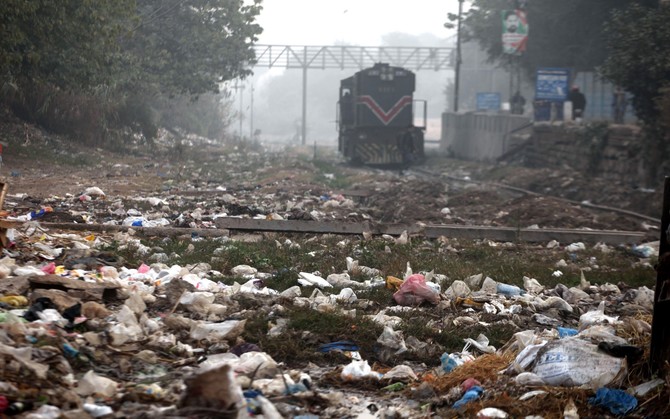
PESHAWAR: Authorities in Peshawar, the capital of the northwestern Khyber Pakhtunkhwa province, have banned the use of throw-away, single-use plastic bags by malls and pharmacies and will replace them with bio-degradable plastic and paper bags in an attempt to tackle plastic pollution.
In a recent executive order, the Deputy Commissioner’s office announced a ban on the use of the plastic bags and starting January 15, malls have seven days and pharmacies fifteen to completely stop using polythene bags, and replace them with more environmental friendly options.
More than 60 countries now have bans or taxes on single-use plastics, according to the United Nations, which has called for such measures to stem the tide of pollution.
Additional Deputy Commissioner Shahid Ali Khan told Arab News the executive order had come after extensive discussions with malls, medical stores, and plastic producing factories.
“Many shopping malls in Peshawar have already shifted to bio-degradable plastic bags,” Khan said. “However, those that are still delaying the shift will soon have to give up using ordinary plastic as the district administration has clearly mentioned that any stocks of the hazardous plastic shopping bags will be seized after the deadline.”
Khan said plastic producing factories had also been told to shift to producing bio-degradable plastic: “The factories are in a process of making the shift, but they will need more time as it requires updating their factories. Within six months to one year, we will have most of the factories producing bio-degradable plastic.”
Owners of medical stores and malls in Peshawar said the government’s deadline was too short to make a switch and most had stocks of up to three months.
Muhammad Zohaib, a store manager in the University Town area, said it would be hard for many people to completely stop using plastic bags in two weeks: “We have a stock of plastic bags for two months which cost us 300,000 rupees. The factory will not take back our stock as we have our logos printed on them all.”
Medical store owner Abdul Wahab said the government should compensate shop owners by providing them with bio-degradable plastic bags or allow them to utilize existing stocks. He also urged the government to ensure the quality of the bio-degradable plastic bags available in the market.
However, ADC Khan said the government would not compensate for the discarded plastic bags as the owners of malls and medical stores had been repeatedly informed that they would soon be phased out.
Pakistan is facing a serious climate change challenge and the government of Pakistan is trying to take measures to counter the damage through bodies like the Environment Protection Agency.
“Plastic is hazardous in any form. It has a life cycle of more than a hundred years,” said Afsar Khan, Deputy Director of Climate Change at the environment ministry. “Bio-degradable plastic bags completely decay in 6 months or a little more. Pakistan has to strengthen its legislation about the recycling of plastic. We have to follow the Reduce, Reuse and Recycle rules to safeguard our future.”


![]()
![]()
![]()

Pakistan’s Peshawar city to phase out plastic bags within two weeks

Pakistan’s Peshawar city to phase out plastic bags within two weeks
- Malls have seven, pharmacies fifteen days to phase out polythene bags
- Businesses say government deadline is too short
Latest updates




© 2026 SAUDI RESEARCH & PUBLISHING COMPANY, All Rights Reserved And subject to Terms of Use Agreement.