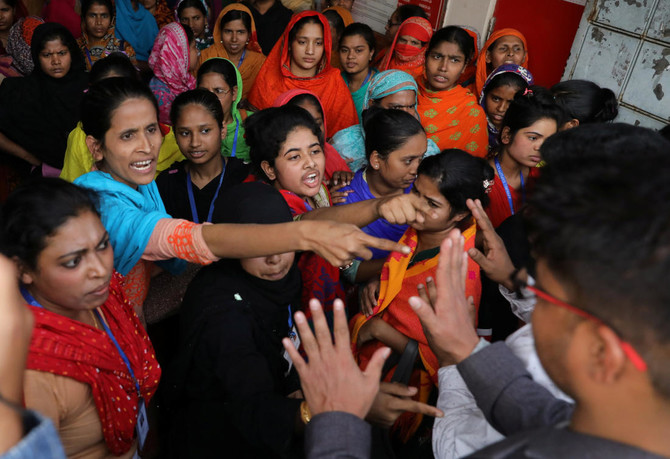
DHAKA: Thousands of Bangladeshi garment workers churning out clothes for top global brands walked off the job Sunday and clashed with police as protests over low wages entered a second week.
Police said water cannons and tear gas were fired to disperse huge crowds of striking factory workers in Savar, a garment hub just outside the capital Dhaka.
Bangladesh is dependant on garments stitched by millions of low-paid tailors on factory floors across the emerging South Asia economy of 165 million people.
Roughly 80 percent of its export earnings come from clothing sales abroad, with global retailers H&M, Primark, Walmart, Tesco and Aldi among the main buyers.
The protests are the first major test for Prime Minister Sheikh Hasina since winning a fourth term in December 30 elections marred by violence, thousands of arrests and allegations of vote rigging and intimidation.
Garment workers have been demanding a wage rise, closing factories in the past seven days and taking to the streets in huge marches that have witnessed violence.
“The workers barricaded the highway, we had to drive them away to ease traffic conditions,” industrial police director Sana Shaminur Rahman told AFP about Sunday’s strike action.
“So far 52 factories, including some big ones, have shut down operations due to the protests.”
Union leader Aminul Islam blamed factory owners for resorting to violence to control striking workers.
“But they are more united than ever,” he told AFP. “It doesn’t seem like they will leave the streets, until their demands are met.”
Minimum wages for the lowest-paid garment workers rose by a little over 50 percent this month to 8,000 taka ($95) per month.
But mid-tier tailors say their rise was paltry and fails to reflect the rising costs of living, especially in housing.
Bangladesh’s 4,500 textile and clothing factories shipped more than $30 billion worth of apparel last year.
The Bangladesh Garment Manufacturers and Exporters’ Association, which wields huge political influence, warned all factories might be shut if tailors do not return to work immediately.
“We may follow the ‘no work, no pay’ theory, according to the labor law,” association president Siddikur Rahman told reporters.
Last year Bangladesh was the second-largest global apparel exporter after China. It has ambitious plans to expand the sector into a $50 billion a year industry by 2023.
But despite their role in transforming the impoverished nation into a major manufacturing hub, garment workers remain some of the lowest paid in the world.
The industry also has a poor workplace safety record.
The Rana Plaza garment factory collapse in 2013 killed more than 1,130 people in one of the world’s worst industrial accidents.
Following the disaster, major retailers formed two groups to introduce factory reforms. The Bangladesh Garment Manufacturers and Exporters’ Association says its members have since invested $1 billion in safety upgrades.


![]()
![]()
![]()
![]()

Bangladesh garment workers clash with police as strikes roll on


Bangladesh garment workers clash with police as strikes roll on
- Bangladesh is dependant on garments stitched by millions of low-paid tailors on factory floors across the emerging South Asia economy of 165 million people
- The protests are the first major test for Prime Minister Sheikh Hasina since winning a fourth term in December 30 elections marred by violence


Latest updates


© 2026 SAUDI RESEARCH & PUBLISHING COMPANY, All Rights Reserved And subject to Terms of Use Agreement.