MAKKAH: Osama Al-Dughairi, a young Saudi in his 20s, is an animal lover to the core. His love for animals could be gauged through the fact that he has transformed his house and farm in Buraidah into a small zoo containing a variety of animals.
His collection includes animals such as bears, crocodiles, lions, tigers and monkeys. The animal enthusiast wishes to establish a zoo for people to see the various inhabitants of the animal kingdom living in better conditions and receiving proper care.
The young Saudi said love for animals runs in his family. “Some other members of my family share my passion,” he said.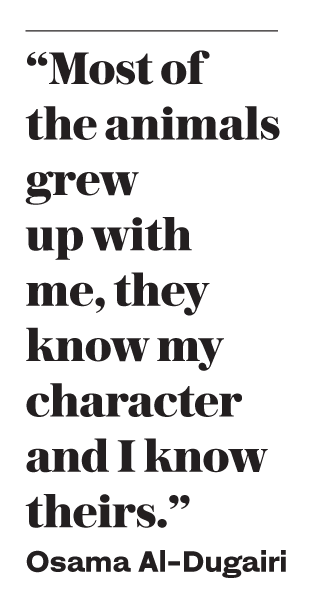
Al-Dughairi said his family’s support encouraged him to continue his passion and increase the number of animals at his farm.
“I have a collection of lions, snakes, bears, Siberian tigers and Bengali cheetahs. Most of the animals grew up with me, they know my character and I know theirs,” Al-Dughairi said.
“I wish to establish a complete safari and I want to get an official permit in this regard,” he said. The Saudi man wants his dream project to be an attraction for domestic and foreign tourists. He firmly believes that the expertise he has acquired over time could be of great use to the Kingdom’s wildlife authorities. He has different ideas to share with the authorities to help increase the dwindling population of Arabian leopards and sand wolves.
The size of leopards’ habitat in Saudi Arabia has shrunk by 90 percent since the 19th century, according to an environmental study.
There are only 100-250 leopards living in various parts of the Arabian Peninsula, said Dr. Ahmad Al-Bouq, a former spokesman of the Saudi Wildlife Authority.
Leopards in the Kingdom are threatened by people killing them, hunting their prey and destroying their habitats, he added.
Al-Dughairi said: “Animals seek to live in environments where they are cared for constantly.”
“The feeding budget for most animals is huge. A lion needs up to 14 kilograms every day,” he said. “I will try to contact sponsors as soon as an official permit is issued.”
Al-Dughairi called on all those wishing to raise animals not to do so without having sufficient knowledge. He said at times it is perilous to enter the cages of predatory animals. “Their temper and head and tail movements need to be closely observed,” he cautioned.


![]()

Saudi with beautiful collection of beasts wants to develop his animal kingdom into a zoo
Saudi with beautiful collection of beasts wants to develop his animal kingdom into a zoo
- There are only 100-250 leopards living in various parts of the Arabian Peninsula, said Dr. Ahmad Al-Bouq, a former spokesman of the Saudi Wildlife Authority


Latest updates





© 2026 SAUDI RESEARCH & PUBLISHING COMPANY, All Rights Reserved And subject to Terms of Use Agreement.