


DUBAI: Some time in the summer of 2014, having spent days watching news coverage of the Israel-Gaza conflict, Dana Al-Sadek made a decision.
“I knew that there was more to be celebrated in terms of Palestinian culture than just seeing war all the time,” she tells Arab News. “At that time, I was already working on film programming in my day job, so I thought why not pool my resources together to try and organize a series of screenings of Palestinian movies.”
Through mutual friends, Al-Sadek was connected to a couple of like-minded women, Noora Husseini and Nadia Rouchdy. The three met, brainstormed some ideas, and came up with a pop-up film festival they called Reel Palestine with the aim, according to the website, “of showing Palestinian culture and tenacity through film, submerging viewers in the beautiful, difficult, emotional, and inspirational moments that occur during occupation.”
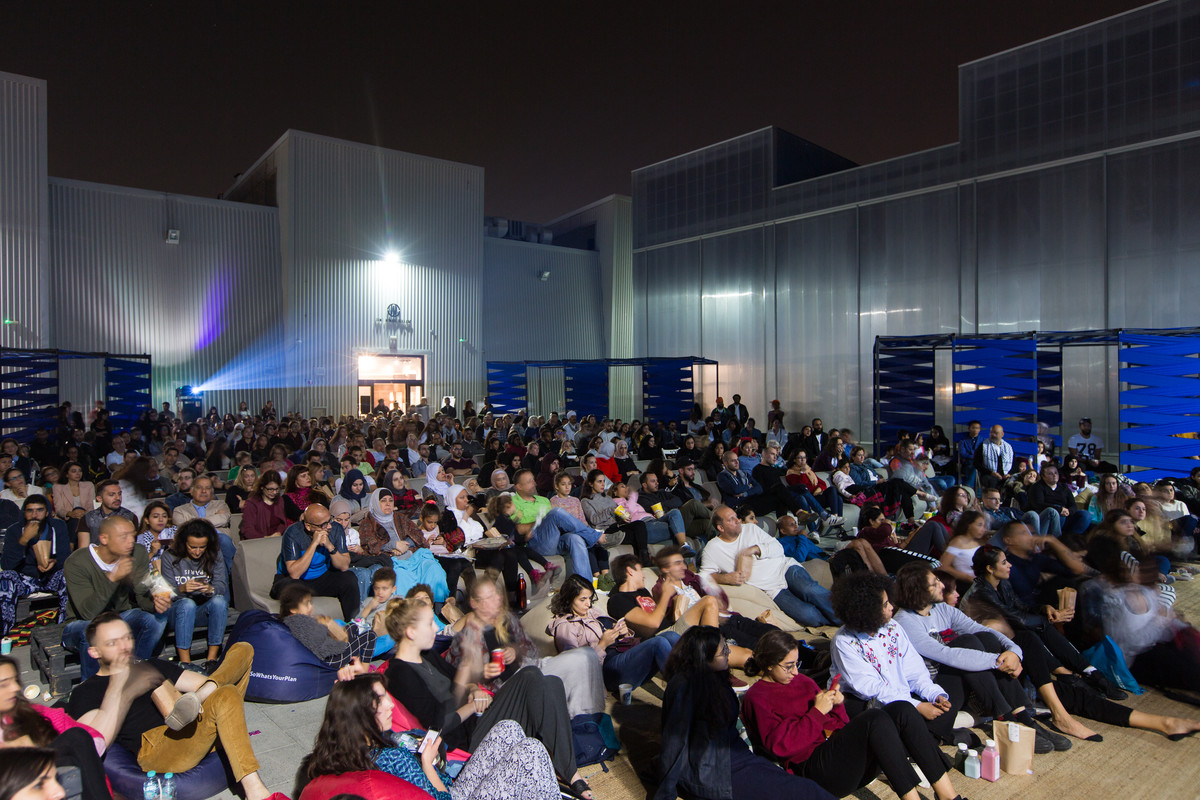
The fifth edition of Reel Palestine takes place in Dubai from January 18-26. Al-Sadek seems slightly — and pleasantly — surprised that it’s come this far. The 2019 edition will be the first to be ticketed.
“It’s really grown organically,” she says. “We never really envisaged it being ticketed, but things have been changing as we’ve grown. We need to do in order to cover our costs and be sustainable. Before we used to try and get film fees waived, but that’s very hard right now, and at the same time we really want to be able to support filmmakers and be able to pay them royalty fees. And we also want to show the films in the best quality set up possible, with the best-quality projection.”
The festival’s long-term partner, Cinema Akil, recently opened its permanent premises in Al Serkal Avenue — becoming the region’s first arthouse cinema. So it was an obvious choice for this month’s screenings. The festival will also include a Palestinian arts and crafts market in Al Serkal.
Another sign of Reel Palestine’s growth is that Al-Sadek says they now get hopeful filmmakers emailing submissions to them on a regular basis — in addition to the research the team does themselves to find movies to screen.
While the festival may have grown significantly in stature since its small-scale debut, the mission has remained consistent.
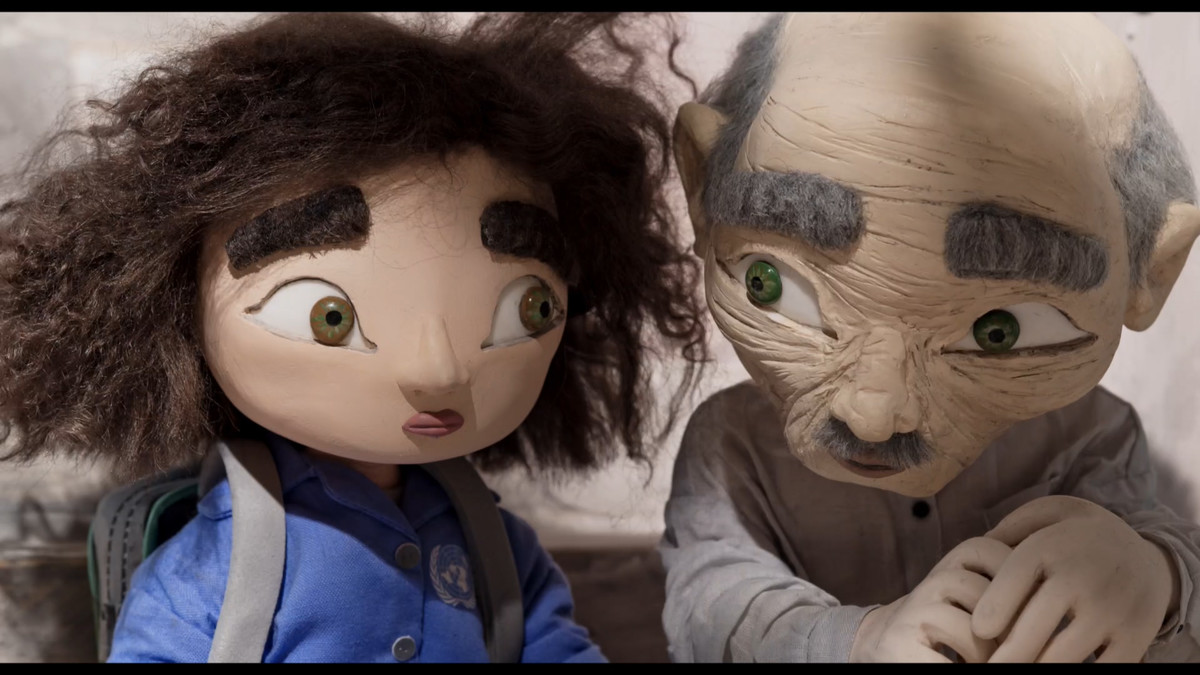
A still from the film 'The Tower.' (Supplied)
“The mission was always to show Palestinian stories — narratives; to show life under occupation,” Al-Sadek says. “But also to show the beauty and rich heritage to give people a view of more than what we see on the news.
“It’s a country rich in history. There’s been cinema there for a very long time. There’s been a lot of Palestinian films made, pre-1942 and 1948. It’s always been there. It’s a country that has so much history. It’s an important region.”
Al-Sadek stresses that the festival has a cultural, rather than political, agenda, but recognizes that a large portion of art — of any kind — created in or about Palestine has a political element.
“The occupation is ongoing, and there’s a need to voice that. Land has been confiscated, our landscape’s changing, demographically everything’s changing, so it’s about not forgetting our history and identity. Not to forget the people there, who can’t even leave — and if they do get a chance to leave, maybe they can’t come back,” she says. “Of course, there’s a huge diaspora as well, and they can relate to the films. A lot of the topics are, unfortunately, not just related to Palestinians right now. They’re related to refugees from all over the world.
“Obviously there’s a need,” she continues. “There’s a need to speak out about oppression, the occupation, injustice, and people feel solidarity with that. That’s why there’s support for these sort of festivals.”
That support — for festivals and for the Palestinian cause in general — has been increasing internationally over the past decade or so, and this year, Al-Sadek notes (although she says it’s a coincidence rather than a conscious decision on her team’s part), many of the documentaries included in the festival’s bill are directed by non-Arabs. “It’s interesting. They’re fascinated by what’s happening and think it’s a story that needs to be told.”
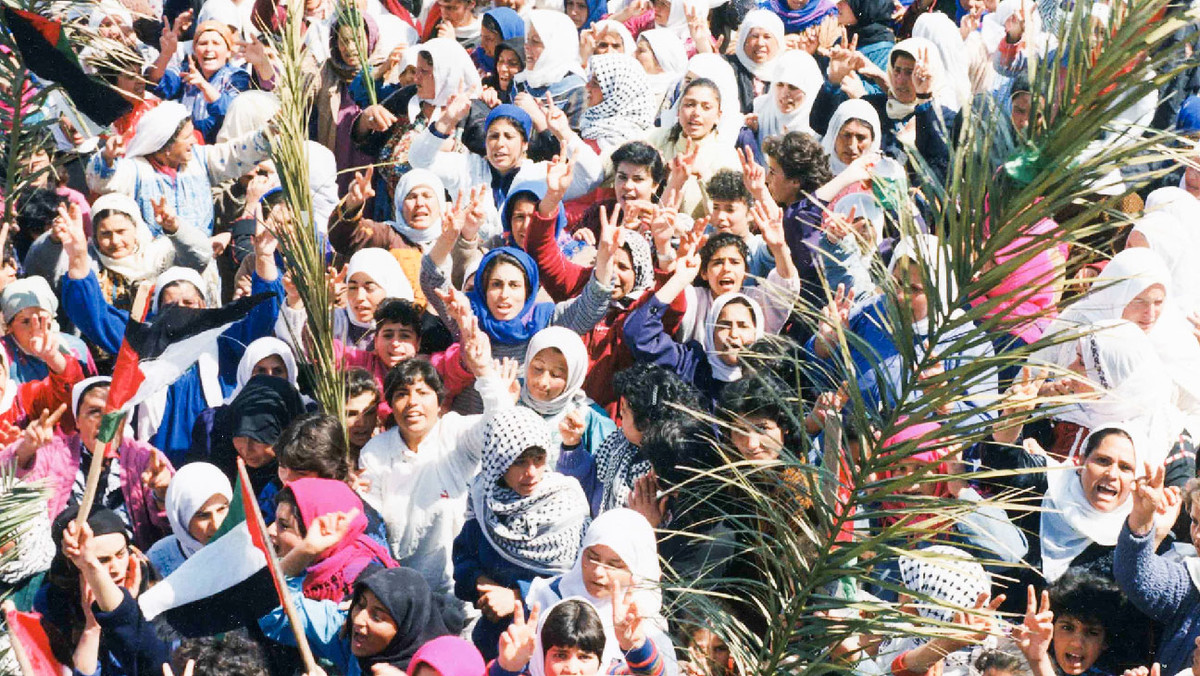
An image from the film ' Naila and the Uprising.' (Supplied)
As they do every year, Al-Sadek and her co-organizers have tried to make sure there’s a wide range of stories included, covering different aspects of Palestinian life.
“We try to make sure there’s variety and we also try to add conceptual art films as well. For example, we have a documentary called ‘White Oil,’ which was done by a photography professor based in the UK. It’s beautiful imagery, and it’s more conceptual than narrative. It doesn’t have much voiceover. It’s more about the imagery giving you a sense of the story.
“We’re covering topics such as female empowerment,” she continues. “We have ‘What Walaa Wants,’ which is a documentary about a woman who wants to join the Palestinian Security Forces. We have ‘Naila and the Uprising,’ which is a story about a very strong lady who tried to stand up for (the right to self-determination).”
There are films, too, about joy, celebration and release under occupation. “In one of the documentary’s we’re screening, called ‘WALL,’ they cover the nightlife scene and how it was a place where people would forget the chaos and just be together, regardless of which side they were on or which area they were coming from,” Al-Sadek says. “And it shows you how one terrorist attack in a club kind of triggered the formation of the wall.
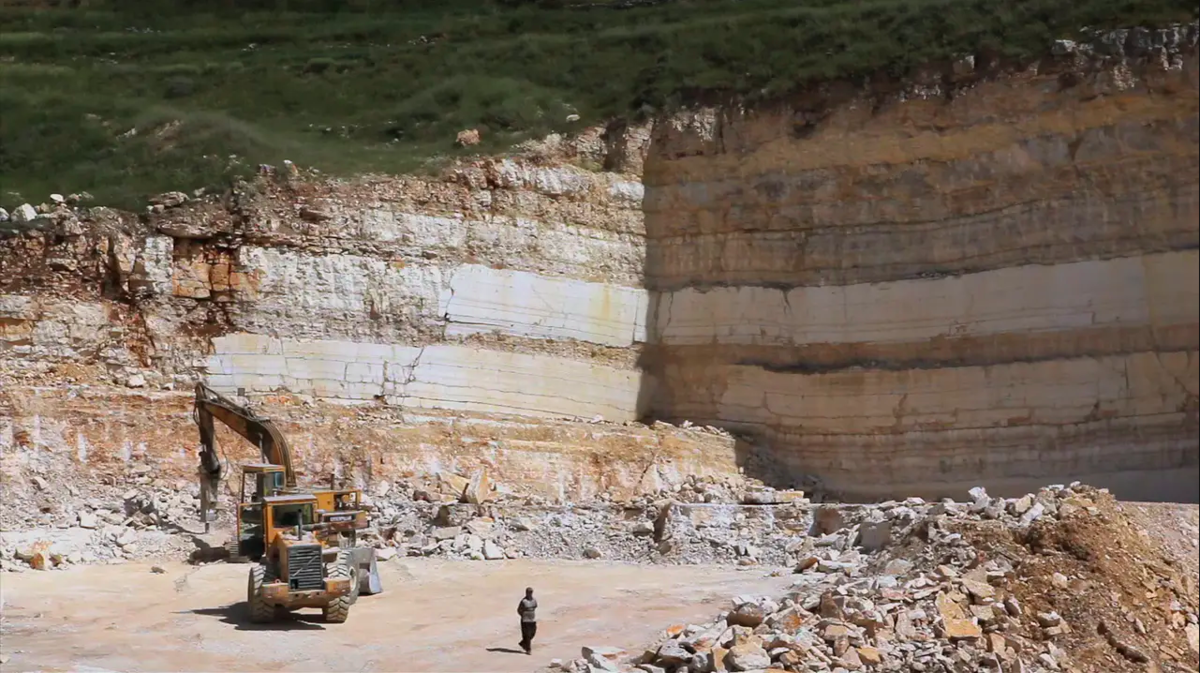
A still from the film 'White Oil.' (Supplied)
“Last year we screened a film called ‘Beneath the Earth,’ which is going to be made into a full-length feature about the music scenes within Palestine, and once we screened a film about mystical folklore across Palestine and it showed the different religions that had formed there and their music. There are so many different communities there and they have their different traditions as well.”
This year, there’s also a ‘family friendly’ movie showing, she adds. “The Tower,” by Norwegian filmmaker Mats Grorud, is an animated feature about one of the largest refugee camps in Lebanon. Screenings will be held during the daytime so that children can attend.
For all its admirable ambitions of spreading awareness of Palestinian heritage and of life under occupation, Reel Palestine still has a very personal benefit for Al-Sadek — one that will probably resonate with many visitors to the festival.
“I’ve never been to Palestine, and neither has my dad,” she explains. “I’m the second-generation to be born outside of Palestine, and I felt like I didn’t really know much about my heritage — whether that be food, accents, (colloquial) language and sayings, different dialects… I wasn’t aware of a lot of these things. And I’ve been able to learn about them through films.”
Five years on, she continues to learn.


