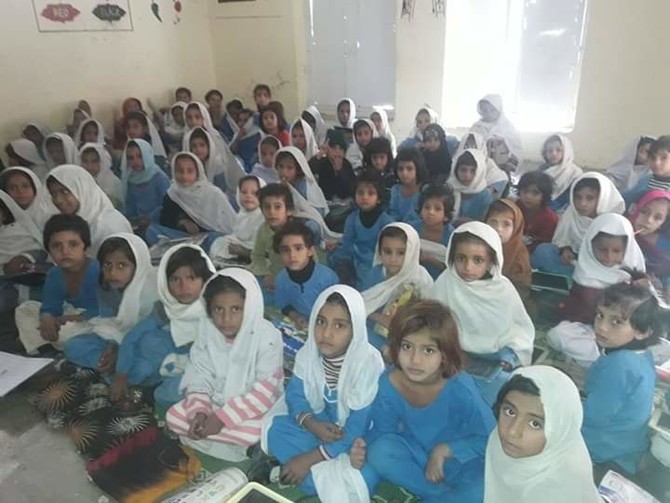
PESHAWAR: At 12.7 percent, the literacy rate among girls and women in the newly-merged tribal districts of Pakistan is discouragingly low and presents a bleak picture of education in the region, educators and officials said on Thursday.
Add to that the lack of residential and other facilities for women teachers in the Federally Administered Tribal Areas (FATA), and the problem increases manifold.
However, Khyber Pakhtunkhwa’s (KP) Education Minister, Ziaullah Bangash reasoned with Arab News that the tribal areas have just been merged with KP and that his government has inclusive plans to support women teachers working in the region. “We have plans to establish a separate directorate for female teachers in tribal districts to specifically focus on their issues. We will offer additional allowances and incentives to female teachers working in remote stations,” he added.
Dr. Rukhsana Aziz Wazir, assistant director at the Directorate of Education (DoE) in KP said that complaints about women teachers — not discharging their duties in FATA — were rampant.
“Female teachers work in the tribal areas’ schools in a tough environment. Yes, there are cases of habitual absenteeism among female teachers but the government is striving to ensure the provision of all facilities to teachers there,” she said, adding issues such as lack of residential facilities and basic amenities, such as electricity, acted as an additional impediment.
“The installations of solar panels at the girls’ schools in the tribal districts will help resolve the electricity issue,” Wazir said.
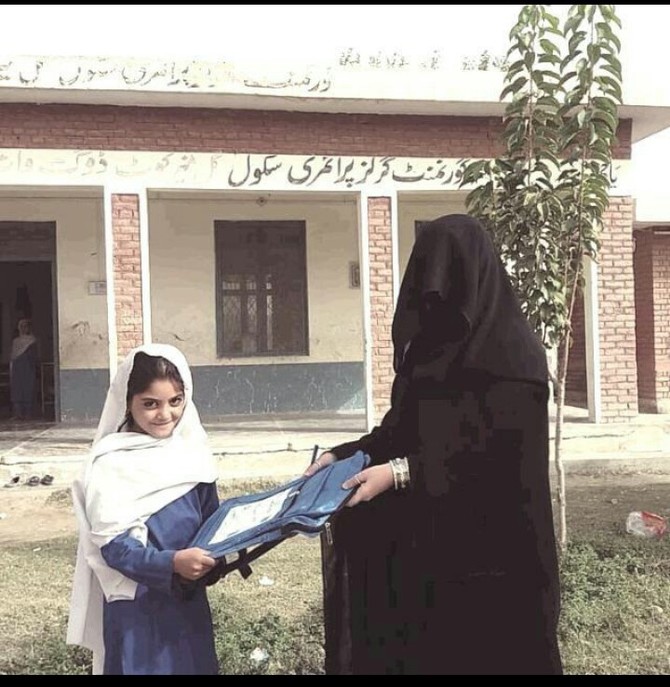
Gul Rukh Wazir, a computer programmer at the DoE in KP, said that a total of 1,030 women teachers worked in the girls’ schools across the area. A school teacher, who wished to remain anonymous fearing a backlash from the community, said that she had spent more than one year at a girls’ school in the North Waziristan tribal district where she had to live with the school’s owner due to the absence of a residential facility. “We are in dire need of residential facilities, [and basic amenities such as] clean drinking water, a proper toilet system, and security while working in remote schools,” she said.
Gul Rukh added that the 1,030 teachers were hired from other districts of KP, which is difficult for them as they are residing at duty stations due to a lack of proper housing facilities.
According to data reviewed by Arab News, at least 61 teachers are working in Bajaur, 133 in Mohmand, 150 in Khyber, 65 in the Frontier Region (FR) of Peshawar, 128 in FR Kohat, 81 in Orakzai, 30 in Kurram, 70 in FR Bannu, 39 in FR Lakki, 124 in North Waziristan, 99 in South Waziristan, 13 in FR Tank, and 37 in FR Dera Ismail Khan. All these teachers are from other districts of the province.
When contacted by Arab News, several of the teachers complained that they could not ensure regular attendance due to the non-availability of residential facilities in the areas where they have been stationed to teach.
A previous report filed by KP’s DoE also presented a dismal picture of education in the tribal region. The report, compiled by the Education Management and Information System (EMIS), said that the literacy rate in the tribal areas was 33.3 percent (with 49.7 percent men and 12.7 percent women).
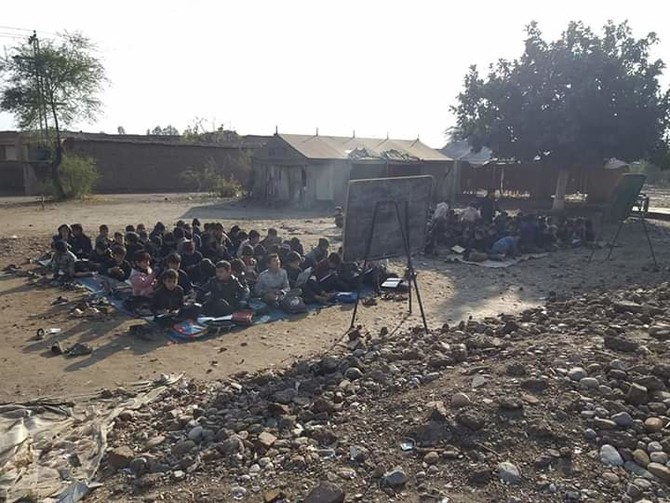
The report added that only 45.2 percent of the schools have a drinking water facility, 43 percent have electricity, 45 percent have toilets, while 70 percent have boundary walls.
When contacted, Khan Malik, former president of the FATA Teachers Association, said that the education-related issues — including the low literacy rate among girls and women — were extremely tragic developments which could have a far-reaching negative impact on the region in the long-run.
He added that after the merger with KP, the government should expedite efforts to bring the vital education sector back on track.
Offering viable solutions to the main issues faced by the teachers, he said that the government should ensure that the owner of the school is responsible for providing housing and food, or build a community residential facility for the teachers, or post them at a station which is closest to their area of residence.
“Without introducing drastic reforms and changes, the girls’ literacy rate tends to show a downward trend,” he warned.
The education minister said that the Pakistan Tehreek-e-Insaf government is adopting several measures and would leave no stone unturned in improving the overall literacy rate in the tribal areas.
“We are assessing the ground realities and simultaneously taking steps to remove the bottlenecks in the education sector,” he noted.


![]()
![]()
![]()
![]()
![]()
![]()
![]()

Women teachers in tribal areas put to test due to lack of amenities



Women teachers in tribal areas put to test due to lack of amenities
- Questionable number of educators main reason for region’s 12.7% literacy rate
- KP government to take up several measures to address the problem
Latest updates


© 2026 SAUDI RESEARCH & PUBLISHING COMPANY, All Rights Reserved And subject to Terms of Use Agreement.