ISLAMABAD: Social media users had just stepped away from their keyboards after reacting to Pakistan Electronic Media Regulatory Authority’s (Pemra) latest memo for TV channels when the Chief Justice of Pakistan, Mian Saqib Nisar, announced that the ban on Indian content will not be lifted.
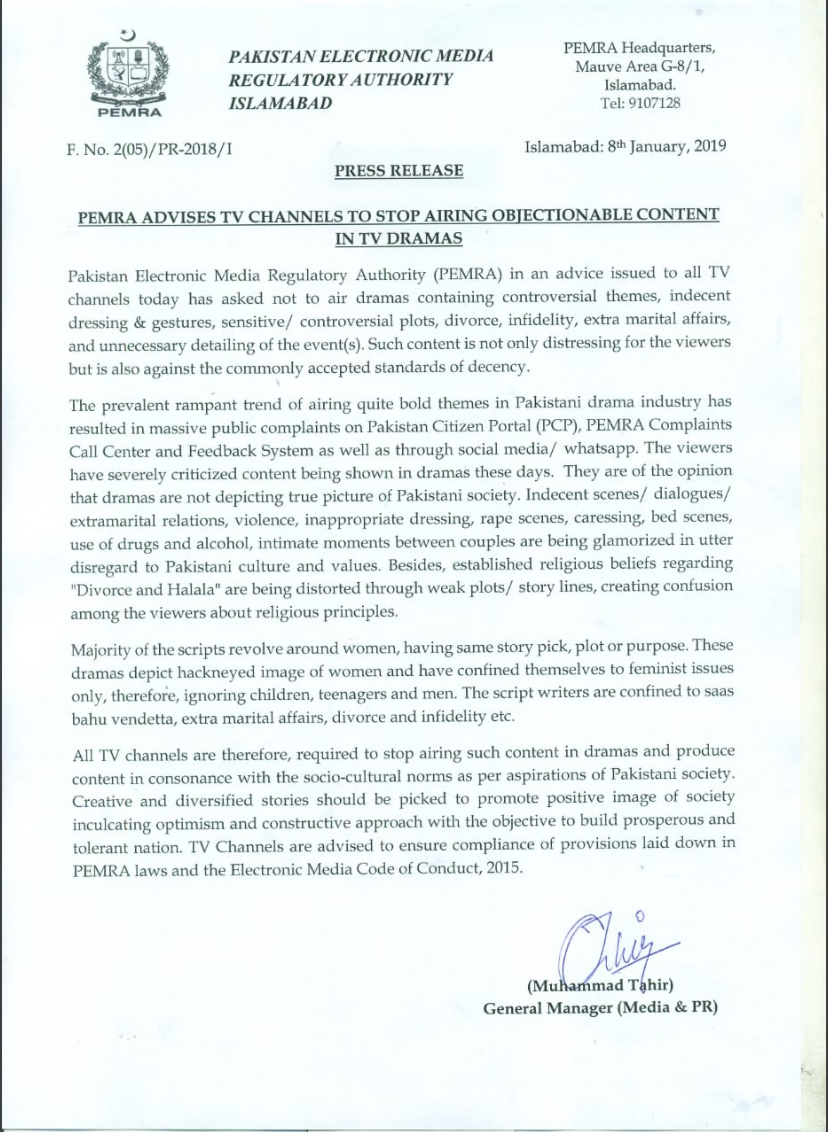
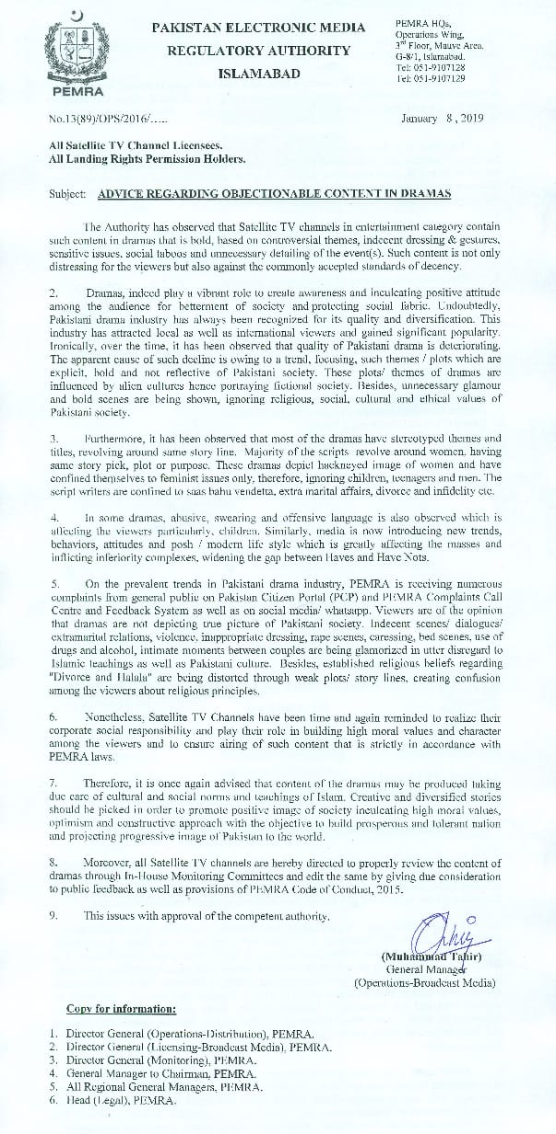
Pemra’s memo, which urged TV channels to change their storylines in order to do away with immoral and ‘alien’ cultures, follows its appeal against the high court’s decision to ban Indian content in Pakistan — a ruling that the Supreme Court’s three-member bench decided to uphold, based on a decision taken in February.
Singling out TV channel Filmazia in particular, Justice Nisar said that while his decision was not directed at all Indian content, “it is however, damaging our culture” — a claim which mirrors Pemra’s action on Pakistani dramas.
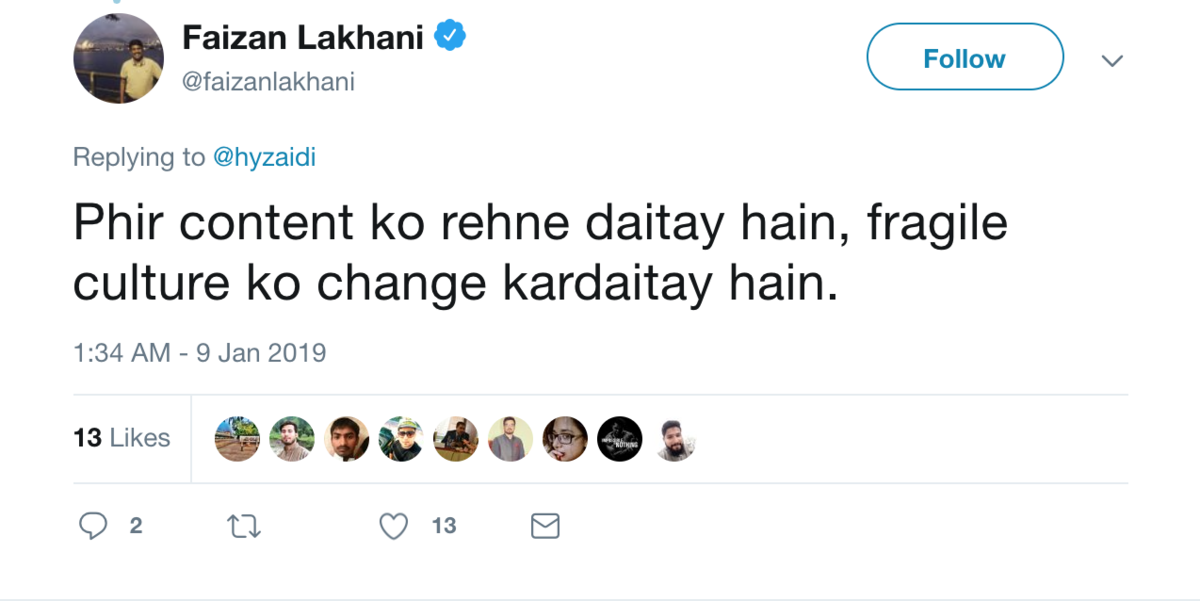
Twitterati in Pakistan responded in droves, with some reasoning that if our culture was so fragile to be at risk then, maybe, it was time to change our cultural practices instead of TV content.
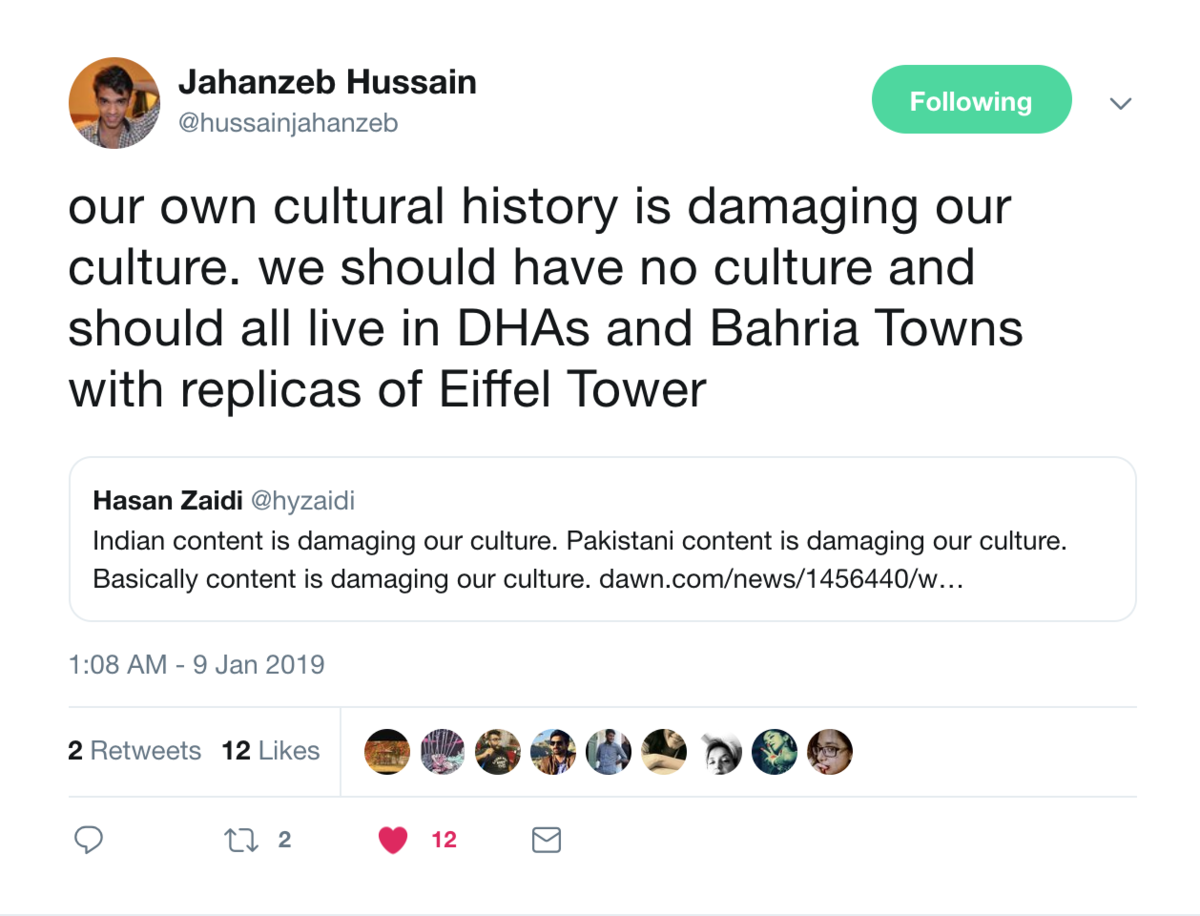
Pemra’s memo left some scratching their heads in bewilderment, while others applauded the decision.
With Pakistani dramas gaining an international foothold — and some taking up digital space on popular streaming services such as Netflix — Pemra said that the ‘deteriorating’ nature of the dramas was a cause for concern.
“Channels contain such content in dramas that is bold, based on controversial themes, indecent dressing & gestures, sensitive issues, social taboos, and unnecessary detailing of the events,” Pemra’s memo reads begins.
It added that such content is not only “distressing for the viewers but also against the commonly accepted standards of decency.”
Several Twitter users were in agreement, particularly storylines which focused on women attacking women.
Others noted that Pemra needed to take a harsher stance on the issue, instead of simply issuing a notice.
The memo garnered more than 600 likes and was retweeted more than 200 times, with an overwhelming number of users supporting the decision. While some called the move “admirable” and a “good decision,” others tagged specific channels for them to take note.
Pemra, for its part, said it recognized the power of soap operas, which is why it wanted TV channels to portray more honest and realistic depictions of “true Pakistani society.”
Citing that storylines depicting extramarital relations, divorce, and “bold scenes” were a reflection of what was happening in Pakistani society, some social media users questioned Pemra’s objection to plots highlighting women-centric issues.
The fact that “feminism” was highlighted alongside “fictional societies,” among the issues raised by Pemra, did not augur well with Pakistan’s tweeps.

Additionally, Some on Twitter questioned as to who can be the final authority on deciding what is and is not a part of Pakistani culture.
One Twitter user highlighted how the memo might interfere with free speech, while others mocked the memo with agreements on showing Pakistan in a halted state in the 90’s and others comparing the orders to being in primary school.
Pemra has not outlined how it plans to implement the points does specified in the memo. However, several said that it was not up to the government to decide what TV users can and cannot consume.
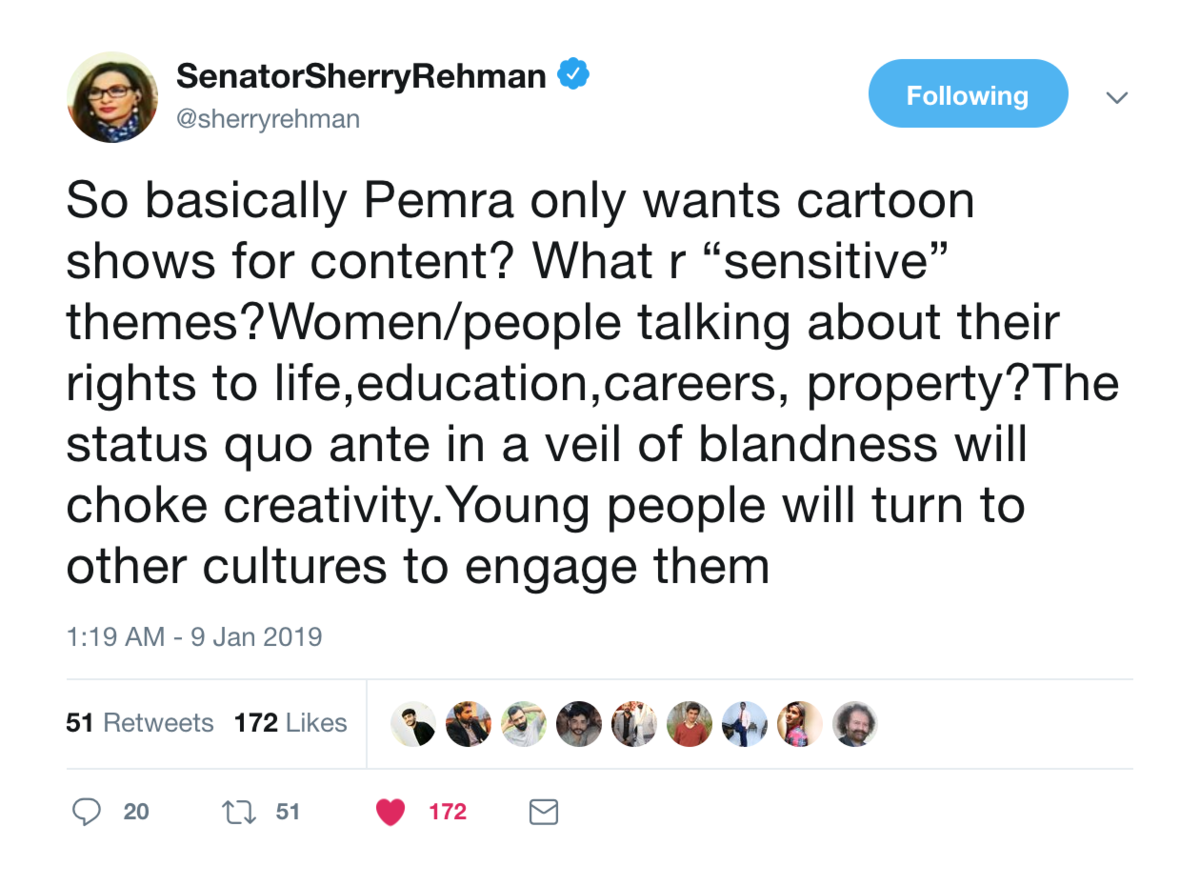
Senator Sherry Rehman responded to Pemra, insisting that the call to question the country’s culture would backfire on the media authority.
“What r “sensitive’ themes? Women/people talking about their rights to life, education, careers, property? The status quo ante in a veil of blandness will choke creativity. Young people will turn to other cultures to engage them.”