Bill Gates seeks to tap into Pakistan’s IT sector

1 / 2
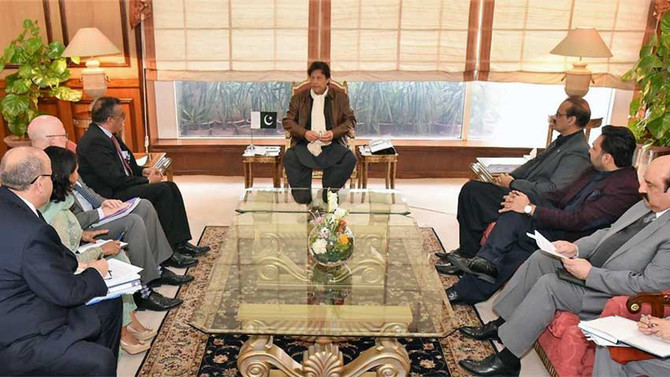
Dr. Christopher Elias delivered a letter from Bill Gates, in the picture, to the Prime Minister Imran Khan on Tuesday in Islamabad. (AFP/File)
2 / 2
Dr. Christopher Elias, President of the Bill and Melinda Gates Foundation’s Global Development Division and WHO Director General Tedros Adhanom Ghebreyesus met with Prime Minister Khan. (Photo Courtesy: PID)
Updated 09 January 2019
Follow

Bill Gates seeks to tap into Pakistan’s IT sector

  • Expresses an interest to invest in the country in letter to PM Khan
  • His non-profit organization has been supporting Islamabad’s polio eradication program for years

ISLAMABAD: Bill Gates, the billionaire business magnate and founder of Microsoft, has expressed an interest to invest in Pakistan’s IT sector, Prime Minister Imran Khan’s party tweeted on Wednesday.
Dr. Christopher Elias, President of the Bill and Melinda Gates Foundation’s Global Development Division met with Prime Minister Khan in Islamabad, on Tuesday, and “delivered a letter from Mr. Bill Gates to the Prime Minister,” the Prime Minister’s Office said in a statement, without divulging any further details.
PM Khan’s administration is working round the clock to attract direct foreign investment, vowing to introduce wide-ranging reforms for global investors and leading international businesses.
PM Khan and Gates discussed efforts for the eradication of polio during a telephone call on December 5 last month.
Gates, on his part, assured the premier of continued cooperation in various fields, in addition to “strengthening of the IT sector in the country was also discussed.”
The Bill and Melinda Gates Foundation has been supporting Pakistan’s polio eradication program for years.
The meeting on Tuesday was attended by officials from the Bill and Melinda Gates Foundation and the Director-General of the World Health Organization (WHO), Tedros Adhanom Ghebreyesus.
Dr. Ghebreyesus congratulated PM Khan on his victory in the recent general elections. “He also informed the Prime Minister about WHO’s ongoing programs/projects in Pakistan. The WHO has considerably increased its level of support in Pakistan, mainly due to intensified activities of the polio eradication initiatives,” the PM Office said in a statement after the meeting.


Pakistan urges pilgrims to complete Saudi biometrics as Hajj preparations gain pace

Updated 30 January 2026
Follow

Pakistan urges pilgrims to complete Saudi biometrics as Hajj preparations gain pace

  • Government warns pilgrims biometric verification is required for Hajj visas
  • Step follows tighter oversight after last year’s Hajj travel disruptions

ISLAMABAD: Pakistan’s government on Friday urged aspiring pilgrims to complete mandatory Saudi biometric verification for Hajj visas, as preparations for the 2026 pilgrimage gather pace following stricter oversight of the Hajj process.

The announcement comes only a day after Pakistan’s Religious Affairs Minister Sardar Muhammad Yousuf said regulations for private Hajj operators had been tightened, reducing their quota following widespread complaints last year, when tens of thousands of pilgrims were unable to travel under the private Hajj scheme.

“Saudi biometric verification is mandatory for the issuance of Hajj visas,” the Ministry of Religious Affairs said in a statement, urging pilgrims to complete the process promptly to avoid delays.

“Hajj pilgrims should complete their biometric verification at home using the ‘Saudi Visa Bio’ app as soon as possible,” it added.

The statement said the pilgrims who were unable to complete biometric verification through the mobile application should visit designated Saudi Tasheer centers before Feb. 8, adding that details of the centers were available on Pakistan’s official Hajj mobile application.

Pakistan has been steadily implementing digital and procedural requirements for pilgrims ahead of Hajj 2026, including mandatory training sessions, biometric checks and greater use of mobile applications, as part of efforts to reduce mismanagement.

Saudi Arabia has allocated Pakistan a quota of 179,210 pilgrims for Hajj 2026, with the majority of seats reserved under the government scheme and the remainder allocated to private tour operators.