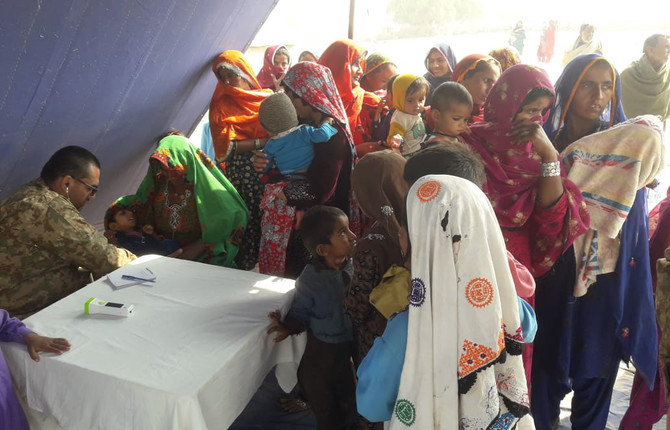
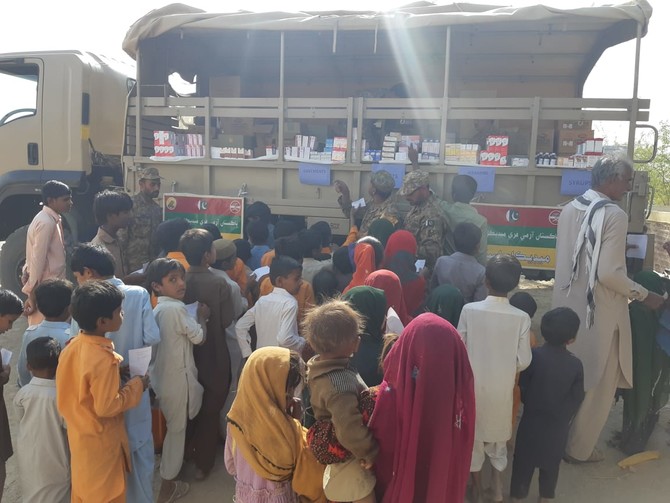
ISLAMABAD: With an aim to help residents in the drought-hit region of Sindh’s Tharparkar district, the Pakistan Army established a three-day free medical camp which began on Monday, the military’s media wing Inter-Services Public Relations (ISPR) said.
“Army doctors and paramedics provided essential medical treatment to more than 1,700 patients during the medical camp,” the ISPR said on Monday, adding that the “team of doctors included physicians, ENT specialists, dental surgeons and gynecologists.”
Situated in Pakistan’s southern Sindh province, Tharparkar has been facing persistent drought for the past several years which has had an adverse impact on the livelihood of the people.
Thar has a population of 1.6 million, as per the 2017 census.
On December 11, 2018 Pakistan’s Chief Justice Saqib Nisar, accompanied by Chief Minister Sindh Murad Ali Shah and other top officials, visited the drought-stricken areas where he urged authorities to expedite efforts in providing clean drinking water and health facilities to the residents.
Last year in October, the Sindh Government had launched a nutrition program for 50,000 families to cope with the rising number of infant deaths in the district.
“The situation in Tharparkar is an example of how bleak things may become in other parts of the country in case adequate water management measures are not adopted. In order to improve the groundwater levels and recharge our aquifers, we need to build more dams,” Pakistan President Dr. Arif Alvi had said in October while addressing a two-day international symposium on “Creating A Water-Secure Pakistan” in Islamabad.


![]()
![]()
![]()
![]()

Army establishes medical camps in Pakistan’s drought-hit Tharparkar

Army establishes medical camps in Pakistan’s drought-hit Tharparkar
- More than 1,700 patients treated on the first day of the initiative
- District in southern Sindh has been facing water scarcity issues for the past several years
Latest updates


Recommended


© 2026 SAUDI RESEARCH & PUBLISHING COMPANY, All Rights Reserved And subject to Terms of Use Agreement.