


Christmas is about keeping hope alive, says Bethlehem mayor

1 / 4
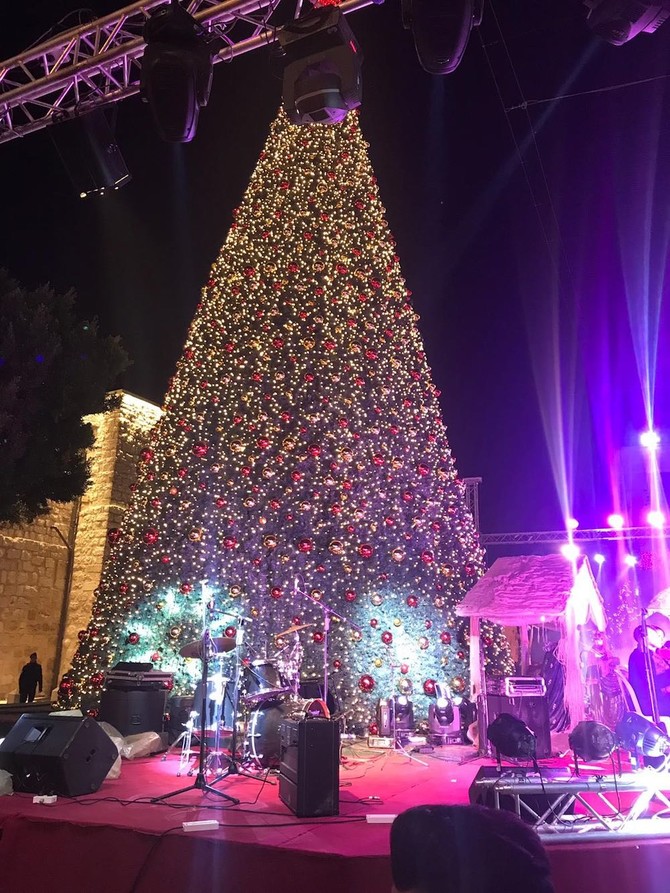
Pilgrims from around the world flocked to Bethlehem for what was believed to be the biblical West Bank city’s largest Christmas celebrations in years. (AN Photo/Hazem Belousha)
2 / 4
Pilgrims from around the world flocked to Bethlehem for what was believed to be the biblical West Bank city’s largest Christmas celebrations in years. (AN Photo/Hazem Belousha)
3 / 4
Pilgrims from around the world flocked to Bethlehem for what was believed to be the biblical West Bank city’s largest Christmas celebrations in years. (AN Photo/Hazem Belousha)
4 / 4
Pilgrims from around the world flocked to Bethlehem for what was believed to be the biblical West Bank city’s largest Christmas celebrations in years. (AN Photo/Hazem Belousha)
Updated 25 December 2018
Follow

Christmas is about keeping hope alive, says Bethlehem mayor

BETHLEHEM: Bethlehem Mayor Anton Salman said keeping hope alive was his biggest challenge.
Talking to Arab News during an exclusive interview, he expressed his wish to bring thousands of disapora Bethlehemites back to the city, but acknowledged his inability to do so “because there’s no land due to Israeli settlements.”
Following are excerpts from the interview:

Q. What is your biggest challenge as mayor of a city surrounded by walls and settlements?
A. Keeping hope alive. We do so not only as a matter of carrying the message of Christmas, but also through our daily work: Building institutions and capacity for our people is a strong form of resistance against the occupation.
In practical terms, I’d like to bring back thousands of Bethlehemites from the diaspora, but I can’t do that because there’s no land due to Israeli settlements, and because the Israelis control the population registry and many people have lost their IDs. Whether by taking land or residency rights, Israel doesn’t want us here. We tell Israel that no matter what, we’ll remain.

Q. What is the biggest obstacle for tourism in Bethlehem?
A. Israel’s monopoly over tourism, but we also have a responsibility in terms of doing more advocacy and promotion. Israel has even tried to prevent tourists from sleeping over in Bethlehem, but we’ve succeeded in bringing more people. What’s important though is not the number of visitors as much as the number of people who stay in the city. Our goal for 2019 is to increase the number of people staying in the city.

Q. Are you interested in Arab tourists? What would you like to see in terms of tourism from Arab and Muslim countries?
A. Bethlehem is the Capital of Arab Culture 2020. We’d love to have thousands of people form Egypt, Jordan, Syria, Iraq and Lebanon here. Unfortunately, this isn’t possible today due to the occupation, and we know we’re losing a lot from it. We lose our potential, but our Arab sisters and brothers should know that we’ll always be waiting for them.
Has the increase in tourism accommodation improved long-term economic conditions, or is it only short-term improvements?
It’s too early to make any conclusions about this, but we can’t take Bethlehem outside the context of the economic crisis that we have in Palestine in general. In any case, we’ll keep working to improve the situation, and to make our residents feel the increase in the number of visitors in their daily lives.

Q. What do you want from the international community?
A. More deeds and less statements. It needs to hold Israel accountable for violating international law. How can a Western government claim to care about the situation of Christians in the Middle East while doing nothing about the oppression we have in Bethlehem? How come separating Bethlehem from Jerusalem with an illegal wall has been normalized by the international community? We need it to uphold its legal and moral responsibilities. That’s all we’re asking for.

Q. What are the issues on which you would like to see the Palestinian Authority (PA) doing more?
A. We have a direct relationship with the PA, and we raise our issues with it. We’d like it to better promote the potential of our city.


Elderly Palestinian shot dead in Rafah

Updated 5 sec ago
Follow

Elderly Palestinian shot dead in Rafah

  • Death toll from Israel’s aggression on Gaza rises to 71,795 since start of assault in October 2023

GAZA: An elderly Palestinian man was killed by Israeli fire in Rafah on Sunday afternoon, bringing the number of fatalities since morning to two, according to local and medical sources.

The sources reported that Khaled Hammad Dahleez, 63, was shot dead by an Israeli drone northwest of Rafah.

Earlier in the day, another man was killed and several others injured in a drone strike north of Wadi Gaza, in the central Gaza Strip, the Palestinian News Agency reported.

BACKGROUND

On Saturday, at least 31 Palestinians, including children and women, were slaughtered in a series of Israeli airstrikes on several locations across the enclave — one of the deadliest days since the start of the ceasefire agreement on Oct. 11, 2025.

On Saturday, at least 31 Palestinians, including children and women, were slaughtered in a series of Israeli airstrikes on several locations across the war-ravaged enclave — one of the deadliest days since the start of the ceasefire agreement on Oct. 11, 2025.

Since the ceasefire took effect on Oct. 11, the number of people killed has risen to 523, with 1,433 injuries recorded, while 715 bodies have been recovered during the same period.

Medical sources said on Sunday the death toll from Israel’s aggression on the Gaza Strip had risen to 71,795 Palestinians killed and 171,551 injured since the start of the assault in October 2023.

The sources reported that 26 fatalities and 68 injuries were brought to Gaza hospitals over the past 48 hours, noting that numerous victims were trapped under rubble or in the streets, with ambulance and rescue crews unable to reach them.

The ceasefire’s first phase called for the exchange of all hostages held in Gaza for hundreds of Palestinians held by Israel, a surge in humanitarian aid and a partial pullback of Israeli troops.

The second phase is more complicated. It calls for installing a new Palestinian committee to govern Gaza, deploying an international security force, disarming Hamas, and taking steps to begin rebuilding.

Hamas has so far ‌rejected disarmament and Israel has repeatedly indicated that if the Islamist militant group is not disarmed peacefully, it will use force to make it do so.