BETHLEHEM, Palestinian Territories: Pilgrims from across the world gathered in Bethlehem on Monday for Christmas Eve, taking in a parade and queueing to see the grotto where Jesus is believed to have been born.
The Palestinian scouts and a bagpipe band paraded in Manger Square across from the Church of the Nativity, built at the traditional site of Jesus’s birth.
Crowds, some wearing Santa hats or holding balloons, looked on at the square decked out with a giant Christmas tree and a manger as carols in Arabic played through speakers.
The Catholic archbishop for the Holy Land, Pierbattista Pizzaballa, was due to arrive in the afternoon and will later lead midnight mass.
Palestinian president Mahmud Abbas was to be among dignitaries attending the mass.
This year, visitors are able to view the Church of the Nativity’s newly restored mosaics after they were recently cleaned and repaired in a major project.
The first church was built on the site in the fourth century, though it was replaced after a fire in the sixth century.
A newer and more spacious church, St. Catherine, is located next door.
“It’s a great opportunity to be in such a symbolic location for Christmas,” said Lea Gudel, a 21-year-old French exchange student studying in Jerusalem and who was in Manger Square on Monday morning.
Bethlehem, located in the occupied West Bank near Jerusalem but cut off from the city by Israel’s separation barrier, has seen an increase in visitors this season after several down years due to unrest linked to the Israeli-Palestinian conflict.
Palestinian tourism officials and hotel operators have reported their strongest season in years.
“This year is much more calm, much better than last year,” said Abeer Nasser, a Palestinian from the nearby town of Beit Sahour who was with her son and daughter and was planning to attend midnight mass.
“Every year I feel more in the mood to celebrate despite the political situation,” the 37-year-old added, referring to the Israeli occupation.


![]()
![]()

Pilgrims gather at Jesus’s traditional birthplace in Bethlehem for Christmas
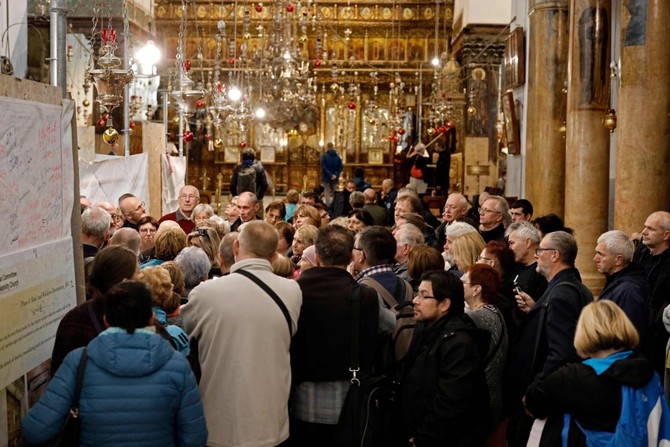
Pilgrims gather at Jesus’s traditional birthplace in Bethlehem for Christmas
- Bethlehem has seen an increase in visitors this season after several down years due to unrest linked to the Israeli-Palestinian conflict
- This year, visitors are able to view the Church of the Nativity’s newly restored mosaics


Latest updates


© 2026 SAUDI RESEARCH & PUBLISHING COMPANY, All Rights Reserved And subject to Terms of Use Agreement.