RIYADH: An up-and-coming Saudi business incubator recently launched a new incentive program aimed at keeping the young and budding entrepreneurs it supports and advises focused “on the prize.”
Oqal, which merges the Arabic word “aqel” (mind) with the Arabic word “amwal” (financial resources), helps youth with business plans and capital make the most of their resources by creating economically viable startups.
The jury on the panel of this latest competition, which was for the Kingdom’s Eastern Province, narrowed down 10 emerging projects to three finalists. Five Saudi judges with experience in the business sector were tasked with selecting the finalists.
Educa, an education-related initiative, won SR50,000 ($13,329) and a car. Qosoor, which rents out wedding and events venues, also won SR50,000. The third-place prize went to a real estate valuation company, which won SR25,000. The winners will also have their businesses accredited.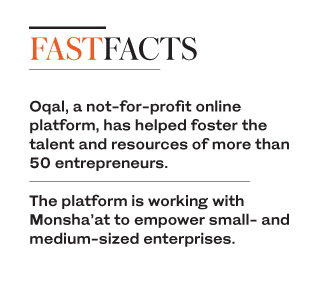
Since its inception in 2011, Oqal, a not-for-profit online platform, has helped foster the talent and resources of more than 50 entrepreneurs whose companies are now thriving in the Saudi market.
Oqal is working with Monsha’at, Arabic for startups, a government initiative attempting to empower small- and medium-sized enterprises (SMEs) to contribute more significantly to the country’s national economy.
“These prizes are a motivating tool and big form of exposure for these businesses, which will need to keep up momentum on this huge initial boost,” said Yaser Al-Ahmed, one of the judges on the panel.
“These businesses will continue to be guided by Monsha’at, which recently announced that the financial pledges made by young owners will be matched by other high-net-worth individuals in order to encourage future investments in startups.”
The latest initiatives come amid efforts to increase the contribution of SMEs to the gross domestic product (GDP). SMEs only account for 20 percent of Saudi Arabia’s GDP, a weak figure compared with first world countries, some of which enjoy an up to 70 percent SME contribution rate.
SMEs in the Kingdom continue to bear the brunt of complex administrative procedures and funding challenges. Currently, financial institutions only provide a 5 percent rate of funding to startups. Monsha’at is trying to increase funding to 20 percent by 2030.
The authority responsible for SME performance is reviewing cumbersome regulations and increasing access to finance methods, as well as introducing more business incubators and helping local businesses export their products.


Saudi startups win big with business incubator Oqal

https://arab.news/ne5tq
Saudi startups win big with business incubator Oqal
- Currently, financial institutions only provide a 5 percent rate of funding to startups
- SMEs in the Kingdom continue to bear the brunt of complex administrative procedures and funding challenges


Saudi watchdog warns of possible health risk from Nestle baby formula
- Company voluntarily recalls its Nan, Alfamino, S-26 Gold and S-26 Ultima products over concerns they might be contaminated with cereulide, a toxin produced by bacteria
- Saudi Food and Drug Authority says recall is precautionary and no related illnesses have been reported, but advises consumers to dispose of recalled products immediately
RIYADH: The Saudi Food and Drug Authority on Tuesday warned the public not to consume certain Nestle infant formula products, after the company issued a voluntary recall over concerns about possible contamination.
The advisory covers products marketed under the Nan, Alfamino, S-26 Gold and S-26 Ultima brands. They might be contaminated with cereulide, a toxin produced by the Bacillus cereus bacteria, which can pose a risk to infant health, the Saudi Press Agency reported.
The Saudi authority said the recall was a precautionary measure and no related illnesses have been reported. Possible symptoms of exposure can include nausea, repeated vomiting and abdominal pain.
It advised consumers to dispose of the recalled products immediately, and said it was coordinating with Nestle to ensure they are removed from stores and is monitoring the process.
Full details of the affected products, including batch numbers, are available at the Saudi Food and Drug Authority website. The organization said consumers can report any food safety concerns by calling 19999.