


KARACHI: With an aim to cater to the infrastructure needs of the China Pakistan Economic Corridor (CPEC), the country’s first Chinese steel mill commenced its operations in Karachi on Saturday.
The Pak China Steel (PCS) company, a joint venture between Pakistan and China’s Jiangbang Group, was established in March this year with an investment of $12 million to cater to the demand for crude iron by local industries. “The installed capacity is 8,000 ton, per months of pig iron and liquid pig iron which would be further expanded,” Xiaonian Wu, Chairman of Shanxi Jianbang Group, said during the inaugural ceremony of the PCS company at Port Bin Qasim on Saturday.
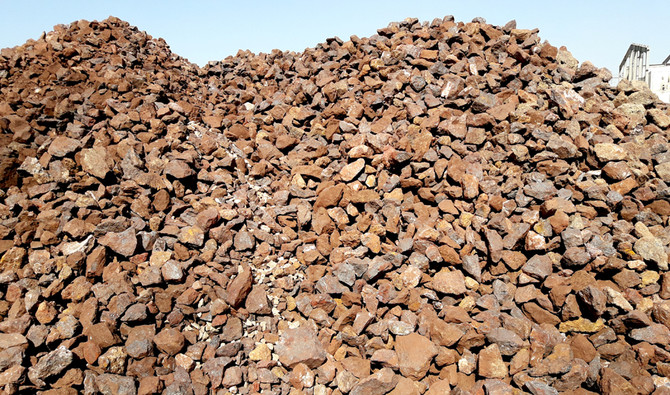
The coal-fired blast furnace is the first facility in the private sector of the country which utilizes the indigenous iron ore extracted from the mines of Balochistan. “Raw materials such as iron ore and limestone is local while metallurgical coke is imported. The facility will be an incredible chapter in the industry of Pakistan,” Wu said.
“At present, the facility is producing 4,000 to 5,000 metric tons per month which would be gradually increased,” he added.
The facility is being run by officials from Pakistan who will be supported by technical experts from China. “PCS has provided employment opportunities to 200 locals while 60 Chinese nationals are providing technical support,” Wu said.
Currently, the demand for Pakistan’s crude iron is being met through imports and shipbreaking industry. “We are looking at supplying pig iron to countries with local material of high quality,” Mustafa Dawood, a local partner of PCS, said.
Last year, Pakistan imported base metal including iron and steel worth $4.78 billion to meet the domestic needs. “We want to completely substitute the import of iron ore with local production and utilization of iron products. This is the first collaboration of Pakistan and China in the steel sector,” Li Felix, Director of PCS said.
In the next phase, the PCS management plans to export pig iron to China, Thailand, and a few other countries.
Wu said that the CPEC has the potential to become the real and potential game-changer in the region and beyond promoting quality and competitiveness worldwide. “We are expecting to meet the growing demand of steel coming from CPEC projects,” he added.
According to the State Bank of Pakistan, Pakistan produces around six million metric tons of steel per year. This includes raw products (iron ore and scrap), flat products (sheets and plates, used in the automotive sector); and long products (steel bars, wire rods, and rails and structures used in infrastructure development and tubes and pipes).
However, the per capita steel consumption in Pakistan is very low at 23.5 kilograms, against 58.6 kilograms in India, as well as the Asian average of 261.3 kilograms and the global average of 216.9 kilograms.


