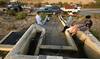
BAGHDAD: The Daesh group’s deliberate destruction of agriculture in northern Iraq has hindered the return of hundreds of thousands of residents, Amnesty International said in a report released Thursday.
The New York-based rights group said Daesh fighters burnt or chopped down orchards and sabotaged wells by filling them with rubble, oil or other materials. The militants also stole or destroyed pumps, cables, generators, transformers and vital electricity lines.
Amnesty called on the Iraqi government to repair rural infrastructure and compensate the displaced so they can return to their homes.
Daesh seized control of much of northern Iraq in the summer of 2014. US-backed Iraqi forces gradually drove the militants from all the territory under their control, declaring victory a year ago after a costly campaign that destroyed entire neighborhoods and towns.
“The damage to Iraq’s countryside is as far-reaching as the urban destruction, but the consequences of the conflict on Iraq’s rural residents are being largely forgotten,” said Richard Pearshouse, senior crisis adviser at Amnesty.
He said the report focuses on the “deliberate, wanton destruction” around the area of Sinjar, where the extremists massacred and enslaved thousands of members of the Yazidi religious minority. About half of Sinjar’s residents have returned, with many others saying they have nothing to go back to.
Beyond Sinjar, Amnesty’s report gave sobering figures for all of Iraq.
“The conflict against IS eviscerated Iraq’s agricultural production, now an estimated 40 percent lower than 2014 levels,” it said. “Before IS, around two-thirds of Iraq’s farmers had access to irrigation — only three years later, this had fallen to 20 percent. Around 75 percent of livestock was lost, spiking to 95 percent in some areas.”
Syrian and Iraqi forces have gradually driven Daesh out of nearly all the territory it once held. But the group still maintains a presence in the Syrian desert and remote areas along the border. Many have warned it could stage a comeback if economic grievances are not addressed.
“Unless there is urgent government assistance, the long-term damage inflicted on Iraq’s rural environment will reverberate for years to come,” Pearshouse said. “When IS tore through Iraq in 2014, it thrived off rural poverty and resentments, so Iraq’s government should be concerned that something similar could happen again.”

Daesh destruction of rural Iraq hinders residents’ return: Amnesty
- Amnesty reported Daesh fighters burnt or chopped down orchards, sabotaged wells and stole or destroyed vital farming equipment
- The extremists seized control of much of northern Iraq in the summer of 2014
Israeli strikes kill 3 people in Gaza, hospital says
DEIR AL-BALAH: Israeli military strikes on Monday killed three people west of Gaza City, according to the hospital where the casualties arrived.
Shifa Hospital reported the deaths amid the months-old ceasefire that has seen continued fighting. The Israeli army said Monday it is striking targets in response to Israeli troops coming under fire in the southern city of Rafah, which it says was a violation of the ceasefire. The army said it is striking targets “in a precise manner.”
The four-month-old U.S-backed ceasefire followed stalled negotiations and included Israel and Hamas accepting a 20-point plan proposed by US President Donald Trump aimed at ending the war unleashed by Hamas’ Oct. 7, 2023, attack into Israel. At the time, Trump said it would lead to a “Strong, Durable, and Everlasting Peace.”
Hamas freed all the living hostages it still held at the outset of the deal in exchange for thousands of Palestinian prisoners held by Israel and the remains of others.
But the larger issues the agreement sought to address, including the future governance of the strip, were met with reservations, and the US offered no firm timeline.
Top UN official concerned over Israel’s West Bank decision
The United Nations top official on Monday expressed concern about the Israeli security cabinet’s decision to deepen the country’s control over the occupied West Bank.
Secretary-General Antonio Guterres is “gravely concerned” and warned that the Israeli decision could erode the prospect of a two-state solution, spokesperson Stéphane Dujarric said in a statement.
“Such actions, including Israel’s continued presence in the Occupied Palestinian Territory are not only destabilizing but – as recalled by the International Court of Justice – unlawful,” he said.
Israel ‘s security cabinet on Sunday approved measures that aim to deepen Israeli control over the occupied West Bank and weaken the already limited powers of the Palestinian Authority.
Israel’s far-right Finance Minister Bezalel Smotrich said the measures would make it easier for Jewish settlers to force Palestinians to give up land, adding that “we will continue to bury the idea of a Palestinian state.”
Israel captured the West Bank, as well as Gaza and east Jerusalem, in the 1967 Mideast war. The Palestinians want all three territories for a future state.
Rafah crossing improving, official says
The Palestinian official set to oversee day-to-day affairs in Gaza said on Monday that passage through the Rafah crossing with Egypt is starting to improve after a chaotic first week of reopening marked by confusion, delays and a limited number of crossings.
Ali Shaath, head of the National Committee for the Administration of Gaza, told Egypt’s Al-Qahera News that operations at the crossing were improving on Sunday. He said 88 Palestinians were scheduled to travel through Rafah on Monday, more than have crossed in the initial days since reopening. Israel did not immediately confirm the figures.
The European Union border mission at the crossing said in a statement Sunday that 284 Palestinians had crossed since reopening. Travelers included people returning after having fled the war and medical evacuees and their escorts. In total, 53 medical evacuees departed during the first five days of operations.
That remains well below the agreed target of 50 medical evacuees exiting and 50 returnees entering daily, negotiated by Israeli, Egyptian, Palestinian and international officials.
Shaath and other members of the committee remain in Egypt, without Israeli authorization to enter the war-battered enclave.
The Rafah crossing opened last week for the first time since mid-2024, one of the main requirements for the ceasefire between Israel and Hamas. It was closed Friday and Saturday because of confusion around operations.
Palestinian officials say nearly 20,000 people are seeking to leave Gaza for medical care unavailable in its largely destroyed health system.
Palestinians who returned to Gaza in the first days after the crossing reopened described hourslong delays and invasive searches by Israeli authorities and an Israeli-backed Palestinian armed group, Abu Shabab. Israel denied mistreatment.
Gaza’s Health Ministry said on Monday that five people were killed over the previous 24 hours, bringing the death toll to 581 since the October ceasefire. The truce led to the return of the remaining hostages — both living captives and bodies — from the 251 abducted during the Oct. 7, 2023, attack that triggered the war.
Hamas-led militants killed around 1,200 people, mostly civilians, in the attack. Israel’s military offensive has since killed over 72,000 Palestinians, according to the ministry, which operates under the Hamas-run government and is staffed by medical professionals. The UN and independent experts consider it the most reliable source on war casualties.
Shifa Hospital reported the deaths amid the months-old ceasefire that has seen continued fighting. The Israeli army said Monday it is striking targets in response to Israeli troops coming under fire in the southern city of Rafah, which it says was a violation of the ceasefire. The army said it is striking targets “in a precise manner.”
The four-month-old U.S-backed ceasefire followed stalled negotiations and included Israel and Hamas accepting a 20-point plan proposed by US President Donald Trump aimed at ending the war unleashed by Hamas’ Oct. 7, 2023, attack into Israel. At the time, Trump said it would lead to a “Strong, Durable, and Everlasting Peace.”
Hamas freed all the living hostages it still held at the outset of the deal in exchange for thousands of Palestinian prisoners held by Israel and the remains of others.
But the larger issues the agreement sought to address, including the future governance of the strip, were met with reservations, and the US offered no firm timeline.
Top UN official concerned over Israel’s West Bank decision
The United Nations top official on Monday expressed concern about the Israeli security cabinet’s decision to deepen the country’s control over the occupied West Bank.
Secretary-General Antonio Guterres is “gravely concerned” and warned that the Israeli decision could erode the prospect of a two-state solution, spokesperson Stéphane Dujarric said in a statement.
“Such actions, including Israel’s continued presence in the Occupied Palestinian Territory are not only destabilizing but – as recalled by the International Court of Justice – unlawful,” he said.
Israel ‘s security cabinet on Sunday approved measures that aim to deepen Israeli control over the occupied West Bank and weaken the already limited powers of the Palestinian Authority.
Israel’s far-right Finance Minister Bezalel Smotrich said the measures would make it easier for Jewish settlers to force Palestinians to give up land, adding that “we will continue to bury the idea of a Palestinian state.”
Israel captured the West Bank, as well as Gaza and east Jerusalem, in the 1967 Mideast war. The Palestinians want all three territories for a future state.
Rafah crossing improving, official says
The Palestinian official set to oversee day-to-day affairs in Gaza said on Monday that passage through the Rafah crossing with Egypt is starting to improve after a chaotic first week of reopening marked by confusion, delays and a limited number of crossings.
Ali Shaath, head of the National Committee for the Administration of Gaza, told Egypt’s Al-Qahera News that operations at the crossing were improving on Sunday. He said 88 Palestinians were scheduled to travel through Rafah on Monday, more than have crossed in the initial days since reopening. Israel did not immediately confirm the figures.
The European Union border mission at the crossing said in a statement Sunday that 284 Palestinians had crossed since reopening. Travelers included people returning after having fled the war and medical evacuees and their escorts. In total, 53 medical evacuees departed during the first five days of operations.
That remains well below the agreed target of 50 medical evacuees exiting and 50 returnees entering daily, negotiated by Israeli, Egyptian, Palestinian and international officials.
Shaath and other members of the committee remain in Egypt, without Israeli authorization to enter the war-battered enclave.
The Rafah crossing opened last week for the first time since mid-2024, one of the main requirements for the ceasefire between Israel and Hamas. It was closed Friday and Saturday because of confusion around operations.
Palestinian officials say nearly 20,000 people are seeking to leave Gaza for medical care unavailable in its largely destroyed health system.
Palestinians who returned to Gaza in the first days after the crossing reopened described hourslong delays and invasive searches by Israeli authorities and an Israeli-backed Palestinian armed group, Abu Shabab. Israel denied mistreatment.
Gaza’s Health Ministry said on Monday that five people were killed over the previous 24 hours, bringing the death toll to 581 since the October ceasefire. The truce led to the return of the remaining hostages — both living captives and bodies — from the 251 abducted during the Oct. 7, 2023, attack that triggered the war.
Hamas-led militants killed around 1,200 people, mostly civilians, in the attack. Israel’s military offensive has since killed over 72,000 Palestinians, according to the ministry, which operates under the Hamas-run government and is staffed by medical professionals. The UN and independent experts consider it the most reliable source on war casualties.
© 2026 SAUDI RESEARCH & PUBLISHING COMPANY, All Rights Reserved And subject to Terms of Use Agreement.