JEDDAH: In an increasingly accessible country with no shortage of cultural hidden gems, Saudi Arabia is in a unique position to develop and showcase its most fascinating heritage sites, from the architectural to the archeological.
Five national treasures have already been added to the list of UNESCO World Heritage Sites since 2008, including Al-Ahsa oasis, Al-Hijr archaeological site (Madain Salih), Historic Jeddah and the rock art at Hail.
The fifth site, recognized by UNESCO in 2010, is Al-Turaif Historical District, the remains of a settlement that dates back to the 15th century. Located in the north-western outskirts of the capital, Riyadh, it is one of the Kingdom’s oldest heritage sites, though its potential was only recognized relatively recently.
It is set against the backdrop of the historic Ad-Dir’iyah oasis, a place that is dear to the hearts of the Saudi people and has a special place in the history of the Kingdom, as the original home of the royal family and the country’s first capital, from 1744 to 1818.
The surviving mud-brick structures, in the Najdi architectural style, overlook the oasis and palm gardens of Wadi Hanifa. They include historic palaces, monuments and administrative buildings used by the First Saudi State, such as Salwa Palace, the home of the ruling family at the time, and Saad bin Saud Palace.
When Ad-Dir’iyah was established as the capital, under the rule of Imam Mohammed bin Saud, the founder of the first Saudi State, tribes from across the desert flocked to the city, which expanded to accommodate them.
The city’s borders ran along the edges of the valley, and the mud-brick walls were designed to cope with the harsh desert weather, including summer temperatures hat can reach more than 55 C. With a valley below, vast farm lands and palm trees covering most of the region, the city thrived and flourished.
During Imam Mohammed’s rule, Ad-Dir’iyah became one of the most important cities in Najd, thanks to its position on the trade routes from east to west, the military strength of Al-Saud family, and its importance to pilgrims, granting them protection and accommodation during their journeys.
Now, Al-Turaif district is undergoing a major renovation project to preserve the historically important structures and showcase them as a reminder of the place and time from which the Kingdom’s founding fathers emerged.
This is just one of many projects planned or underway to safeguard Saudi Arabia’s national treasures and develop them as major tourist attractions. As part of the ongoing process, the Saudi Commission for Tourism and National Heritage last week added 19 archaeological sites to the National Antiquities Register, which aims to develop and preserve Saudi’s heritage sites.
Ad Dir’iyah has long been considered one of the nation’s greatest treasures. In the run-up to the celebrations in 1999 for the 100th anniversary of the founding of the Kingdom of Saudi Arabia, King Salman bin Abdul Aziz, at the time the governor of Riyadh, ordered the formation of a committee to develop Ad-Dir’iyah, following a request by Prince Sultan bin Salman, the president of the Saudi Commission for Tourism and National Heritage. The main aim was to preserve the historic mud-brick buildings and monuments of Al-Turaif, as part of a wider program to develop the Historic Ad Dir’iyah site.
The SCTH has launched many projects across the country as part of an ongoing overall effort to transform Saudi Arabia into one of the top tourism destinations in the Middle East.
In 2010, Al-Turaif District became a registered World Heritage site after a number of development projects were carried out in preparation for its inclusion. The development program, drawn up by the Riyadh Development Authority in corporation with the SCTH and Ad Dir’iyah Governate, focused on the historic and political and cultural value of the city.
Ad-Dir’iyah Salwa Palace Museum and the Imam Mohammed bin Saud Mosque are among the major buildings being developed and preserved. There are four other attractions in the area: a Social Life Museum, a Military Museum, an Arabian Horse Museum and a Trade and Monetary Museum.
Another main attraction is Al-Bujairi Park, a modern development project that includes a spacious park, cafes, restaurants and an art gallery that is popular with international tourists and locals thanks to its relaxing atmosphere away from the city’s hustle and bustle. It serves as the main recreational attraction of Historical Ad Dir’iyah between Al-Bujairi and Al-Turaif Quarter also has steep rock formations, passageways and water creeks, making it a unique location in the capital.
On December 9, 2018, after the GCC Summit in Riyadh, King Salman attended the opening ceremony of Al-Turaif Historical District Development Project in the presence of GCC dignitaries and leading Saudi officials and guests. The project will help transform the Ad-Dir’iyah area into an international and national tourism and cultural hub.
“Al-Turaif has been transformed into an open museum with the restoration and documentation of its archaeological sites,” said Prince Faisal bin Bandar, Emir of Riyadh and chairman of Riyadh Development Authority.
As a key focus of Saudi Arabia’s Vision 2030, tourism is seen as one of the most important sectors that can contribute to job creation in the Kingdom.
It currently employs more than 900,000 Saudis, a number that is expected to rise to 1.2 million by 2030.


![]()
![]()
![]()

Al-Turaif: How Saudi Arabia is bolstering future tourism by reviving past treasures
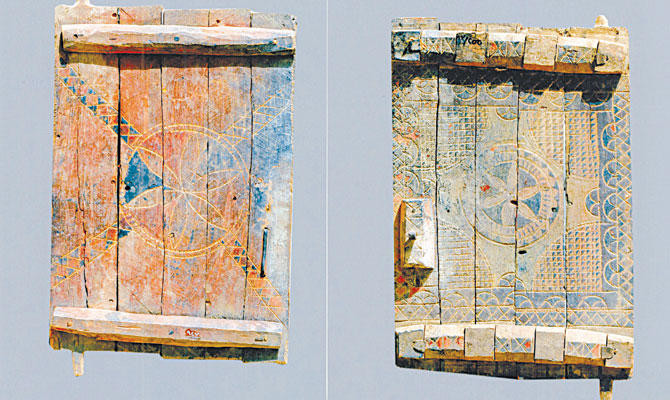


Al-Turaif: How Saudi Arabia is bolstering future tourism by reviving past treasures
- Of the many Saudi UNESCO World Heritage Sites declared over the past decade, Al-Turaif is the newest (and oldest) kid in town
Related


Latest updates


© 2026 SAUDI RESEARCH & PUBLISHING COMPANY, All Rights Reserved And subject to Terms of Use Agreement.