Rehabilitation of Saudi heritage village of Rijal Alma complete to join UNESCO’s list

1 / 6
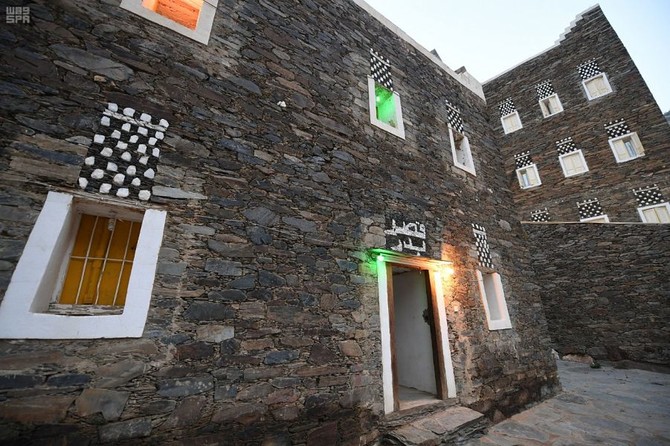
Restoration work at the famed village of Rijal Alma in Asir region is now complete. (SPA)
2 / 6
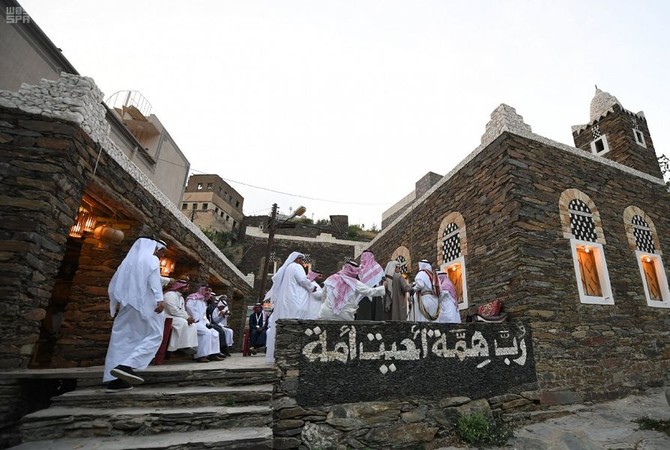
Restoration work at the famed village of Rijal Alma in Asir region is now complete. (SPA)
3 / 6
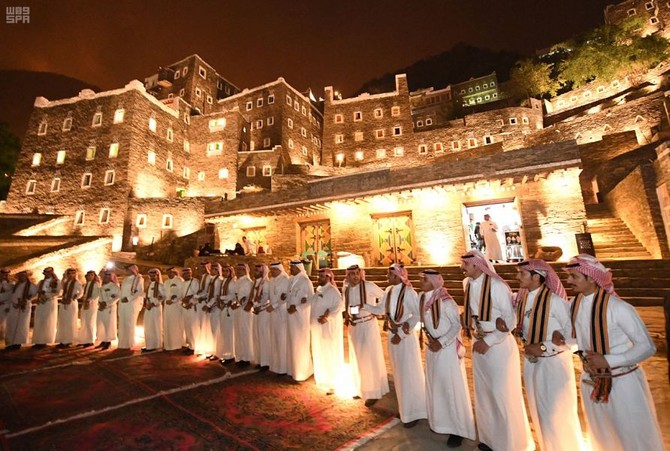
Restoration work at the famed village of Rijal Alma in Asir region is now complete. (SPA)
4 / 6
Restoration work at the famed village of Rijal Alma in Asir region is now complete. (SPA)
5 / 6
Restoration work at the famed village of Rijal Alma in Asir region is now complete. (SPA)
6 / 6
Restoration work at the famed village of Rijal Alma in Asir region is now complete. (SPA)
Updated 05 December 2018
Follow

Rehabilitation of Saudi heritage village of Rijal Alma complete to join UNESCO’s list

  • The famed Saudi village includes tens of castles built with hard stones, painting a unique landscape with its architecture, delicate engravings and the illuminated lamps on its road sides
  • Rijal Alma is just one of many sites in Saudi Arabia that are being readied for the growing tourism industry in the Kingdom

JEDDAH: Some eight government bodies have completed their work in preparing the archaeological site of the village of Rijal Alma in the southern province of Asir to join the UNESCO’s World Heritage List. 

The famed Saudi village, which lies 50 km west of Abha city, includes tens of castles built with hard stones, painting a unique landscape with its architecture, delicate engravings and the illuminated lamps on its road sides. 

A tour by the Saudi Press Agency on Saturday at the site has overseen the village’s rich history and heritage which had made it nominated to join the UNESCO’s World Heritage List.

Work at the site began around two months ago, under instructions from his royal highness Prince Faisal bin Khalid bin Abdel Aziz, Emir of Assir region, and the continuous follow up tom his deputy  Prince Turki bin Talal bin Abdulaziz and Prince Sultan bin Salman bin Abdulaziz, Chairman of the Saudi Commission for Tourism and National Heritage, to meet the requirements of joining the village to the World Heritage List. 

Restoration works as well as efforts to meet the UNESCO requirements at the site were carried by the Rijal Alma Municipality and the Saudi Commission for Tourism and Heritage, and a branch of the Ministry of Islamic Guidance, and the Transport and Environment Ministries. 

A visual presentation seen by the media delegation during the visit has highlighted the main works conducted at Rijal Alma, during which the Saudi Commission renovated and modified facades of some of the village buildings and decorated its general council. 

As well as building a wall to protect the visitors center from floods, and replacing instruction signs with smaller ones that are more suitable for the site’s environment. 

The municipality has also removed new cement buildings at the site and rebuilt historic ones with stones from the site, in addition to removing guest rooms and replaced with an open style setting that is suitable for the village environment and to rearrange the village lighting with a more traditional style. 

Some of the modern stone writings were corroborated, and concrete murals were treated in the village and the roofs of shops were covered. 

The Ministry of Islamic Affairs has also prepared the site’s mosque and its components. 

Also, the SCTH has also ordered the continuation to implement an archaeological excavation at the Asham historical site in the western region of Baha for the third season.

The project is one of 44 archaeological projects being implemented by the Commission during this year. 

A specialized team led by Khalid Bin Mohammed AlZahrani and a number of researchers, specialists, and technicians from antiquities and museum sectors in SCTH began to reveal architectural details of the area. 

They focused on the industrial zone of the area to uncover a number of furnaces and smelting and casting tools, that the site is characterized with since the pre-Islamic period. 

The approval of the Commission’s chairman follows the success achieved in the first two seasons, which focused its work in the commercial market area and in the mosque area. 

These works have led to discovering a number of architectural elements in the market area consisting of two adjacent shops and an open courtyard may have been used to exchange various goods.


Ithra will bring Spain to life for 2-week cultural celebration

Updated 08 January 2026
Follow

Ithra will bring Spain to life for 2-week cultural celebration

  • Ithra Cultural Days will unfold across the plaza, museum, theater, lush garden, library, idea lab, cinema, children’s museum, energy exhibit and Ithra tower

DHAHRAN: Visitors to the King Abdulaziz Center for World Culture (Ithra) can enjoy a taste of Spanish culture from Jan. 12-31.

Under the banner “Live Spain,” spaces at Ithra will be transformed to give a glimpse of life in this vibrant European country.

Ithra Cultural Days will unfold across the plaza, museum, theater, lush garden, library, idea lab, cinema, children’s museum, energy exhibit and Ithra tower, with exhibitions dedicated to Spanish photography, fashion and sports. There will also be Spanish cuisine and interactive installations exploring historical and linguistic connections between Arab and Spanish traditions.

There will be live performances across various stages, with a production of “Carmen” among the highlights.

“Cultural exchange is a core part of Ithra’s approach to programming. Celebrating Spain’s culture and history reflects this focus, particularly as this year’s Cultural Days take on a distinctive character by exploring Spain’s cultural heritage,” Noura Alzamil, program manager at Ithra, said.

“Visitors to Ithra will experience an exciting program in every sense, given the scale and variety of events designed to appeal to all tastes and interests.”

Cinema showings will feature Spanish short and feature films, accompanied by post-screening discussions to provide additional cultural context, while talks and sessions in the idea lab and library will explore architecture, literature and creative practice.

Hands-on workshops will invite visitors to engage directly with Spanish crafts and creative traditions, from visual arts and design to food-related practices.

A dedicated program for children and youth will run alongside with storytelling, creative workshops and performances among the attractions. Food and market experiences in Ithra’s public spaces will reflect the important social role played in the country by food.

Ithra Cultural Days present international cultures through immersive, public-facing experiences. This year’s focus on Spain follows the success of last year’s Japan edition, which welcomed more than 200,000 visitors in just two weeks.