


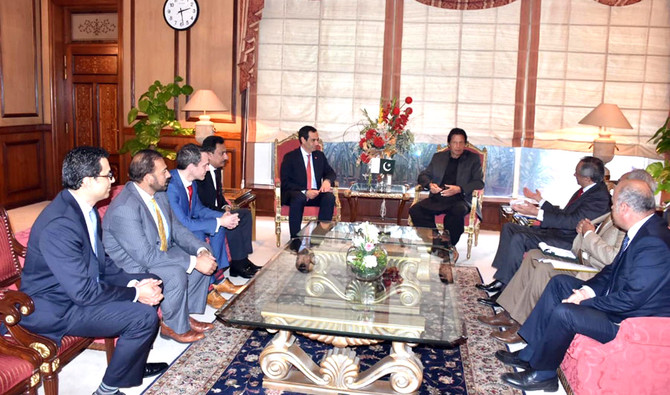
KARACHI: Pepsi and Coca-Cola approached Pakistan Prime Minister Imran Khan on Thursday to pledge investments worth $1.4 billion into the country’s market.
A delegation from Pepsi, headed by Mike Spanos, CEO Pepsi Co Asia, Middle East, and North Africa briefed Khan about the company’s existing business in Pakistan, while detailing plans to invest an additional $1.2 billion in the next five years.
Earlier, a delegation from Coca-Cola company in Pakistan – along with bottling partners Coca-Cola Içecek Turkey, led by Orhun Kostem Regional Director -- met Khan to discuss the short and long-term investment plans in Pakistan, a statement released by the Prime Minister’s Office said.
Coca-Cola said that they have already invested more than $500 million in the past five years, with plans to invest another $200 million in the future. The initiative is expected to create new jobs, support ancillary industries, and help the government earn an incremental revenue through taxes as the business grows further.
Experts said that the developments for Pakistan, which is currently facing fewer inflows of foreign direct investment, are encouraging and bode well for the government.
“This is a positive development that investments are coming to Pakistan after political stability. However, Pakistan needs much more to generate employment and provide the much-needed boost to the local economy,” Muhammad Sohail, CEO of Topline Securities, told Arab News.
PM Khan assured investors of his government’s support for the development of their businesses in the country. “The present government is committed to facilitating businesses and investors in every possible manner to take advantage of the existing opportunities in the country which has a population of more than 100 million below the age of 30,” he said.
During the meetings with the premier, representatives from both the companies highlighted issues faced by the industry, including a burden of taxes and illegally-acquired money which is hampering the industry’s growth.
“There is potential to double the production of beverages in the country from the current number to around 400 to 500 cases annually,” Siraj Qasim Teli, Director of Pakistan Beverages (Pepsi Cola, Karachi, Hyderabad, and Quetta) and former president of Karachi Chamber of Commerce and Industry KCCI, told Arab News.
“The industry is now paying around 27 percent taxes. The country’s bureaucracy thinks there is potential for taxes. Yes, there is but it should be imposed with the volumes,” Teli added.
Experts said that the taxation system is hurting big companies due to their provincial activities, and the fact that both the federal and provincial tax authorities issue notices to them to exact revenues on the same taxable events.
“They have to incur a heavy cost for complying with notices from various tax authorities and bear the cost of long-drawn litigation. There is also the uncertainty of laws and highhandedness on the part of the tax officials,” Dr Ikram Ul Haq, an expert on economic and taxation matters, said.
“The government must end multiple tax agencies and merge them all into a single National Tax Agency. It will improve the ease of doing business. Tax laws and procedures should be made simple and certain,” Dr Haq suggested.
Pepsi and Coca-Cola enjoy more than 95 percent of the soft-drink market in Pakistan and their share is rising due to the youth’ preference for their drinks in the country.
Pakistan, which is home to 208 million people, is the sixth-largest consumer market and focus of major local and multinational corporations which are playing a vital role in the growth of the country’s economy which touched 5.8 percent during the last fiscal year of 2018.


