KARACHI: Finance Minister Asad Umar took to Twitter on Tuesday to announce Suzuki Motors’s interest in investing $450 million in Pakistan as part of its plans to expand its car production capacity.
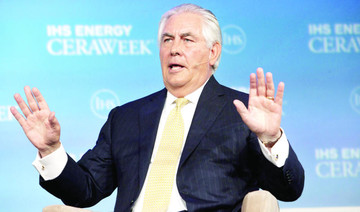
In the same breath, Umar added that ExxonMobil, the American multinational oil and gas company, has re-opened its office in Pakistan after 27 years.
“Excellent day from a foreign investment perspective. Global Chairman Suzuki Motors visited and expressed interest in investing $450 million to expand car production in Pakistan and world’s biggest energy company ExxonMobil re-opened their office in Pakistan 27 years after leaving the country,” he tweeted.
Confirming the news, Abdul Razak Dawood, Adviser for Commerce, Textile, Industry & Production, told Arab News: “Yes they (Suzuki Motors) are coming for expansion and we welcome them.”
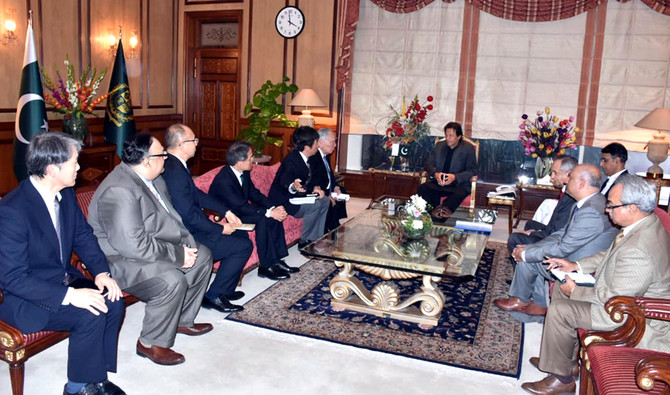
A delegation of Suzuki Motors Corp – comprising several top officials including the Ambassador of Japan, Takashi Kurai -- also called on Prime Minister Imran Khan on Tuesday, a statement issued by his office said.
They briefed the premier about the existing investments of Suzuki Motors Corp and the company’s future plans in the country. The prime minister was also apprised about plans for the construction of a second plant which aims to manufacture an additional 100,000 vehicles per year.
PM Khan, while appreciating the contribution of Suzuki Motors in the automobile sector, said that the present government is committed to the development of the private sector, the growth of the manufacturing sector, and improving the ease of doing business, among other things, the statement said.
Suzuki Motor Corporation is a Japanese multinational corporation which manufactures automobiles, four-wheel drive vehicles, motorcycles, all-terrain vehicles (ATVs), outboard marine engines, wheelchairs and a variety of other small internal combustion engines.
Established in 1983, the company has increased its production capacity to 150,000 units per annum.
Last year, the company had expressed an interest to avail the greenfield status for its new plants under the current auto policy of 2016-18.
Meanwhile, Pakistan’s auto manufacturers are gearing up their production capacity by adopting new technologies as more than 10 new companies have announced plans to enter Pakistan’s growing automobile market.
Car assemblers expect that the demand for the vehicles will reach 500,000 units by the year 2024-2025. The sales of cars in Pakistan stands at around 268,000 units, including used cars imported mainly from Japan. The present installed capacity is 285,000 units per year, according to the Pakistan Association of Automotive Parts and Accessories Manufacturers.
ExxonMobil, on its part, reenters Pakistan’s market after a gap of nearly three decades by re-opening its office in the country. “ExxonMobil is coming in a big way,” Dawood said in response to a question about the investment potential of ExxonMobil returning to Pakistan.
In May this year, the oil giant acquired 25 percent stakes in offshore drilling in Pakistan. The agreement was signed at the Prime Minister’s Secretariat between representatives of ExxonMobil, Government Holdings Private Limited, PPL, Eni and the Oil and Gas Development Corporation.
The agreement has reduced the drilling share of other partner exploration companies to 25 percent each, with the first exploration well planned for January 2019. The company is also putting up an LNG berth at Port Qasim, the second seaport in Karachi.
A delegation of Coca-Cola Company in Pakistan and bottling partners Coca-Cola Içecek Turkey, led by Regional Director Orhun Kostem met PM Khan to discuss short and long-term investment plans in Pakistan.
Coca-Cola said that they have already invested more than $500 million in the past five years and plan to invest another $200 million in the future. The move is expected to create new jobs, support ancillary industries and help the government earn incremental revenue through taxes, as the business grows further.
Pakistan is currently facing an external imbalance of payments, for which it is seeking financial assistance from the International Monetary Fund and its allies, including Saudi Arabia which has pledged a $6 billion bailout package out of which Islamabad recently received $1 billion.