Arab coalition hands Hadramout role to Yemen coast guard

1 / 6
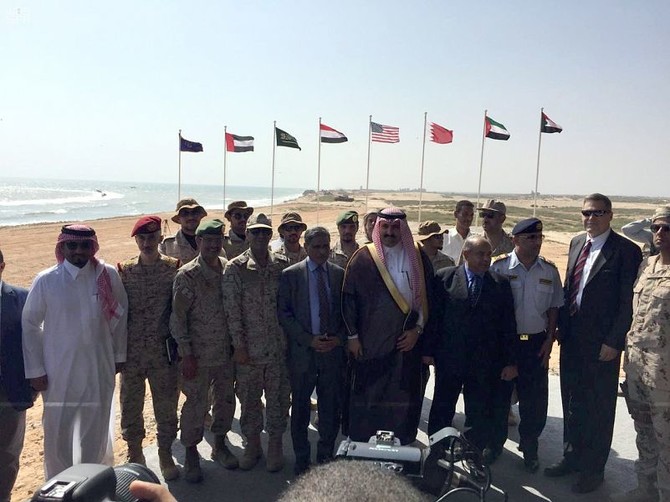
The Arab coalition officially handed over responsibility for protecting the Hadramout region’s coastline to the Yemeni coast guard. (SPA)
2 / 6
The Arab coalition officially handed over responsibility for protecting the Hadramout region’s coastline to the Yemeni coast guard. (SPA)
3 / 6
The Arab coalition officially handed over responsibility for protecting the Hadramout region’s coastline to the Yemeni coast guard. (SPA)
4 / 6
The Arab coalition officially handed over responsibility for protecting the Hadramout region’s coastline to the Yemeni coast guard. (SPA)
5 / 6
The Arab coalition officially handed over responsibility for protecting the Hadramout region’s coastline to the Yemeni coast guard. (SPA)
6 / 6
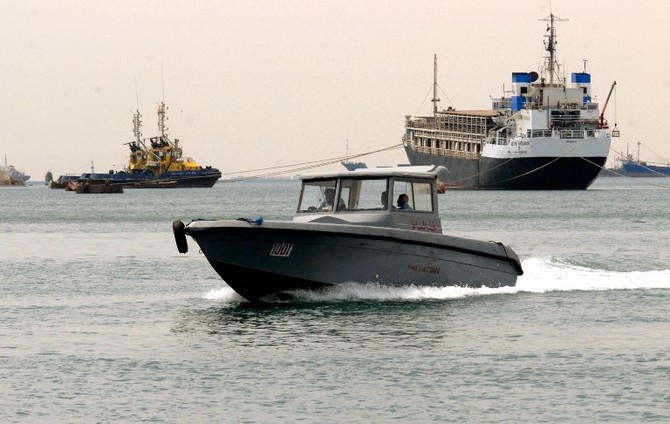
The Yemeni coast guard received boats equipped with weapons and communication devices and radar developed to guard and protect the coast of Yemen. (File/ AFP)
Updated 29 November 2018
Follow

Arab coalition hands Hadramout role to Yemen coast guard

  • The Saudi-led Arab coalition officially handed the port of Hadramout and coastal duties to Yemen’s coast guard
  • The Yemeni coast guard also received boats equipped with weapons and communication devices and radar developed to guard and protect the coast of Yemen

JEDDAH: The Arab coalition officially handed over responsibility for protecting the Hadramout region’s coastline to the Yemeni coast guard on Thursday.
Boats equipped with weapons, communication devices and radar were given to the coast guard to help carry out its role.
Coast guard duties include managing regional ports, maintaining security on the Arabian Sea coastline, and preventing the smuggling of arms, drugs or people into the region.
The ceremony was attended by Yemeni Prime Minister Dr. Salem Ahmed Al-Khanbashi; Saudi Ambassador to Yemen Mohammed Saeed Al-Jaber; US Ambassador to Yemen Matthew Toler; Gov. of Hadramout Maj. Gen. Faraj Al-Bahsani; and Maj. Gen. Abdullah Abu Hatim, commander of the Yemeni border guards.
Al-Jaber said in a press conference following the ceremony that Yemen’s coast guard would protect Yemen, the Arabian Peninsula and the region against smuggling and terrorism. Terrorism had been eliminated in Yemen, he said.
The envoy said that the Arab coalition had trained 1,000 Yemeni military officers and provided them with equipment, including radar and vehicles. Training had included military exercises and tactics.
Maj. Gen. Saleh Al-Ghamdi, representing the naval forces of the coalition’s Joint Forces Command, said that the coalition had trained new Yemeni coast guard personnel in Hadramout. More personnel would be trained, he said.
“Trainees have also received courses in inspecting, auditing and combating maritime piracy in cooperation with the US side as the Yemeni coast guard is a member of the Combined Maritime Forces 150, based in Bahrain,” Al-Ghamdi said.
He said that 37 boats equipped with weapons, communication equipment and updated radar had been given to Yemen’s coast guard in order to guard Hadramout’s coast. The 350 km coastline houses seven main ports and dozens of small harbors.
Commander of Yemeni Coast Guard Forces Maj. Gen. Khalid Al-Qamali said that the protection and management of the coast of Hadramout would be handled in cooperation with the leadership of the local authority and with the support of the Joint Forces Command of the coalition.
The coast guard sector in the Arabian Sea includes four governorates — Hadramout, Al-Mahrah, Shabwah and Socotra — with the headquarters of the main center located in the city of Mukalla.
Al-Qamali said that it had been agreed with the Saudi-led coalition to establish the sector in stages, with the first stage launched last August in Al-Mahrah followed by Hadramout.
Trainees demonstrated their new skills during the ceremony through security scenarios in which they stopped “hostile” boats.

The Arab coalition said later on Thursday that a missile launch platform in Saadah had been destroyed before a ballistic missile could be fired toward Saudi Arabia.


Iran urges US to drop ‘excessive demands’ to reach deal

Updated 10 sec ago
Follow

Iran urges US to drop ‘excessive demands’ to reach deal

  • Longtime adversaries Iran and the United States held their third round of Omani-mediated nuclear talks on Thursday in Geneva
  • Both Iran and Oman cited progress after the talks, with technical discussions scheduled for Monday in Vienna
TEHRAN: Iran’s Foreign Minister Abbas Araghchi said on Friday that in order to reach a deal, the United States will have to drop its “excessive demands,” after the two sides held talks in Geneva.
In a phone call with Egypt’s top diplomat Badr Abdelatty, Araghchi said “success in this path requires seriousness and realism from the other side and avoidance of any miscalculation and excessive demands.”
Araghchi did not clarify what demands he was referring to, but Washington has pointed to Iran’s ballistic missile program and has repeatedly described Tehran’s uranium enrichment capability as a red line.
US President Donald Trump said on Wednesday that Tehran had “already developed missiles that can threaten Europe and our bases overseas, and they’re working to build missiles that will soon reach the United States of America.”
Also on Wednesday, US Secretary of State Marco Rubio said Iran is “not enriching right now, but they’re trying to get to the point where they ultimately can,” adding that Tehran “refuses” to discuss its ballistic missile program and “that’s a big problem.”
Iran has repeatedly said its missile program is part of its defensive capabilities and has ruled out abandoning uranium enrichment, insisting its nuclear program is solely for peaceful purposes.
Longtime adversaries Iran and the United States held their third round of Omani-mediated nuclear talks on Thursday in Geneva, seeking to avert military escalation as Washington expands its military build-up in the region.
Both Iran and Oman cited progress after the talks, with technical discussions scheduled for Monday in Vienna ahead of a fourth round expected next week.