


LONDON: To enter the London store of celebrated Egyptian jeweler Azza Fahmy is to pass into a world of opulence, glamor and, lets face it, wealth. The glitter of the gems, the gleam of the gold… This is a whole other level of bling.
Azza Fahmy has been showcasing Middle Eastern style to the world for almost 50 years. Fans of her creations include Middle Eastern celebrities such as Lebanese TV presenter Raya Abirached and international stars Rihanna and Joss Stone. There are 17 Azza Fahmy shops in Egypt, Jordan and Dubai. Her first outside the Middle East opened this year in London.
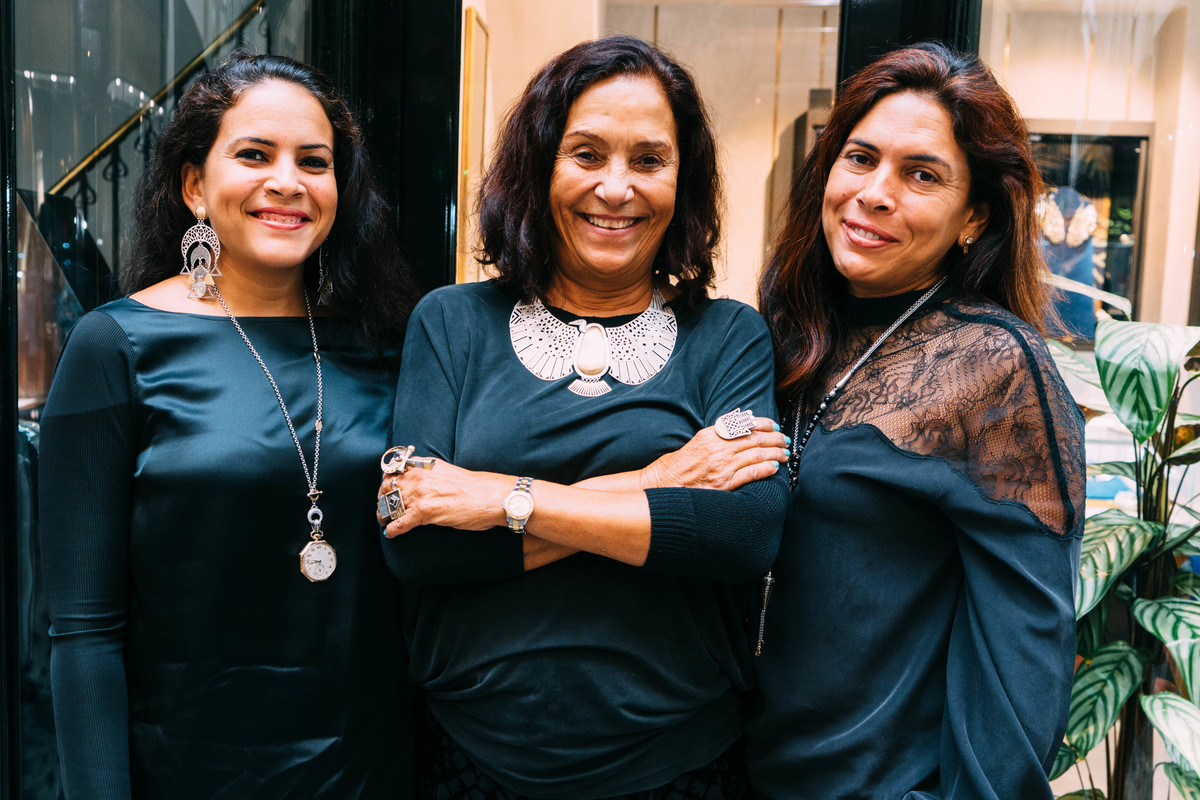
What is clear is that this is a business conceived, run and driven by women. There is Azza herself, now 74, but still chairman and creative director. Her elder daughter, Fatma, 38, is managing director, and younger daughter Amina, 35, is head of design.
However, Fahmy is the first to acknowledge the debt she owes to the master craftsmen of Kham El Khalili, Cairo’s old jewelry quarter.
Making jewelry was not her first choice of career, she reveals. After studying interior design she designed textiles and ceramics and illustrated children’s books. “But it didn’t fulfil me,” she says. “I would get bored. If you love something, you don’t get bored.”
In the late 1960s, Cairo hosted its first international book fair. In the German section, Fahmy found the book that would change her life.
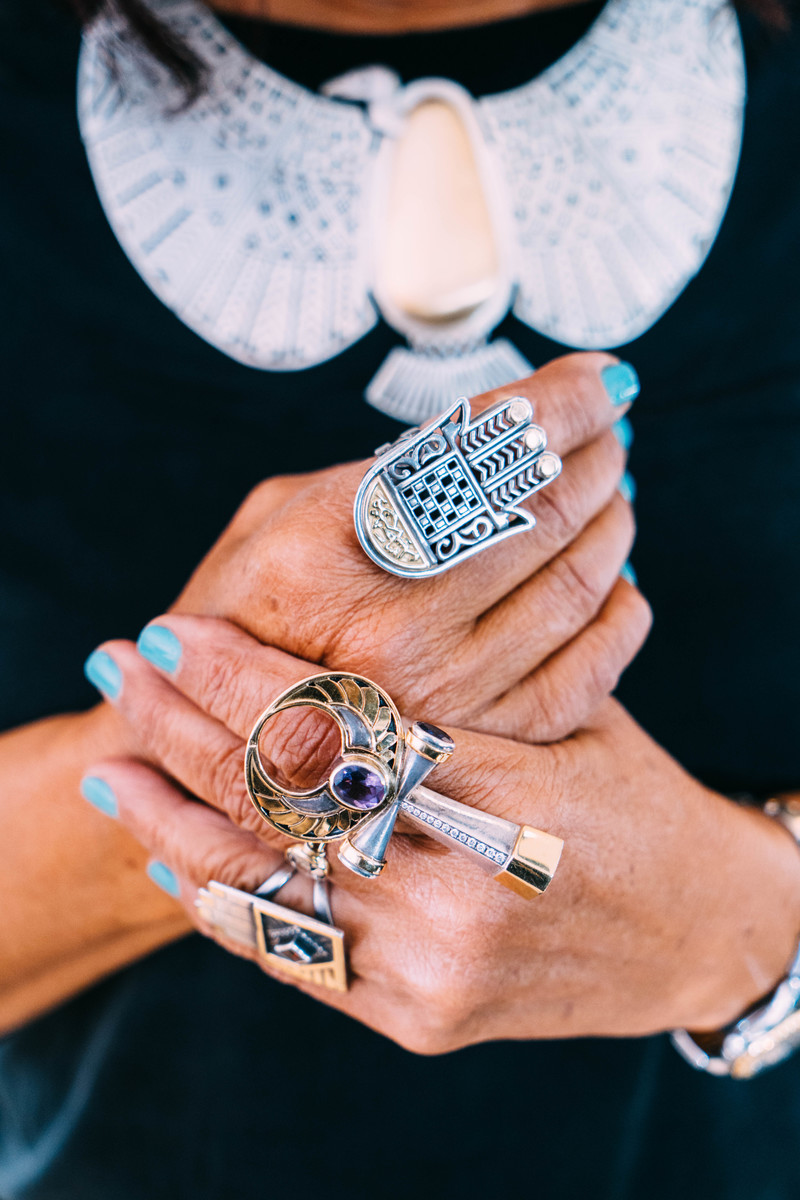
“It was a book on medieval jewelry and I opened it on a page that showed earrings shaped like donkeys made using a technique called granulation, which is lots of little balls soldered together. My heart was beating really fast and I knew: ‘This is what I want to do.’ At the time I was working for the government, doing political illustrations, and my monthly salary was 19 Egyptian pounds. The book cost 17 pounds, but I bought it because I believed it was going to change my life.”
She had found her purpose, but now she needed the skills. And she realized the people who could teach her what she needed were not in the classroom but in the souk.
Back in the late 1960s, a woman requesting to be apprenticed to a silver- or goldsmith was highly unusual. “It still is,” says Fahmy. “But they accepted me right away. They were very happy that someone like me, a person with a university degree, appreciated and respected their skill.” She trained while working full time.
After only a month, she sold her first five rings for 45 pounds (“a fortune”). She rented a little showroom once a week to display her wares. One of her best customers was the head of the British Council, who arranged for her to study at the Cass School of Art (now part of London Metropolitan University) in London.
Fahmy completed the two-year course in six months, studying nine different disciplines. “Useful is too small a word. It was transformative,” she says.
With a loan of 15,000 Egyptian pounds, Azza opened her first gallery in 1983. The rest, as they say, is history.
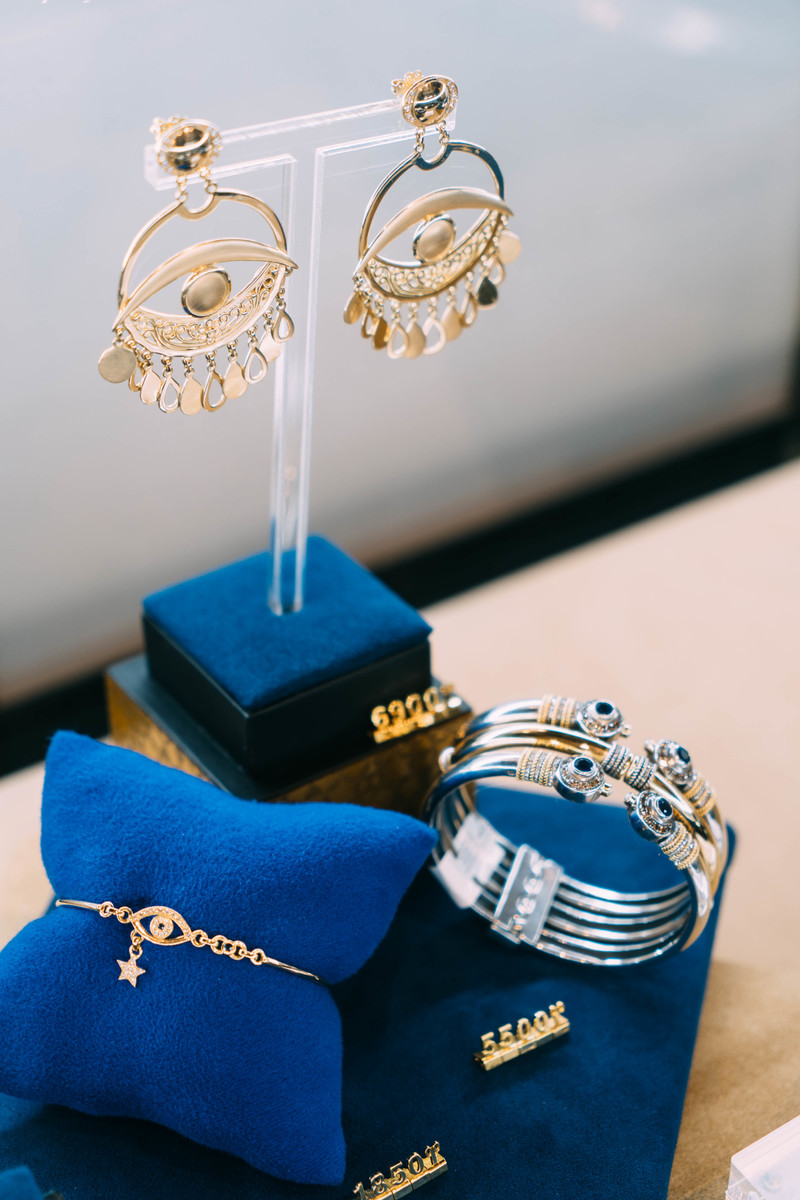
She finds inspiration in her country’s rich history. “When I started, the Europeans were the elite, but in Egypt we have the legacy of ancient Rome, ancient Greece, the Graeco-Romans, the Copts and then the Islamic period. Why look abroad?”
The London outlet has proved popular with Middle Eastern visitors, but shop manager Kris Betlem tells of four ladies from Texas who flew in to London for a rock concert that was canceled at the last minute. So they went shopping instead and spent over $50,000 in 40 minutes.
Fahmy now produces five collections a year, consisting of anything from six pieces to 20. The label also accepts bespoke commissions. Each gemstone is personally selected by Amina.
Traditionally, jewelry in the Middle East not only denoted social standing but was also a way of keeping one’s wealth in portable form.
“People bought jewelry by weight, not for the design. That’s why women wore lots of gold bangles,” Amina explains. “We have shifted perceptions by charging for the expertise and craftsmanship, but people still ask how many grams of gold in a piece.”
Fahmy has continued studying with craftsmen in Florence and has no intention of retiring. “And she wonders why she’s tired,” says Fatma.”She never stops.”
Fahmy will have none of it: “To this day I am hungry for education,” she says. “I will never stop learning.”


