

Saudi Arabia to build a new hospital in Islamabad

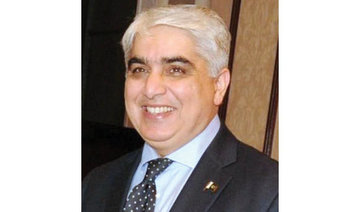
Abdullah Al Shoebi from Saudi Fund for Development (SFD) met with Pakistan’s Federal Minister for National Health Services Aamer Mehmood Kiani, on Monday, in Islamabad (Photo by Press Information Department)
Updated 27 November 2018
Follow

Saudi Arabia to build a new hospital in Islamabad

  • Facility will a capacity of 200 beds to ease the pressure on public sector entities
  • Kingdom has been providing assistance for various projects in Pakistan

ISLAMABAD: With an aim to give public sector hospitals some breathing space by catering to the growing number of patients, a delegation from Saudi Arabia met with top officials in Islamabad on Tuesday to discuss the way forward for the construction of a new 200-bed facility in the capital.

Led by Abdullah Al Shoebi from the Saudi Fund for Development (SFD), the delegation met with Pakistan’s Federal Minister for National Health Services, Aamer Mehmood Kiani on Monday to detail the Kingdom’s support for various projects.

Kiani said that the site for the new hospital has already been finalised and is ready for construction.

"Federal Minister National Health Services was briefed that the 200-bed Islamabad General Hospital at Tarlai will be established at a total cost of Rs 2,500 million on a land measuring 13 acres,” an official statement released on Tuesday read.

The Saudi mission thanked Kiani for taking a personal interest in the project and for expediting the construction work, the statement added.

“Prime Minister Imran Khan has shown a keen interest in health infrastructure development and bringing positive changes in the provision of improved healthcare delivery system for the people living in the rural areas,” Kiani said.

According to the UN's Financial Tracking Service (FTS) report, released in October this year, Saudi Arabia is ranked fourth among the world's major donors of humanitarian aid.

In Pakistan itself, the Kingdom has provided assistance amounting to $107.3 million, which was used in the implementation of 85 projects for displaced people who were affected by floods and earthquakes between 2005 and 2018, the report said.

Pakistan signals commitment to regulate digital assets in meeting with Binance leadership

Updated 6 sec ago
Follow

Pakistan signals commitment to regulate digital assets in meeting with Binance leadership

  • Binance delegation led by CEO Richard Teng meets Pakistan’s prime minister, army chief in Islamabad
  • Pakistan has attempted to tap into growing crypto market to curb illicit transactions, improve oversight

ISLAMABAD: Pakistan’s government has signaled its “strong commitment” to digital asset regulation as the country’s senior officials met the leadership of Binance, one of the world’s most prominent global cryptocurrency exchanges, the Prime Minister’s Office (PMO) said on Saturday. 

The Binance team, led by its Chief Executive Officer Richard Teng, is in Pakistan and has held meetings with Finance Minister Muhammad Aurangzeb, Pakistan Virtual Assets Regulatory Authority (PVARA) Chairman Bilal bin Saqib and senior Pakistani bank officials this week. 

Pakistan has been attempting to regulate its fast-growing crypto and digital assets market by bringing virtual asset service providers (VASPs) under a formal licensing regime. Officials say the push is aimed at curbing illicit transactions, improving oversight and encouraging innovation in blockchain-based financial services.

“Binance senior leadership visits Pakistan as government signals strong commitment to digital asset regulation,” the PMO said. 

A Binance delegation led by Teng met Chief of Army Staff and Chief of Defense Forces Field Marshal Syed Asim Munir in Islamabad. 

Saqib also attended the meeting and gave the Binance team a briefing about his organization.

Pakistan has attempted in recent months to tap into the country’s growing crypto market, a move analysts say could bring an estimated $25 billion in virtual assets into the tax net.

In September, Islamabad invited international crypto exchanges and other VASPs to apply for licenses to operate in the country, a step aimed at formalizing and regulating its fast-growing digital market.