DERA ISMAIL KHAN: Seventy-year-old Gulzar Ahmad was walking past a park near his home in the city of D.I. Khan, in Khyber-Pakhtunkhwa, when he heard roars of laughter. A group of men of all ages were laughing as though they had just heard a really good joke. But, Ahmad noticed, no one was telling jokes or even really talking.
“In the beginning I thought they were some crazy people — now I am one of them,” he said.
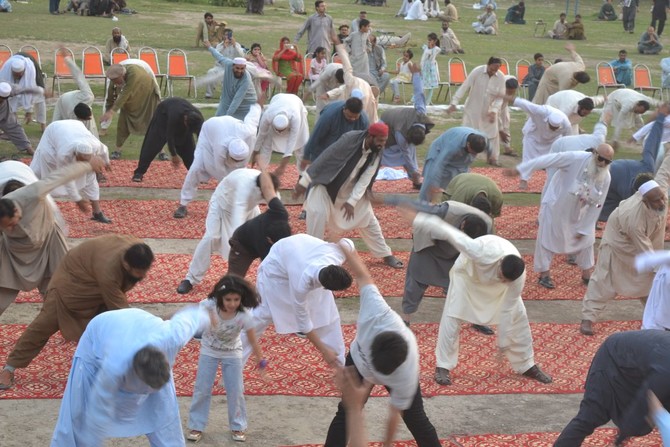
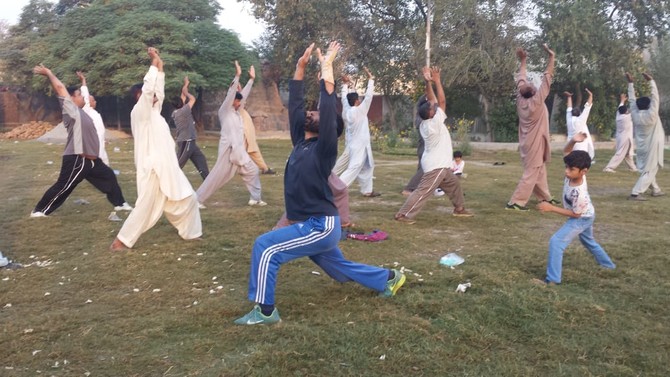
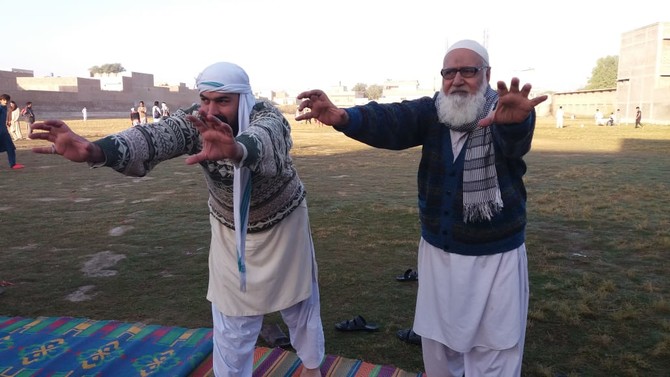
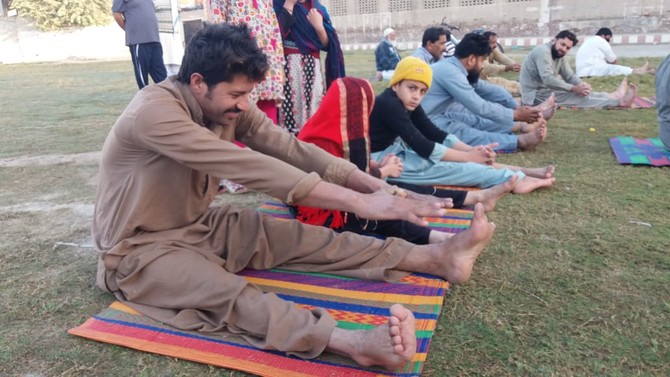
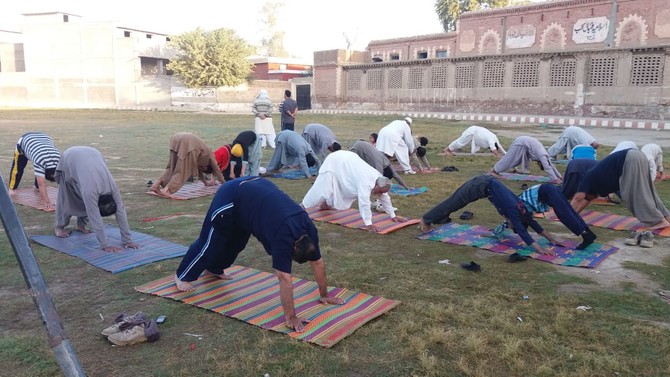
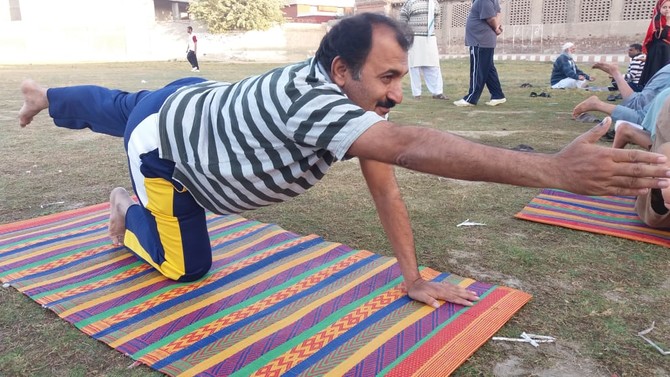
What Ahmad was witnessing was people indulging in laughter therapy, which aims to reduce stress. It was part of a yoga session, which until recently was something that not many people in the district were familiar with.
If anywhere needs its share of laughs, it is D.I. Khan. Dera Ismail Khan, to give it its full name, is the adjoining district to South Waziristan, which is one of seven tribal districts in Pakistan and shares a border with Afghanistan. Following the US invasion of Afghanistan in 2001, there was a huge influx of refugees in South Waziristan, which spilled over into D.I.Khan.
Subsequent military operations in the region added to the upheaval for residents of the underdeveloped district.
The first yoga group in the city was established at Haq Nawaz Park in 2015 by Mohammed Khalid Ali Zai, a retired military colonel.
“I wanted to do something for my native region, where I was born,” he said. “The people of the city have faced the brunt of terrorism, which spoils their lives.
That’s why I wanted to serve the population and help them keep physically fit.
“The city no longer belongs only to the people of D.I. Khan but also to the adjacent Waziristani people as well. They have been targeted by a plague of militancy for many years, which has destroyed them financially, mentally and psychologically. My dream is to see the public parks full of people and the hospitals empty.”
With people of all ages increasingly falling victim to a variety of skin, eye, stress and anxiety-related diseases, a new yoga and fitness club has opened in the heart of the city to help people stay healthy and overcome any problems. The Town Hall Yoga Club, which is for women only, provides basic fitness training and classes free of charge in the afternoons and evenings.
“Here, the majority of women are housewives and busy with domestic activities,” said Ghazala Shaheen, a yoga instructor at the club. “This is the perfect place where they can come and exercise, which ultimately helps them relieve their stress. Staying at home has made these women the victims of obesity, diabetes, high blood pressure and other diseases.”
She said that that the popularity of the club has grown quickly: “We started with just few ladies but now, after only two weeks, we have about 60. I am hopeful that soon the numbers will rise and we will have to open new centers.”
It’s not only older women who are showing interest in the sessions, but also college and university students.
“D.I. Khan is a small city,” said Sana, a student at Gomal University. “It has few options for going out. We are feeling much better, mentally and physically, since the opening of this yoga center. Its not just a place to practice yoga but a good way to mingle with other people.”
She has also noticed improvements to her health and wellbeing, too. “Before we used to breath through our mouths. Yoga has taught us to close our mouths and inhale through our noses, which is the first step of yoga,” she said, adding that the trainers have shown her how to improve the condition of her body and respiratory system.
Nizamuddin Mehsud, a welfare officer in the city who hails from the Makin subdivision of South Waziristan, said that Yoga sessions had helped him improve his digestive system and lose weight.
“I can feel huge difference in my health,” he said, “I would recommend yoga, especially for elderly people. It’s a very good activity and helps in reducing the pain that our people have been carrying in their heads for more than a decade.”
Shoaib Alizai is a lawyer in D.I. Khan and also works as an instructor at the yoga center.
“I am happy to see more and more people joining the sessions,” he said. “Now we are conducting our sessions twice a day, morning and afternoon. There is no age restriction. Now even kids are joining us, which is very encouraging. We are seeing good results among people with diabetes, obesity and orthopedic problems.”
Doctor Muhammad Waseem Akbar, chairman of the department of media studies at Gomal University, teamed up with Khalid Ali Zai to raise awareness of the benefits of yoga among the people of the city. It was not easy at first to convince people to attend the sessions. Initially, they started practicing yoga in public parks, where they could reach people easily. As the movement gained momentum, at least six yoga centers were established in the city.
“This region had faced a lot of hardships in many ways, be it economic, psychological or financial,” said Akbar. “I felt a lot of stress among the students and that was the triggering point to launch something new for the local community that could eventually help them find peace.
“Our basic aim was attract people who had been suffering from psychiatric and psychological diseases, as those people can contract other diseases in hospitals. Such patients need an alternative place with a good environment where they can exchange their views.”
The war on terror has had a huge impact on the lives of people in the region and it will take time to heal, he added.
“Now the people are coming to us after seeing the effects that Yoga can have on their lives and bodies,” said Akbar.


![]()
![]()
![]()
![]()
![]()
![]()
![]()
![]()
![]()

Yoga trends in D.I. Khan — once a Taliban gateway


Yoga trends in D.I. Khan — once a Taliban gateway
Latest updates


Recommended


© 2026 SAUDI RESEARCH & PUBLISHING COMPANY, All Rights Reserved And subject to Terms of Use Agreement.