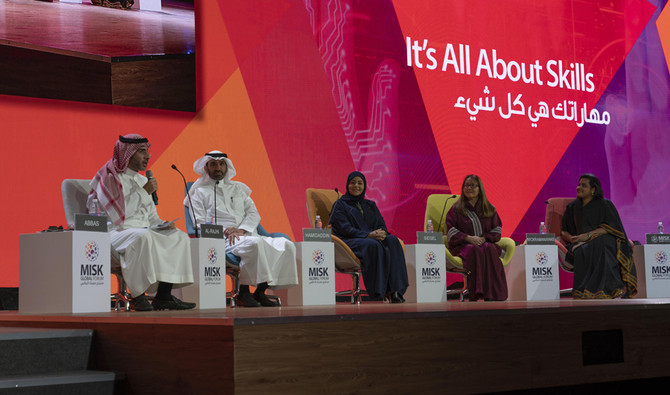






RIYADH: As the moderator of the first session, “It’s All About Skills,” at the Misk Global Forum on Wednesday, Arab News’ editor in chief Faisal J Abbas began by holding up the morning’s newspaper: “Two years ago people used to read the news like this,” he said.
But as he pointed out, the news has changed drastically, with audiences more digitally connected now getting their news through online platforms such as Twitter.
With media tweeting out his comments, Abbas began introducing his guests: Ahmed bin Suleiman Al-Rajhi, Saudi Minister of Labor and Social Development; Shaima Hamidaddin, executive manager of the Misk Global Forum; Jayathma Wickramanayake, the UN secretary general’s envoy on youth from Sri Lanka; and Sue Siegel, chief innovation officer for General Electric.
Abbas asked Al-Rajhi how the government was tackling the challenge of finding jobs for youth. “With Vision 2030 programs (that) are happening today, we have a lot of initiatives and there is potential,” the minister said. “We all need to work together and collaborate with the education system, employers that create the jobs and the ministry to give a clear direction of where we are going today.”
IN PICTURES: View the Third annual Misk Global Forum in Riyadh photo gallery
Asked whether job creation is considered a worldwide issue, the UN envoy on youth confirmed it’s not just a regional concern. “It is not a national or regional issue but a global one: Our world is younger than it has ever been before. I’d like to look at this as an opportunity to achieve sustainability.”
Wickramanayake said out that by 2030, South Asia and Africa will supply 60 percent of the world’s workforce. “We have a large majority of young people that are working but still live in poverty,” she said, and it’s important to invest in them. “If we are serious then this is the time to make those investments: to be productive citizens and employees and employers.”
One of the groups making those sorts of investments in Saudi Arabia is the Misk Foundation, the forum’s organizer, which was founded by Crown Prince Mohammed bin Salman in 2011. Hamidaddin pointed out that the foundation plays a complementary role, bridging gaps and working with partners to help equip young people with skills.
Abbas asked the question that’s on everyone’s minds these days: Are machines going to take over our jobs? Siegel said everybody looks at artificial intelligence and thinks it means machines will take over our jobs, but it will actually enable productivity and create new jobs by taking over the more mundane ones. She pointed out that everyone thought computers would take our jobs, but they just augmented what we do.
When asked about the Arab world’s perception that international companies don’t care about the region, Seigel said that just isn’t so. “It’s inaccurate,” she said. “We have been in the Kingdom for over 80 years. Seventy percent of our business is out of the US. We have 4,000 employees here. The success of the country is the success of our company. We are pleased with the progress we have made here. “
When it comes to preparing Saudi youth for the jobs of the future, Al-Rajhi said a governmental committee formed by five ministers is looking at how well education is preparing them for it.
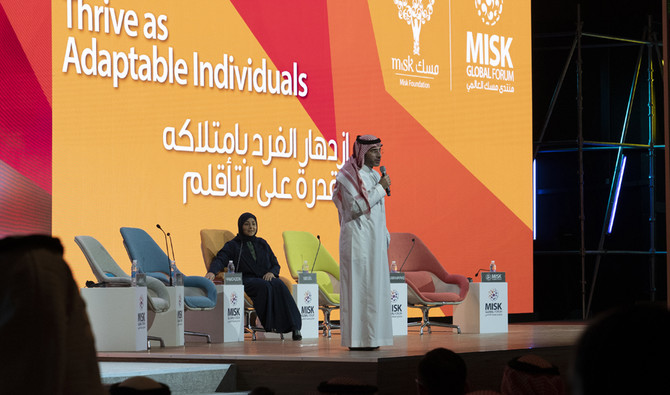
Speaking up from the audience, Saudi Education Minister Ahmed bin Mohammed Al-Issa took the mic: “It’s the easiest thing to criticize the education system, but we can see that all the people here are from education,” he said. “In general, we are reviewing all the education aspects in terms of curriculum or skills that (they) should require. We are also reviewing the specification of the needs of the labor market and education system. “
Al- Rajhi said the skills youth need for the future are definitely changing, stressing the need for problem solving, conversational skills and teamwork.
Abbas asked panelists to describe in one word what skills were needed for the future.
“Agility,” Hamidaddin said.
“The ability to learn,” said Siegel.
Wickramanayake said it’s a holistic approach and that we need to talk about skills development as a package for human beings.
And Al-Rajhi went with innovation. “Try to be always innovative or at least adaptable to innovation - in my opinion this is key to success,” he concluded.
Taking it back to his opening remarks, Abbas wrapped up the session by telling the audience to read about it on arabnews.com, prompting laughter from the audience.
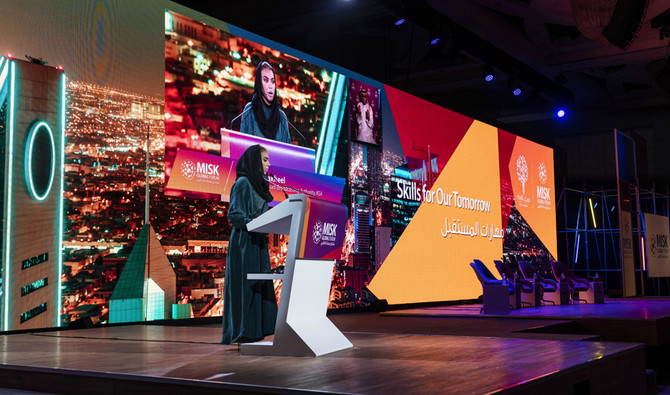
The third annual Misk Global Forum, with the theme Skills for Our Tomorrow, is taking place place at Four Seasons Hotel Riyadh at Kingdom Center on Wednesday and Thursday.