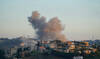
Libya warlord casts shadow over Italy’s bid to solve crisis

Haftar and the Tripoli-based Government of National Accord previously agreed to hold polls in December. (File/AFP)
Updated 13 November 2018
Follow

Libya warlord casts shadow over Italy’s bid to solve crisis

  • Haftar arrived in Palermo from his Benghazi stronghold on Monday evening after days of doubts over his crucial presence, but did not attend a working dinner with other leaders
  • Analysts say the Sicily summit risks being compromised not only by tensions between Libyan factions but also the competing agendas of foreign powers

PALERMO: Italy hosts Libyan and global leaders on Tuesday to try to kick-start a long-stalled political process and trigger elections, with eastern Libyan strongman Khalifa Haftar casting a shadow over the fresh bid to bring stability to the chaos-stricken nation.
Italy is the latest country aiming to bring Libya’s disparate and often warring factions together after a Paris summit in May saw the Tripoli-based Government of National Accord (GNA) and Haftar agree to hold national polls on December 10 — a date which has fallen by the wayside.
Acknowledging the chaotic political situation since dictator Muammar Qaddafi was deposed in 2011, the United Nations last week conceded elections will not be viable before at least the spring of 2019.
Haftar arrived in Palermo from his Benghazi stronghold on Monday evening after days of doubts over his crucial presence, but did not attend a working dinner with other leaders.
“The path to Libyan stability is complex and does not include shortcuts or miraculous solutions,” Conte told the dinner, according to Italian media.
Conte did not confirm reports that he would hold bilateral talks on Monday evening, and it was not certain that Haftar would join roundtable talks set for Tuesday morning.
Analysts say the Sicily summit risks being compromised not only by tensions between Libyan factions but also the competing agendas of foreign powers.
Just as in May, the key Libyan invitees are Haftar, the eastern parliament’s speaker Aguila Salah, GNA head Fayez Al-Sarraj and Khaled Al-Mechri, speaker of a Tripoli-based upper chamber.
The GNA says it will use the Palermo talks to lobby for security reforms that unify the army, a constitutionally rooted electoral process, economic reform and an end to “parallel institutions.”

The US, Arab countries and European nations have all sent representatives to the talks, including Egypt’s President Abdel Fattah El-Sisi and Russian President Dmitry Medvedev.
For Rome’s populist government, a top priority is stemming the flow of migrants who exploit Libya’s security vacuum in their quest to reach European shores, often via Italy.
UN envoy Ghassan Salame told the Security Council on Thursday that a national conference in early 2019 would be organized to provide “a platform” for Libyans to spell out their vision for the future.
But diplomatic wrangling between Italy and France hangs over this summit.
In September, Italy’s defense minister and parliamentary speaker both partly blamed France for Libya’s security crisis, which continues to simmer some seven years after the NATO-backed uprising toppled Qaddafi.
The Italian swipes came as Tripoli was plagued by militia clashes that killed at least 117 people and wounded more than 400 between late August and late September.
Salame’s deputy Stephanie Williams on Monday hailed the GNA’s moves to secure Tripoli since then but said more must be done to “generate regular forces ready to assume security responsibilities in the capital.”
Rome and Paris have for months been at loggerheads over Libya’s election timetable. While France repeatedly endorsed the December date, Italy opposed it.
Italy has not been alone in pushing for elections to be delayed. The December 10 date was also viewed skeptically by Washington and Moscow.
One Italian diplomatic source said that no definitive poll date should be set at the summit and it is “not sure that there will be a final document” after the talks.
According to diplomats and analysts, Russia, France, Egypt and the UAE support Haftar, while Turkey and Qatar have thrown their weight behind rivals to the eastern strongman, especially Islamist groups.


Sudan’s prime minister takes his peace plan to the UN, but US urges humanitarian truce now

Updated 8 sec ago
Follow

Sudan’s prime minister takes his peace plan to the UN, but US urges humanitarian truce now

  • Sudan’s prime minister is proposing a wide-ranging peace initiative to end a nearly 1,000-day war with a rival paramilitary force
  • It seems unlikely the RSF would support the proposal, which would essentially give government forces a victory and take away their military power
UNITED NATIONS: Sudan’s prime minister on Monday proposed a wide-ranging peace initiative to end a nearly 1,000-day war with a rival paramilitary force, but the United States urged both sides to accept the Trump administration’s call for an immediate humanitarian truce.
Kamil Idris, who heads Sudan’s transitional civilian government, told the Security Council his plan calls for a ceasefire monitored by the United Nations, African Union and Arab League, and the withdrawal of paramilitary forces from all areas they occupy, their placement in supervised camps and their disarmament.
Sudan plunged into chaos in April 2023 when a power struggle between the military and the powerful paramilitary Rapid Support Forces exploded into open fighting, with widespread mass killings and rapes, and ethnically motivated violence. This has amounted to war crimes and crimes against humanity, according to the UN and international rights groups.
It seemed highly unlikely the RSF would support the prime minister’s proposal, which would essentially give government forces a victory and take away their military power.
In an indirect reference to the truce supported by the US and key mediators Saudi Arabia, Egypt and the United Arab Emirates, known as the Quad, Idris stressed to the UN Security Council that the government’s proposal is “homemade — not imposed on us.”
In early November, the Rapid Support Forces agreed to a humanitarian truce. At that time, a Sudanese military official told The Associated Press the army welcomed the Quad’s proposal but would only agree to a truce when the RSF completely withdraws from civilian areas and gives up their weapons — key provisions in the plan Idris put forward on Monday.
Idris said unless the paramilitary forces were confined to camps, a truce had “no chance for success.” He challenged the 15 members of the Security Council to back his proposal.
“This initiative can mark the moment when Sudan steps back from the edge and the international community — You! You! — stood on the right side of history,” the Sudanese prime minister said. He said the council should “be remembered not as a witness to collapse, but as a partner in recovery.”
US deputy ambassador Jeffrey Bartos, who spoke to the council before Idris, said the Trump administration has offered a humanitarian truce as a way forward and “We urge both belligerents to accept this plan without preconditions immediately.”
Bartos said the Trump administration strongly condemns the horrific violence across Darfur and the Kordofan region — and the atrocities committed by both the Sudanese Armed Forces and the Rapid Support Forces, who must be held accountable.
UAE Ambassador Mohamed Abushahab, a member of the Quad, said there is an immediate opportunity to implement the humanitarian truce and get aid to Sudanese civilians in desperate need.
“Lessons of history and present realities make it clear that unilateral efforts by either of the warring parties are not sustainable and will only prolong the war,” he warned.
Abushahab said a humanitarian truce must be followed by a permanent ceasefire “and a pathway toward civilian rule independent of the warring parties.”
UN Assistant Secretary-General for political affairs Khaled Khiari reflected escalating council concerns about the Sudan war, which has been fueled by the continuing supply of increasingly sophisticated weapons.
He criticized unnamed countries that refuse to stop supplying weapons, and both government and paramilitary forces for remaining unwilling to compromise or de-escalate.
“While they were able to stop fighting to preserve oil revenues, they have so far failed to do the same to protect their population,” Khiari said. “The backers of both sides must use their influence to help stop the slaughter, not to cause further devastation.”
The devastating war in Sudan has killed more than 40,000 people according to UN figures, but aid groups say the true number could be many times higher. The conflict has created the world’s largest humanitarian crisis, with over 14 million people displaced, disease outbreaks and famine spreading in parts of the country.