

Government fires PTV Director

Updated 07 November 2018
Follow

Government fires PTV Director

  • Follows embarrassing error where channel spelt “Beijing” as “begging”
  • Blooper was part of PM Khan’s speech to the nation during recent trip to China

ISLAMABAD: Was it a genuine oversight or a well-thought-out wordplay?
That’s what several on Twitter debated on Wednesday as the government issued orders to remove Pakistan Television’s (PTV) Managing Director, Col. Hassan Immad Mohammadi from his post.
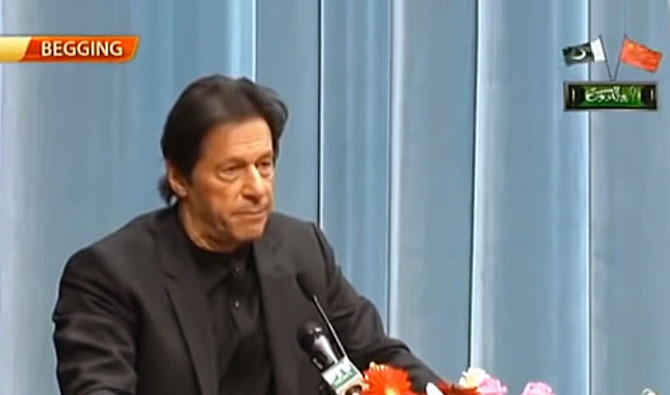
The decision followed a colossal faux pas on part of the channel which used the word “begging” instead of “Beijing” for its locator graphic, during a speech by Prime Minister Imran Khan from China.
And while some were of the opinion that the typographic error was a genuine spelling mistake, others said the timing of the word’s usage was suspect considering PM Khan was in China at the time to secure aid, to resolve the country’s ongoing economic crisis.
The speech, which was being broadcast live from Beijing on November 4, had the graphic for 20 seconds of PM Khan’s address — on the top left corner of the screens – following which it was removed. But not before several on social media spotted the mistake, resulting in #begging becoming the top trend on Twitter.
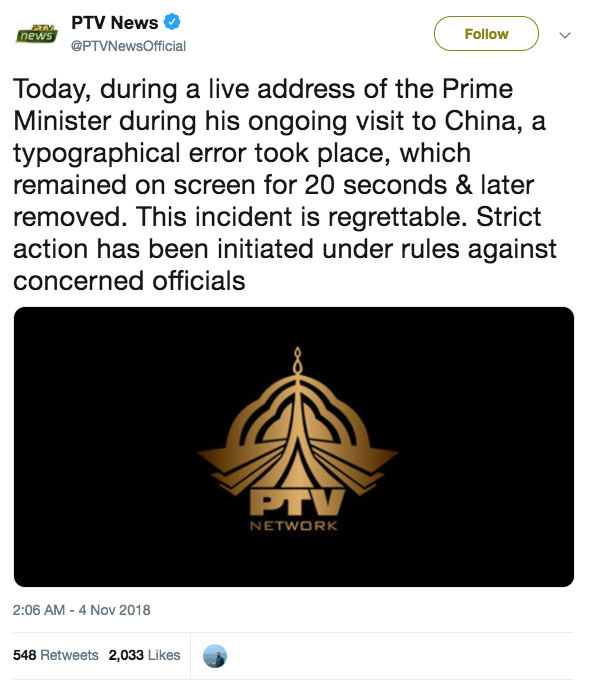
PTV, on its part, acknowledged the error and tweeted an apology: “Today, during a live address of the Prime Minister during his ongoing visit to China, a typographical error took place, which remained on screen for 20 seconds & later removed. This incident is regrettable. Strict action has been initiated under rules against concerned officials.”
An official order issued by the Ministry of Information and Broadcasting on Tuesday dismissed Mohammadi from his post, without directly mentioning the reason or incident. Mohammadi had assumed office in October this year.

REACTIONS ON SOCIAL MEDIA


Pakistan finance minister touts debt discipline, export focus at Davos panel

Updated 5 sec ago
Follow

Pakistan finance minister touts debt discipline, export focus at Davos panel

  • Aurangzeb says debt must fund exports, not consumption, for sustainable growth
  • He says Pakistan used fiscal buffers to respond to floods without external appeals

KARACHI: Pakistan’s Finance Minister Muhammad Aurangzeb said on Wednesday disciplined borrowing, export-led growth and careful debt management were central to stabilizing the country’s economy, as Islamabad looks to unlock new sources of growth amid rising global debt levels.

Speaking at a panel discussion on the sidelines of the World Economic Forum (WEF) in Davos, he said debt was not inherently harmful if used productively, but warned that emerging economies such as Pakistan could not afford to deploy borrowed funds for consumption.

“For countries like Pakistan, debt must be channeled into investments that generate exportable surplus,” Aurangzeb said, according to a statement circulated by the Finance Division. “It is not about the availability of debt or funding, but how wisely and effectively it is steered to create long-term economic value.”

Pakistan has been pursuing fiscal reforms as part of an International Monetary Fund-backed stabilization program, including cutting subsidies, broadening the tax base and restructuring state-owned enterprises, as the government seeks to restore macroeconomic stability and revive growth.

Aurangzeb said Pakistan had reduced its debt-to-GDP ratio to 70 percent from 75 percent, achieved a primary fiscal surplus and brought inflation down from a peak of 38 percent to single digits, allowing the central bank to cut its policy rate to 10.5 percent.

He also flagged ongoing debt-management reforms, including liability management operations and buybacks, and said Pakistan plans to enter China’s capital markets with its first Panda bond, structured as a green bond.

Addressing climate risks, Aurangzeb said building fiscal buffers had allowed Pakistan to respond to recent floods using domestic resources rather than international emergency appeals, underscoring the need for resilience in climate-vulnerable economies.

He added that public-private partnerships and capital markets were playing a growing role in financing development, citing a $3.6 billion syndicated financing for a major copper mining project expected to generate $2.8 billion in annual exports from 2028.

The finance minister is part of Pakistan’s delegation visiting Davos for the annual gathering of global leaders and investors.

The delegation is led by Prime Minister Shehbaz Sharif, who highlighted the country’s shift toward an export-driven growth model, with a focus on minerals, information technology, artificial intelligence and digital services, while speaking at a breakfast event on the sidelines of the forum.