DUBAI: The US-backed Alhurra TV channel relaunched its news outlets on Sunday ahead of the Trump administration reimposing key sanctions on Iran.
The channel — part of umbrella corporation Middle East Broadcasting Networks (MBN) — is no stranger to controversy, with previous claims that it is a mouthpiece for the US government.
Yet a senior Alhurra executive said the relaunched network — which comes as the Trump administration looks to gain support for its harder line on Tehran — will not shy away from reporting the pressing issues affecting the Middle East.
“We will not be holding back on the things that we believe need to be discussed very openly — for example, terrorism, the involvement and interference of Iranian forces and their proxy in the region,” Nart Bouran, senior vice president of news, programming and transformation at MBN, told Arab News.
Alhurra, which first launched in 2004 as a counter voice to a perceived anti-US media bias among some Middle East networks, attracted notoriety in the region over allegations it is a US propaganda machine, partly because it is indirectly funded by Congress through the US Agency for Global Media, an independent federal agency.
This was also highlighted by Alhurra’s coverage of the Iraq Abu Ghraib prison-torture scandal under then-US President George Bush’s tenure in mid-2004.
Alhurra, which is Arabic for “the free one,” was the first Arabic news channel to air an interview in which Bush apologized to the Arab world, with many in the Middle East seeing that as a confirmation that the channel has a US government agenda.
The US-backed channel only broadcasts in the Middle East and North Africa, and not in the US where it is headquartered. Yet Bush’s decision to issue his first apology via Alhurra was unpopular with many US citizens — as well as many in the Arab world.
Bouran, however, said the relaunch will clear up any “misconception” about Alhurra and what it stands for.
“I think you’ll notice that when it comes to the US policy, there are voices that speak for and against and all voices are present on our screen,” Bouran said. “Alhurra can take the opportunity to make ourselves present proper media or journalistic values that others might claim (but) we will actually implement.”
The relaunch includes the opening of new studios at Dubai Media City; Alhurra also has a bureau in Baghdad, where it operates Alhurra Iraq, and it hopes to boost its presence across the Arab world, and especially in Saudi Arabia.
“We’re hoping that we can also be present in Saudi Arabia soon because we believe it’s very important to be there and be able to cover Saudi Arabia properly,” Bouran said.
The decision to go for studios in Dubai and not another Arab country is due to logistics, Bouran explained, saying that it is about “getting in touch with guests who want to appear on screen and early on in the day to have a full 24-hour news service.”
However, when asked whether the channel has editorial agreements with the governments of the countries it operates in, Bouran responded by saying: “No, the simple answer is no.”
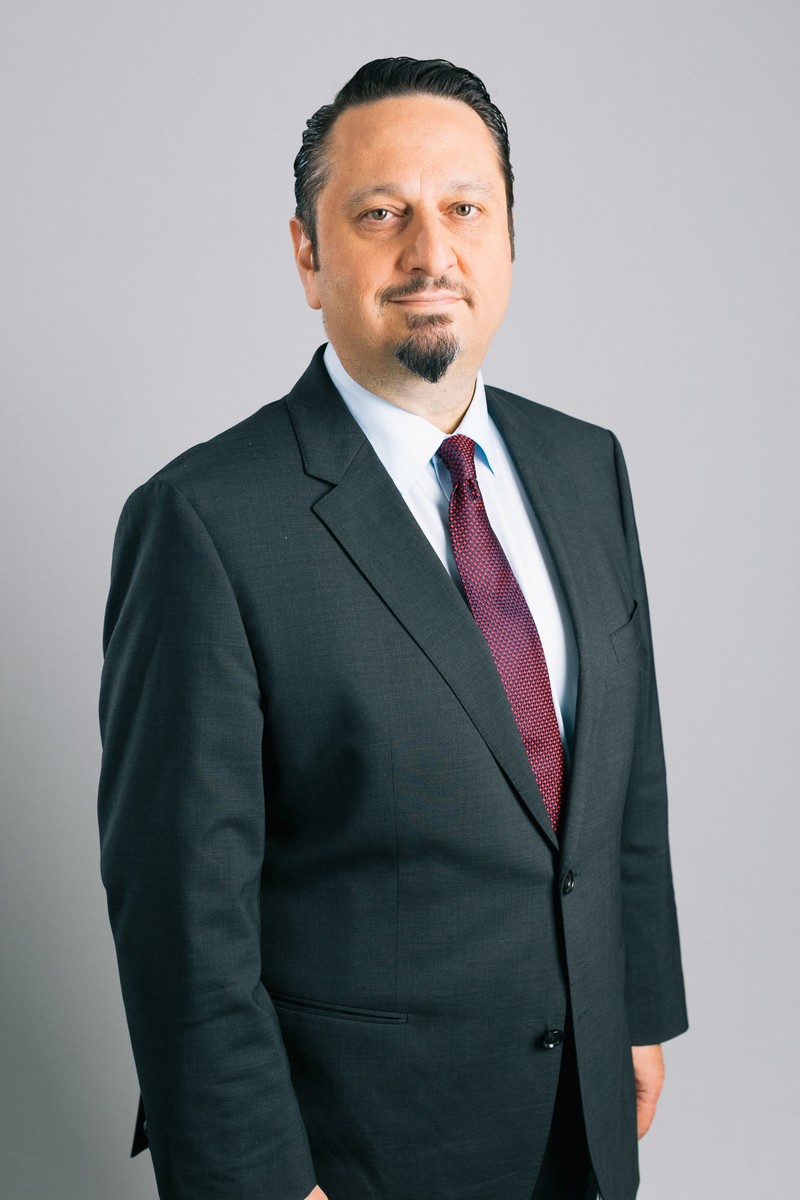
Nart Bouran: Senior VP of News, Programming and Transformation at MBN
Alhurra operates in a media landscape that it vastly different to when it launched in 2004, with its audience now relying heavily on digital and social media platforms as primary sources of news.
“Nobody argues that (social media is not) very important but you also have to remember all the viewers, and not everyone is going to get into social media; there’s a connectivity issue for a lot of countries in the Arab world,” Bouran said.
He also explained that Alhurra is taking a “holistic approach,” with a large number of platforms, including digital and social media and linear TV, carrying its content.
Although the market is already saturated — with Arabic heavyweight channels such as Saudi-owned Al-Arabiya, BBC Arabic, CNN Arabic and Qatari-owned Al Jazeera already dominating screens — Bouran said the relaunch is “timely” and that there is a “strong and prominent” role Alhurra can play.