JEDDAH: Egyptian President Abdel Fattah El-Sisi opened the second World Youth Forum in Sharm El-Sheikh on Saturday. Palestinian President Mahmoud Abbas attended the opening at the International Congress Center.
In his speech, El-Sisi said that the aims of the forum are to create a world of “hope, beauty, and humanity, without conflict, poverty, ignorance and illness” and to help young innovators realize their dreams.
“The first recommendation of the forum will be a call for the world to (recognize and condemn) the crimes committed by Daesh, and all the other extremist organizations in the world,” he said.
“Extremism, discrimination and racism are totally rejected in Egypt.”
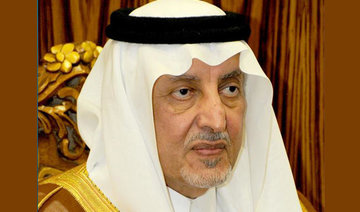
Makkah Gov. Prince Khaled Al-Faisal also participated in the opening of the event on behalf of King Salman. He was received at Sharm El-Sheikh Airport by Maj. Gen. Khaled Fouda, governor of South Sinai, and Osama bin Ahmed Nuqali, the Saudi ambassador to Egypt and the Kingdom’s permanent representative to the Arab League.
The three-day forum is set to discuss several issues including development and innovation; water security; the role of world leaders in developing and maintaining peace; Euro-Mediterranean cooperation; the role of soft power in countering extremism and terrorism; Agenda 2063 — a blueprint for sustainable development in Africa; the empowerment of people with disabilities; and the role voluntary work can play in building for the future.
The forum brings together 5,000 young people from 160 nations to take part in 30 sessions. Keynote speakers at the opening ceremony stressed the need for discussion and exchange of expertise.
Jayathma Wickramanayake, the UN secretary-general’s envoy on youth, said that such discussions help to convey the ideas of young people from around the world to their leaders, thus allowing them to participate in political and social development.
Nelson Mandela’s grandson, Zondwa, also spoke at the event, and said the conference “brings together young men and women from all over the world to discuss ways to make this world a better place.”
Iraqi Yazidi human rights activist and Nobel Peaze Prize co-winner Nadia Murad said the world is in the midst of several major crises, and that millions are oppressed by extremists and terrorists and deprived of their human rights — particularly women and children.
The young Egyptian writer, Mohamed Khairat, discussed his media organization Egyptian Streets, saying that its main objective is to raise awareness of important issues and help refugees. He added that social media has helped “empower (everyone to) make a difference.”


![]()
![]()


World Youth Forum envisages a planet free of conflicts
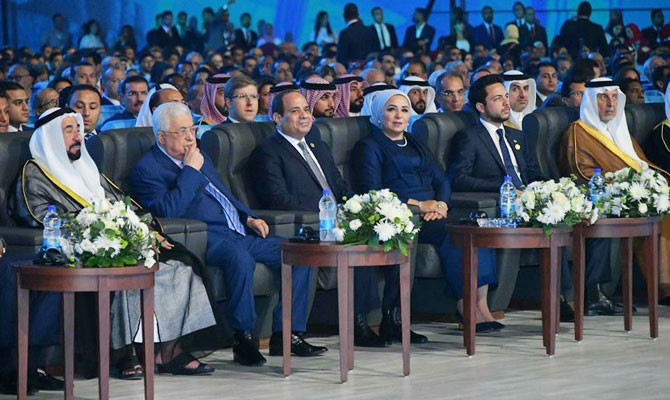
World Youth Forum envisages a planet free of conflicts
- Makkah Gov. Prince Khaled Al-Faisal participated in the opening of the event on behalf of King Salman
- The forum brings together 5,000 young people from 160 nations to take part in 30 sessions

Iranian ambassador thanks Saudi for not allowing territory to be used during
- Alireza Enayati tells AFP Iran appreciates Kingdom's pledge not to allow its 'airspace, waters, or territory' to be used in US attacks
- Envoy also denies that his country hit the US embassy in Riyadh this week with drones
RIYADH: Iran’s ambassador to Saudi Arabia Alireza Enayati said on Thursday his country remained appreciative of Saudi Arabia’s pledge to not allow its airspace or territory to be used during the ongoing war with the US and Israel.
“We appreciate what we have repeatedly heard from Saudi Arabia — that it does not allow its airspace, waters, or territory to be used against the Islamic Republic of Iran,” he told AFP.
Before the outbreak of war, Riyadh had thrown its support behind diplomatic efforts to diffuse tensions between Tehran and Washington and vowed that its airspace would not be allowed to be used for attacks against Iran.
Enayati also categorically denied that his country hit the US embassy in Riyadh this week, after Saudi officials said Iran targeted the compound with drones.
Saudi Arabia has repeatedly accused Tehran of launching missile salvos and drone attacks at its territory and warned that the kingdom reserved the right to defend itself, including by retaliating.
Iran had earlier denied attacking the sprawling Ras Tanura refinery — one of the largest in the Middle East — which Riyadh had also accused Tehran of targeting twice with drones.
Enayati added to the denial, saying Iran also had no hand in the targeting of the US embassy that triggered a fire at the compound.
“We confirmed that Iran has no role in the attack on the US embassy in Riyadh,” the ambassador told AFP.
“If the operations command in Tehran attacks somewhere, it takes responsibility for it.”
The war in the Middle East has engulfed the otherwise stable Gulf region as Iran retaliates over US and Israeli strikes that killed its supreme leader, launching strikes at Israel, the wider region and beyond.
At least 13 people have been killed in the Gulf, including seven civilians, since Iran began its attacks on Saturday.
Enayati, however, denied that Iran was waging a regional war as retaliation for the attacks on his country by the US and Israel.
“This is not a regional war and it is not our war. It was imposed on the region,” he told AFP.
“We appreciate what we have repeatedly heard from Saudi Arabia — that it does not allow its airspace, waters, or territory to be used against the Islamic Republic of Iran,” he told AFP.
Before the outbreak of war, Riyadh had thrown its support behind diplomatic efforts to diffuse tensions between Tehran and Washington and vowed that its airspace would not be allowed to be used for attacks against Iran.
Enayati also categorically denied that his country hit the US embassy in Riyadh this week, after Saudi officials said Iran targeted the compound with drones.
Saudi Arabia has repeatedly accused Tehran of launching missile salvos and drone attacks at its territory and warned that the kingdom reserved the right to defend itself, including by retaliating.
Iran had earlier denied attacking the sprawling Ras Tanura refinery — one of the largest in the Middle East — which Riyadh had also accused Tehran of targeting twice with drones.
Enayati added to the denial, saying Iran also had no hand in the targeting of the US embassy that triggered a fire at the compound.
“We confirmed that Iran has no role in the attack on the US embassy in Riyadh,” the ambassador told AFP.
“If the operations command in Tehran attacks somewhere, it takes responsibility for it.”
The war in the Middle East has engulfed the otherwise stable Gulf region as Iran retaliates over US and Israeli strikes that killed its supreme leader, launching strikes at Israel, the wider region and beyond.
At least 13 people have been killed in the Gulf, including seven civilians, since Iran began its attacks on Saturday.
Enayati, however, denied that Iran was waging a regional war as retaliation for the attacks on his country by the US and Israel.
“This is not a regional war and it is not our war. It was imposed on the region,” he told AFP.
Latest updates


© 2026 SAUDI RESEARCH & PUBLISHING COMPANY, All Rights Reserved And subject to Terms of Use Agreement.