Director hits the right note with film on folk music

1 / 3
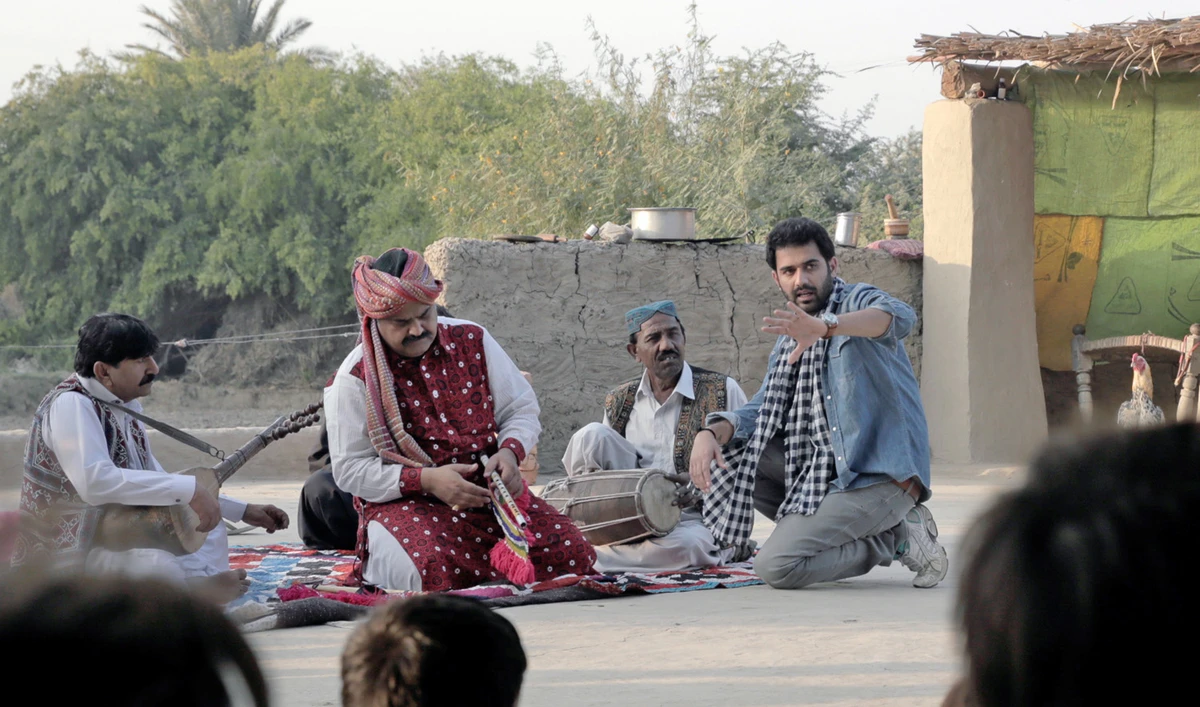
‘Indus Blues’ weaves the story of the reality facing those holding strong to the folk music, the rapidly disappearing instruments and threatened craftsmanship that have been intertwined with the diverse cultures present in Pakistan along the Indus for ages. (Photo courtesy: Jawad Sharif)
2 / 3
‘Indus Blues’ weaves the story of the reality facing those holding strong to the folk music, the rapidly disappearing instruments and threatened craftsmanship that have been intertwined with the diverse cultures present in Pakistan along the Indus for ages. (Photo courtesy: Jawad Sharif)
3 / 3
‘Indus Blues’ weaves the story of the reality facing those holding strong to the folk music, the rapidly disappearing instruments and threatened craftsmanship that have been intertwined with the diverse cultures present in Pakistan along the Indus for ages. (Photo courtesy: Jawad Sharif)
Updated 31 October 2018
Follow

Director hits the right note with film on folk music

  • Documentary aims to highlight difficulties faced by artistes in Pakistan, Sharif says
  • Indus Blues also throws light on endangered genre of music and instruments used

DUBAI: By panning the camera on the dying breed of folk artistes across the country, Pakistani filmmaker Jawad Sharif said that he hoped to unearth the genre’s “hidden gems” through his latest venture, Indus Blues.
Speaking exclusively to Arab News, Sharif said that virtuosos in the field continue to live a difficult life in Pakistan, as “being a music performer is a social taboo in society.”
During the research phase of his project, Sharif says he came across several instances of people who were of the opinion that the income earned by musicians was haram (against Islamic principles or forbidden), thereby making it an arduous task for the folk artistes to earn a decent livelihood.
“While we had a general impression about people looking down upon musicians as a lower segment of the society, we were shocked during our research about how difficult life was for them. This is why folk musicians are leaving their art form in droves,” he said, adding that this very experience forced him to create “Indus Blues.”
Having won notable awards for ‘K2 & the Invisible Footmen,’ a feature film which was screened at several international film festivals, Sharif said he was hoping to reach a wider audience in the Gulf region through his latest venture.
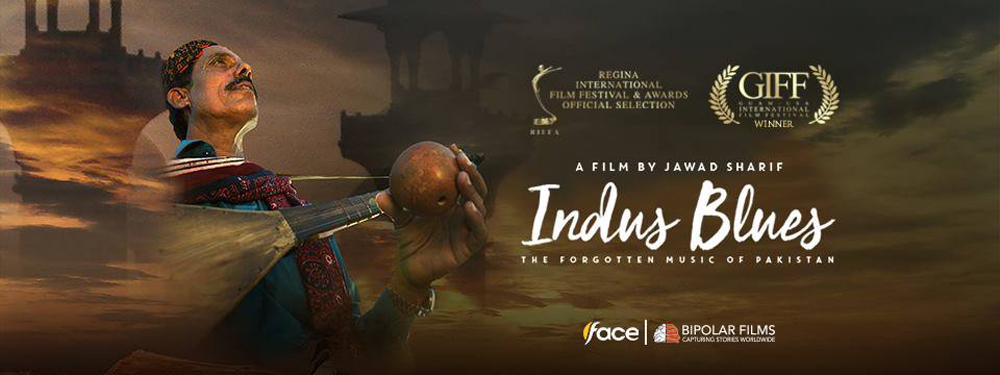
‘Indus Blues’ premiered at the Regina International Film Festival in Canada earlier this year and earned critical acclaim, taking home the Grand Jury Award for Best Documentary Feature at the Guam International Film Festival 2018, in October this year.
idher

The film, which took more than three years to complete, weaves the story of nine instruments and a group of musicians who choose to face society's harsh realities every day in order to protect their endangered craft – the very art form that has been an integral aspect of the diverse cultures representing Pakistan, along the Indus, for ages.
Through his journey of a thousand miles, Sharif takes us through the northern Karakoram mountains to the southern coastline, all the while in search of Pakistan’s folk treasures.
When he finally chances upon them, he discovers that instead of a culture that should be thriving, artistes from this specific genre of music were struggling to make ends meet as they continued to fight the odds against those who did not see the value in keeping the art alive. “There are elements in the society who are against this valuable heritage,” he said, analyzing conversations with several community members who expressed resentment for the craft.
Narrating details of one such interaction, he talked about an incident whereby his production team was moments away from being attacked. “In the concluding sequence of the trailer, a student union at a prominent educational institution in Peshawar stopped us from covering a sarinda (a stringed folk musical instrument similar to lutes or fiddles popular across the Indian subcontinent) performance, even though we had the permissions to do so, because, according to them, it was not a part of their culture,” he said.
With a desire to compel people to think otherwise, Sharif lamented that our culture would be half empty “if [we] close our eyes to our rich musical heritage.”
“In a country riddled with political turmoil, economic challenges, and social identity crisis, musicians and instrument craftsmen find it hard to survive and sustain their art. We have to share these hidden gems. The world should know that Pakistan is a home of beautiful instruments and musicians,” he said.
Pakistan opposition rallies in Khyber Pakhtunkhwa to demand release of Imran Khan

Updated 07 December 2025
Follow

Pakistan opposition rallies in Khyber Pakhtunkhwa to demand release of Imran Khan

  • PTI-led gathering calls the former PM a national hero and demands the release of all political prisoners
  • Government says the opposition failed to draw a large crowd and accuses PTI of damaging its own politics

ISLAMABAD: Pakistan’s opposition led by the Pakistan Tehreek-e-Insaf (PTI) party demanded the release of jailed former prime minister Imran Khan at a rally in the northwestern Khyber Pakhtunkhwa province on Sunday, describing him as a national hero who continues to command public support.

The gathering came days after a rare and strongly worded briefing by the military’s media chief, Lt. Gen. Ahmed Sharif Chaudhry, who dismissed Khan as “narcissistic” and “mentally ill” on Friday while responding to the former premier’s allegations that Pakistan’s chief of defense forces was responsible for undermining the constitution and rule of law.

He said that Khan was promoting an anti-state narrative which had become a national security threat.

The participants of the rally called for “civilian supremacy” and said elected representatives should be treated with respect.

“We, the people of Pakistan, regard Imran Khan as a national hero and the country’s genuinely elected prime minister, chosen by the public in the February 8, 2024 vote,” said a resolution presented at the rally in Peshawar. “We categorically reject and strongly condemn the notion that he or his colleagues pose any kind of threat to national security.”

“We demand immediate justice for Imran Khan, Bushra Bibi and all political prisoners, and call for their prompt release,” it added, referring to Khan’s wife who is also in prison. “No restrictions should be placed on Imran Khan’s meetings with his family, lawyers or political associates.”

Addressing the gathering, Sohail Afridi, the chief minister of Khyber Pakhtunkhwa, denied his administration was not serious about security issues amid increased militant activity. However, he maintained the people of his province had endured the worst of Pakistan’s conflict with militancy and urged a rethinking of long-running security policies.

The resolution asked the federal government to restore bilateral trade and diplomatic channels with Afghanistan, saying improved cross-border ties were essential for the economic stability of the region.

The trade between the two neighbors has suffered as Pakistan accuses the Taliban administration in Kabul of sheltering and facilitating armed groups that it says launch cross-border attacks to target its civilians and security forces. Afghan officials deny the claim.

The two countries have also had deadly border clashes in recent months that have killed dozens of people on both sides.

Some participants of the rally emphasized the restoration of democratic freedoms, judicial independence and space for political reconciliation, calling them necessary to stabilize the country after years of political confrontation.

Reacting to the opposition rally, Information Minister Attaullah Tarrar said the PTI and its allies could not gather enough people.

“In trying to build an anti-army narrative, they have ruined their own politics,” he said, adding that the rally’s reaction to the military’s media chief’s statement reflected “how deeply it had stung.”

“There was neither any argument nor any real response,” he added, referring to what was said by the participants of the rally.