Egyptian archaeologists find parts of pharaoh’s booth

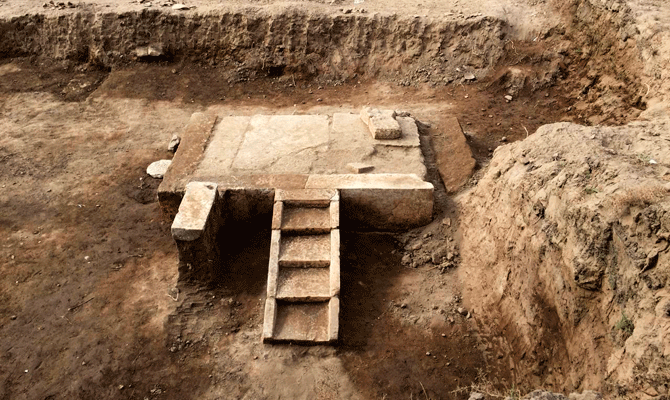
This Oct. 2018 photo released by the Egyptian Ministry of Antiquities, shows parts of a booth with a seat that belonged to Ramses II, one of the longest ruling pharaohs in antiquity, in eastern Cairo's Matariya neighborhood, Egypt. (AP)
Updated 27 October 2018
Follow

Egyptian archaeologists find parts of pharaoh’s booth

  • The Antiquities Ministry says the artifacts were found during an excavation in eastern Cairo’s Matariya neighborhood
  • The booth with a seat probably belonged to famous pharaoh Ramses I

CAIRO: Egypt says archaeologists have uncovered parts of a booth with a seat that belonged to famous pharaoh Ramses II, one of the longest ruling pharaohs in antiquity.
Thursday’s statement from the Antiquities Ministry says the artifacts were found during an excavation in eastern Cairo’s Matariya neighborhood.
Egyptologist Mamdouh el-Damaty says the structure was probably used in celebrations and for public gatherings, and dates back to the 19th Dynasty.
Ramses II ruled Egypt more than 3,000 years ago. He is credited with expanding ancient Egypt’s reach as far as present-day Syria and Sudan, campaigns that earned him the title “Ramses the Great.”
Egypt frequently announces archaeological discoveries, hoping this will spur interest in the country’s ancient treasures and revive tourism, which was hit hard by political turmoil following the 2011 uprising.


The art of war: fears for masterpieces on loan to Louvre Abu Dhabi

Updated 13 March 2026
Follow

The art of war: fears for masterpieces on loan to Louvre Abu Dhabi

  • UAE paid more than €1 billion to borrow priceless works, but experts in France want them back

PARIS: The Middle East war has raised fears for the safety of priceless masterpieces on loan from France to the Louvre Abu Dhabi, the museum’s only foreign branch.
The Abu Dhabi museum, which opened in 2017, has so far escaped damage from nearly 1,800 Iranian drone and missile strikes launched since the conflict erupted on Feb. 28.
However, concerns are mounting in France. “The works must be removed,” said Didier Selles, who helped broker the original agreement between France and the UAE.
French journal La Tribune de l’Art echoed that alarm. “The Louvre’s works in Abu Dhabi must be secured!” it said.
France’s culture ministry said French authorities were “in close and regular contact with the authorities of the UAE to ensure the protection of the works loaned by France.”
Under the agreement with the UAE, France agreed to provide expertise, lend works of art and organize exhibitions, in return for €1 billion, including €400 million for licensing the use of the Louvre name. The deal was extended in 2021 to 2047 for an additional €165 million.
Works on loan include paintings by Rembrandt and Chardin, Classical statues of Isis, Roman sarcophagi and Islamic masterpieces: such as the Pyxis of Al-Mughira.

A Louvre Abu Dhabi source said the museum was designed to protect collections from both security threats and natural disasters.