

Sheraton Grand: a piece of 1920s history in modern London

The entrance of the Sheraton Grand in London. (Supplied)
Updated 24 October 2018
Follow

Sheraton Grand: a piece of 1920s history in modern London

  • The Sheraton Grand London Park Lane caters to Arab travelers and is in a prime location
  • Whether you’re with friends or family, it’s perfect for a seasonal stay

LONDON: Walking through the Sheraton Grand London Park Lane, it’s almost as if we’ve never really left the Middle East. With its prime West End location — just a short walk from Oxford Street, Bond Street and Knightsbridge — and its willingness to cater to Arab travelers (removing alcohol from your room, offering prayer mats, and providing halal cuisine) the hotel has quite the fan base from the region. During our recent group stay, nothing was deemed too complicated for staff and they were happy to help.

Accommodating service aside, the hotel’s history is what impressed us the most. The Sheraton Grand first opened (as The Park Lane Hotel) in 1927; a time when Art Deco was the definitive style movement in the English capital, influencing all forms of design – fashion, film, interiors and architecture. This luxury property was unique at the time, and unashamedly modern. When Sheraton Hotels & Resorts took over in 1996, that history was thankfully retained; for example, there are copies of hotel magazine “The Park Lane Courier” dated 1929-30; plus a letter dated 1939 from developer and former chairman Sir Bracewell Smith notifying guests that The Park Lane was one of the safest places to be in London during World War II. The stunning ballroom — which has been used as a location for several international films including “The Danish Girl” and “Goldeneye” — displays old clippings and signage that indicate it had been selected as the shelter location for politicians had the Houses of Parliament taken a direct hit during World War II.

There are five categories of room available — from Classic to Grand Suite. We stayed in a mid-range Club Room that offered restricted views of the capital’s skyline, including the London Eye and The Shard. More impressive was the room’s size — ‘spacious’ is not a word we’d normally associate with London — while the Sheraton’s signature bed didn’t disappoint. If you don’t know what we’re talking about, Google it. The brand’s beds are legendary in their own right.
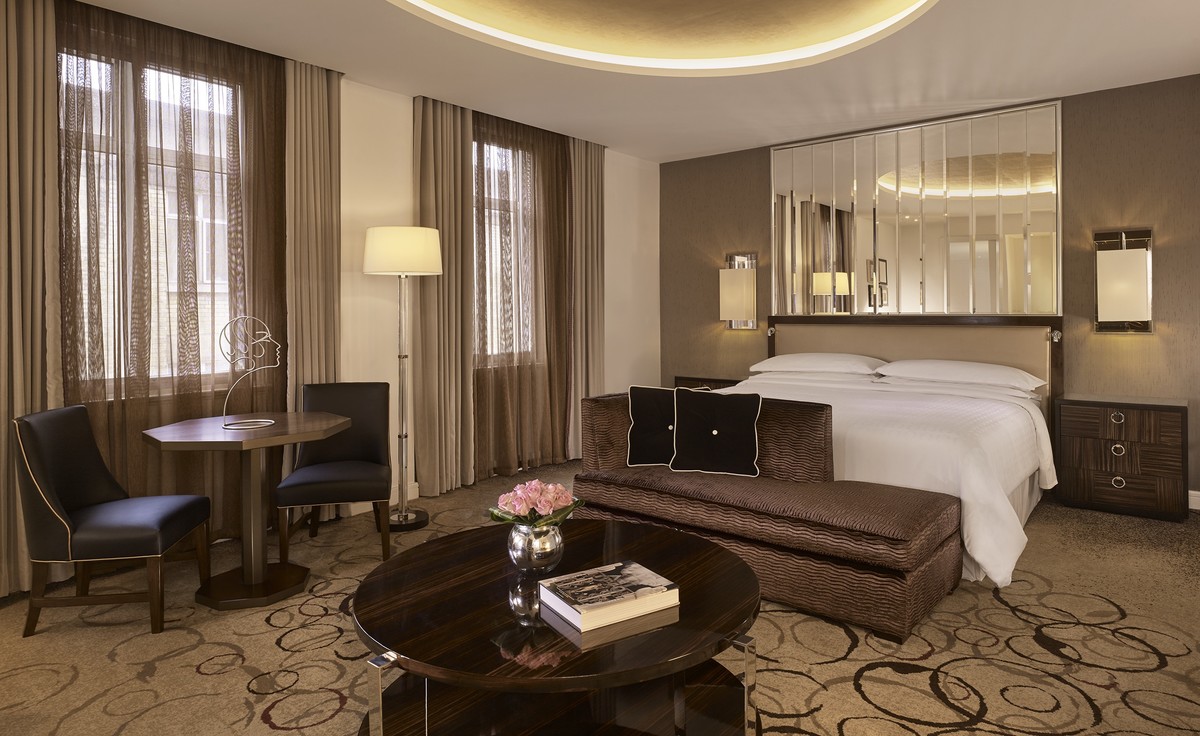

Oh. And the hotel is home to London’s first-ever ‘Five Senses’ suite, created in collaboration with a behavioral scientist and psychologist. The $2,065-per-night room is said to have a selection of items and experiences that induce happiness. Yes. Really.

Holidays are not complete without some good food, of course, and there are options here — some better than others. The breakfast buffets in both Italian restaurant Mercante and the Club Lounge left a lot to be desired, while Mercante’s dinner offering was also distinctly average.

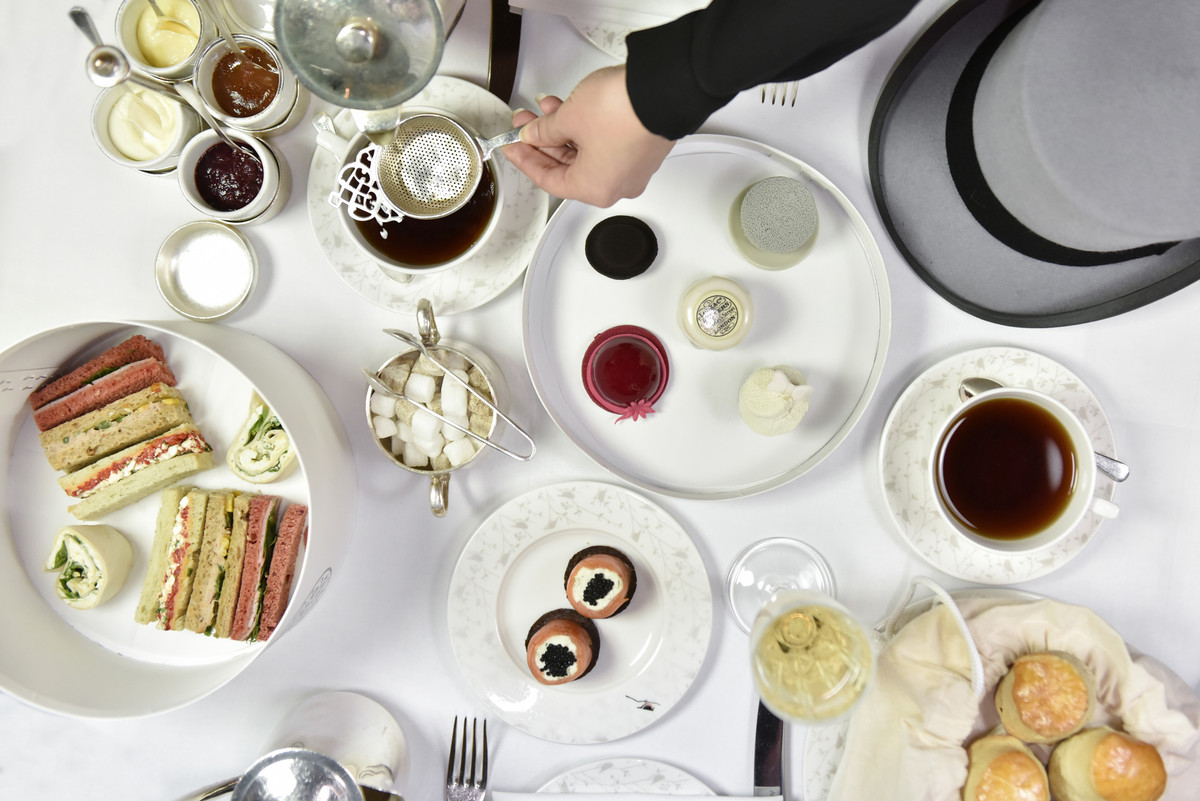
But those disappointments were overcome by the glorious signature afternoon tea in the Palm Court, along with the modern British dishes at the pet-friendly Smith & Whistle, where a ‘dogtail’ menu — London’s very first permanent drinks list created exclusively for canine consumption — is available. Your furry friend can enjoy beverages including a ‘Poochie Colada’ and ‘Bubbly Bow Wow.’

At the time of publishing, rooms started from SAR 1,561 for a stay at the beginning of November. A stay at the Sheraton Grand is certainly not cheap, but as the saying goes, you get what you pay for. The location will save a lot on taxis and public transport, and the rooms really are spectacularly spacious. Whether you’re with friends or family, it’s perfect for a seasonal stay.

THE LOWDOWN
WHERE: Sheraton Grand London Park Lane
PRICE: From $416 per night at start of November
NO. OF ROOMS: 303
PHONE: +44 20 7499 6321
WEBSITE: sheratonparklane.com


AlUla’s ancient scripts come alive after dark at Ikmah

The team at ‘Ikmah After Dark: Secrets of the Scribe’ showing a visitor how to carve on a stone. (Supplied)
Updated 04 January 2026
Follow

AlUla’s ancient scripts come alive after dark at Ikmah

  • Gen-Z local Omer Mohammad guided Arab News through the vast outdoor setting of ‘Secrets of the Scribe’

ALULA: Ikmah Mountain, also known as Jabal Ikmah, one of AlUla’s landmark archeological sites, is offering visitors a new experience this week as part of the Winter at Tantora programming, which ends on Jan. 10. 

Near the ancient city of Dadan, Ikmah highlights AlUla’s role as a major cultural and religious center long before the rise of the Nabataeans. It is being activated under the stars in a brand new, old way.

The site, often described as “an open-air library” for its hundreds of ancient inscriptions carved on its canyon walls thousands of years ago, provides visitors with have a chance to etch their own names, using the ancient alphabet, on a block of stone they can take home.

The team at ‘Ikmah After Dark: Secrets of the Scribe’ showing a visitor how to carve on a stone. (Supplied)

Written mainly in Dadanitic and Lihyanite, the ancient texts once recorded religious dedications, laws, names of rulers and traced everyday life, providing rare insights into the beliefs and social structures of early Arabian kingdoms. 

Arab News spoke with Gen-Z local Omer Mohammad, who guided us through the vast outdoor setting of the “Secrets of the Scribe — Ikmah After Dark” experience.

“When the guests arrive, we welcome them ... give them some tea to get refreshed. After that, if the group is big, we split them into two; some of the group goes to go to the carving where they are going to learn how to carve. And the other group is going to go to explore the gorge,” he said. 

Storytelling was such an important thing here 3,000 years ago. People from all over the world used to bring their animals and rest here; it had a river so it had some water and everything.

Omer Mohammad, AlUla local

The gorge is an elevated path with candles lighting the way on both sides.

“In the scripts and descriptions you’re going to see (in the mountains), you will get to know more about Dadani lives and what they used to do here,” he said.

After the hike down, visitors from both groups join at the gathering point where everyone is encouraged to rest, mingle and enjoy small bites such as dates and other goodies, as well as tea. 

While it is a new experience, the tradition is old. 

“Storytelling was such an important thing here 3,000 years ago. People from all over the world used to bring their animals and rest here; it had a river so it had some water and everything,” he said.

Dressed in garb from olden times and speaking in poetic prose, Mohammad and his peers guided us to see the light in the dark night.

“It is significant to me personally to work on this project to get people to come here and get excited (about) what’s happening, enjoy our stories and know more about Dadani life,” he said.

On a personal note, Mohammad is grateful to know more about his own history and wants to continue passing on that newfound knowledge to all generations — both younger and older than his own — and be part of the unfolding story of the land and its people.

“I guess you can say that this is the land of my ancestors. I really love history, and I really would like to know more about history — and my history,” Mohammad said. “But I just learned about this ancient history three years ago when I started working here.

“I never had the experience before, so when I knew more about it, I was so happy. And it was so good. Everyone should come,” he said.