BAGHDAD: Drain the swamp: it’s a promise leaders around the world are making in this era of voter cynicism and political upheaval.
But Iraq’s Prime Minister-designate Adel Abdul-Mahdi may be taking it further than anyone else. To form his government, he opened an online portal for anyone to apply to run Iraq’s 22 ministries, posts that have come to be associated with patronage and graft.
Within days, his office received more than 15,000 applications, according to local media, and offered interviews to 601 candidates.
Still, many here are skeptical that Abdul-Mahdi can change how business is done. Many political parties have their own militias and threaten to disrupt Iraq’s fragile stability if they do not get the ministries they desire.
Others are asking whether it is wise to appoint political neophytes to the highest positions of government.
“I’m fifty-fifty,” said Hisham Al-Dahabi, a social worker and philanthropist, who said he applied reluctantly to be the minister of labor and social affairs, a position that oversees services and pensions for veterans, their widows and children.
“The parties will never waive their shares in the new government,” said Al-Dahabi.
On a recent day at the orphanage he runs in the heart of Baghdad, Al-Dahabi juggled his responsibilities as manager and social worker while giving media interviews and showing around an admiring delegation from a European embassy.
Children vied for his affections and called him “Baba,” Arabic for “Dad.” He scooped up an armful of the youngest ones and checked their teeth — a dentist was slated to visit later in the day.
“They all want to see him, but we have to pick two,” he said.
He hadn’t told them he’d applied to be a minister, and in any case he felt it was a long shot. It was a campaign by friends and supporters, he said, that led him to apply.
One week later, Al-Dahabi met the prime minister-designate. He said only that they had discussed initiatives to improve the lives of Iraqi children.
Abdul-Mahdi has remained tight-lipped about his Cabinet appointments, and his office declined a request for an interview. By law, he has until Nov. 2 to appoint his ministers, who must be approved by parliament before being sworn in. Iraq’s official newspaper, Al-Sabah, said Monday that 15 appointments could come this week, and that the remainder would be named at a later date.
And while it is unlikely he will be able to pry the top ministries from the hands of Iraq’s leading blocs, the online initiative appeared calculated to burnish Abdul-Mahdi’s image as a technocrat and reformer at a time when Iraqis are fed-up with party politics.
In May parliamentary elections, turnout was just 44 percent — a record low — and Iraqis gave the largest share of their votes to a list championed by the populist cleric Muqtada Al-Sadr. Al-Sadr had vowed to deliver a “government of technocrats,” though his bloc has a poor record of running ministries in the past.
Since returning from exile in 2003, Abdul-Mahdi, an economist, has served as oil minister, finance minister and vice president, developing a reputation as a political independent. He is Iraq’s first prime minister in 12 years who is not from the Dawa party, blamed by many for presiding over the deterioration of the country’s civil service and unchecked militia growth.
Alaa Khudair, a retired civil servant, called the online initiative a “positive step” to wrest power away from the established parties that he said “failed to speak for Iraqis and produce a national project.”
Should any ministers be appointed from the online applicants, they will find themselves thrust into a remorseless political environment, civic activist Yahya Al-Hafiz warned.
“The political parties are refusing to go along. They’re starting to show their fangs. This is a government that works on favors and deals. It’s impossible to think they’re going to give that up,” said Al-Hafiz.
But Al-Dahabi said he was unfazed, and other experts would not be intimidated either.
“At least we have some experience in our fields, and we have some accomplishments on the ground,” he said.


![]()
![]()

Want to run an Iraqi ministry? Apply online, PM says
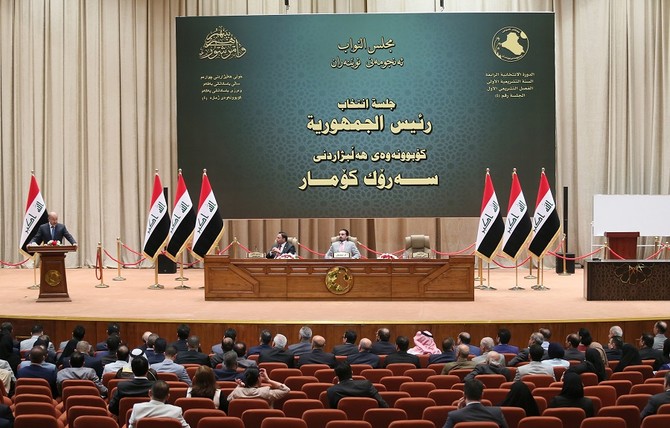

Want to run an Iraqi ministry? Apply online, PM says
- Many political parties have their own militias and threaten to disrupt Iraq’s fragile stability if they do not get the ministries they desire
- Should any ministers be appointed from the online applicants, they will find themselves thrust into a remorseless political environment


Latest updates


© 2026 SAUDI RESEARCH & PUBLISHING COMPANY, All Rights Reserved And subject to Terms of Use Agreement.