GAZA CITY: Mohammed Al-Hamaydeh is sorting through a large pile of clothes for something that suits him in Firas, a second-hand market in Gaza City.
Such clothes markets — known as “aswaq al-bala” — are widespread in all cities of the Gaza Strip, which is populated by a majority of the refugees, but are more popular in territory’s largest city.
Al-Hamaydeh is one of many customers who have turned up at Firas market, which dates back to the period of Egyptian rule, in recent years.
A severe economic recession, compounded by a 12-year Israeli blockade, has left many Gaza residents increasingly dependent on aid from local or international charities. 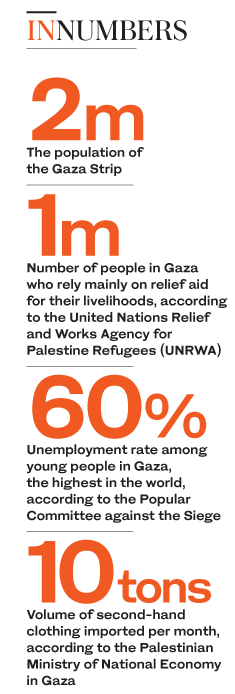
The economic situation has contributed to a growing acceptance of wearing used clothes, journalist Hamed Jad told Arab News.
Take Al-Hamaydeh’s family. The 21-year-old university student’s father can only provide the basic requirements for him and his six siblings. Along with his fellow students, Al-Hamaydeh found refuge in Firas market, which is meeting their urgent need for clothing.
The Al-Hamaydeh family’s economic situation has worsened in the last year because of the Palestinian Authority’s (PA) cuts to employee salaries in Gaza. “After the PA cuts and the bank loan instalment, there is nothing left of my father’s salary to eat and drink,” Al-Hamaydeh told Arab News.
After the end of his day at university, Al-Hamaydeh goes to work daily at a brick factory to help provide for the family’s basic needs.
Mu’taz Sultan, another visitor to the second-hand clothes market, told Arab News that he was at first ashamed about visiting Firas market, choosing times when there was less traffic for fear of being seen by those who know him. But today he is less shy. After all, the economic crisis has hit the majority of the population, and “even traders were imprisoned for failing to pay their debts,” he said.
Sultan, who got a government job under the previous Hamas government, has received just 40 percent of his salary for some years, along with some 30,000 of his colleagues. He has found the second-hand market the right place to buy everything he needs, and takes his children on special occasions.
Second-hand clothing dealer Sameer Al-Asfar said his customers are from various social sectors, and every day new ones join the ranks of those who suffer from poverty and unemployment.
As for the source of the second-hand clothing, Al-Asfar told Arab News: “The largest proportion comes from Israel, as (many Jews) change their old clothes in the Passover.”
Hussein Al-Sindawi, who has worked in the profession for more than 40 years after he inherited the business from his father, has shops in all cities of the Gaza Strip. He described his trade as interesting, especially during the years of siege and political division between Fatah and Hamas.
He said that the most expensive pieces displayed in his stores do not exceed 30 Israeli shekels (approximately $8).
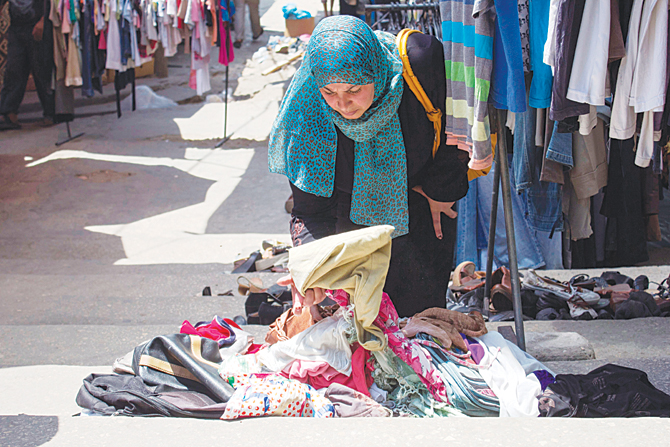
Many Gaza residents are increasingly dependent on aid from local or international charities.
Al-Sindawi said the clothes are delivered through the Kerem Shalom commercial crossing, packed in huge cardboard containers. Each container contains a certain grade of clothing according to its quality, and on this basis, the price per ton ranges from 3,000 to 6,000 shekels. The wholesaler sells them to retailers, and they end up in the hands of the customer after a long journey.
In the Gaza Strip, there are few shops offering new clothes and shoes from international brands, and the prices are too expensive for most residents to afford.
Hassan Zughra and his wife and children go to al-bala markets whenever they need new clothes, whether it is summer or winter. “I find my needs and the need of my five children in clothes and shoes, and I can buy all their needs at a much lower price than the brand-new clothing market,” he said.
“I and my children wear one of the most prestigious international brands of European goods that outweigh the quality of new goods in local markets,” he added.
While customers do not know the source of their garments, their desire to buy them is not affected. Om Wael Al-Burdini said she does not see the importance of knowing the source of the clothes, whether they come from Israel or Europe. What is important to her is that they are in good condition and at reasonable prices, and she is careful to wash them well.
Sherif Abu Mohsen agreed with Al-Burdini: “It does not matter where the clothes come from; I wash them well before I use them.”