

Pakistan may go to IMF but will seek other options first — Imran Khan

Imran Khan. (AP)
Updated 07 October 2018
Follow

Pakistan may go to IMF but will seek other options first — Imran Khan

  • "Pakistan is suffering huge internal and external debt ... caused by corruption of the former rulers," Khan said
  • IMF warned last week Pakistan needed to quickly secure "significant external financing" to stave off a crisis

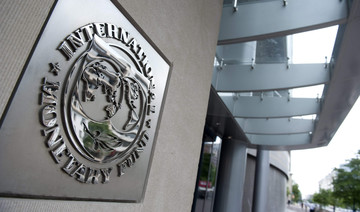
LAHORE: Prime Minister Imran Khan said on Sunday that Pakistan might need to return to the International Monetary Fund to address its mounting balance of payments crisis but would seek funding from friendly countries first.

Khan, who took office in August, blamed Pakistan's economic woes on the previous government and repeated a promise to recover billions of dollars he says corrupt officials have stashed abroad.

He has been reluctant to ask the IMF for emergency loans that would be the country's second bailout in five years.

But foreign reserves dropped by $627 million in late September to $8.4 billion, barely enough to cover sovereign debt payments due through the end of the year. The weekly fall was the sharpest in years.

"We may go to IMF for loan to handle the country's financial issues," Khan told reporters. "But, first we will try to get assistance from other countries as we have requested three countries to deposit money in Pakistan's State Bank that would help boost national reserves."

He did not name the countries or provide any details of the requests.

The IMF concluded a consultative visit last week with a warning that Pakistan needed to quickly secure "significant external financing" to stave off a crisis, though it did not suggest who could supply the money.

Any IMF bailout would likely include conditions to curb government spending, threatening Khan's campaign promise to build an Islamic welfare state.

Finance Minister Asad Umar has said foreign reserves need to be boosted by at least $8 billion, but since the July election, none of Pakistan's allies including China and Saudi Arabia have offered emergency assistance despite high-level visits of officials from both nations.

Khan blamed the previous government for the economic situation.

"Pakistan is suffering huge internal and external debt ... caused by corruption of the former rulers," he said.

Pakistan's anti-corruption agency arrested opposition leader Shehbaz Sharif on Friday on charges he took bribes to improperly award a low-cost housing contract while he was governor of Punjab province.

Sharif is the brother of ex-Prime Minister Nawaz Sharif, who was removed by the Supreme Court last year and in June was sentenced to 10 years in prison by an anti-corruption court.

Both Sharifs deny wrongdoing, calling the cases politically motivated.

Commenting on Shehbaz Sharif's jailing, Khan said on Sunday: "He should have been arrested months ago."

Pakistan reports current account surplus in Jan. owing to improved trade, remittances

Updated 17 February 2026
Follow

Pakistan reports current account surplus in Jan. owing to improved trade, remittances

  • Pakistan’s exports crossed the $3 billion mark in Jan. as the country received $3.5 billion in remittances
  • Last month, IMF urged Pakistan to accelerate pace of structural reforms to strengthen economic growth

ISLAMABAD: Pakistan recorded a current account surplus of more than $120 million in January, the country’s finance adviser said on Tuesday, attributing it to improved trade balance and remittance inflows.

Pakistan’s exports rebounded in January 2026 after five months of weak performance, rising 3.73 percent year on year and surging 34.96 percent month on month, according to data released by the country’s statistics bureau.

Exports crossed the $3 billion mark for the first time in January to reach $3.061 billion, compared to $2.27 billion in Dec. 2025. The country received $3.5 billion in foreign remittances in Jan. 2026.

Khurram Schehzad, an adviser to the finance minister, said Pakistan reported a current account surplus of $121 million in Jan., compared to a current account deficit of $393 million in the same month last year.

“Improved trade balance in January 2026, strong remittance inflows, and sustained momentum in services exports (IT/Tech) continue to reinforce the country’s external account position,” he said on X.

Pakistan has undergone a difficult period of stabilization, marked by inflation, currency depreciation and financing gaps, and international rating agencies have acknowledged improvements after Islamabad began implementing reforms such as privatizing loss-making, state-owned enterprises (SOEs) and ending subsidies as part of a $7 billion International Monetary Fund (IMF) loan program.

Late last month, the IMF urged Pakistan to accelerate the pace of these structural reforms to strengthen economic growth.

Responding to questions from Arab News at a virtual media roundtable on emerging markets’ resilience, IMF’s director of the Middle East and Central Asia Jihad Azour said Islamabad’s implementation of the IMF requirements had been “strong” despite devastating floods that killed more than 1,000 people and devastated farmland, forcing the government to revise its 4.2 percent growth target to 3.9 percent.

“What is important going forward in order to strengthen growth and to maintain the level of macroeconomic stability is to accelerate the structural reforms,” he said at the meeting.

Azour underlined Pakistan’s plans to privatize some of the SOEs and improve financial management of important public entities, particularly power companies, as an important way for the country to boost its capacity to cater to the economy for additional exports.

“This comes in addition to the effort that the authorities have made in order to reform their tariffs, which will allow the private sector of Pakistan to become more competitive,” the IMF official said.