


KUALA LUMPUR: Kuching’s compelling cultural patchwork might be easily explained by the city’s colorful origin story, but that doesn’t make a visit to the capital of Malaysia’s semi-autonomous Sarawak region in northwest Borneo any less captivating.
Once a part of the Bruneian Empire, the settlement was handed to British buccaneer James Brooke in 1841. Brooke gradually came to rule ever-vaster swathes of land, until Brunei was reduced to its current compact confines. Brooke bolstered the population of his personal fiefdom by inviting Chinese immigrants over to work the mines and farms, and his family remained in control until the Japanese invasion in World War Two. Following Allied liberation, the province became a British colony, until 1963, when it became part of the newly independent Malaysia.
(Shutterstock)
Today, Sarawak’s cosmopolitan capital Kuching is a stew of ethnicities broadly split between the large Malay and Chinese communities, and the native Iban, Bidayuh and other indigenous people, with English a widely understood second official language.
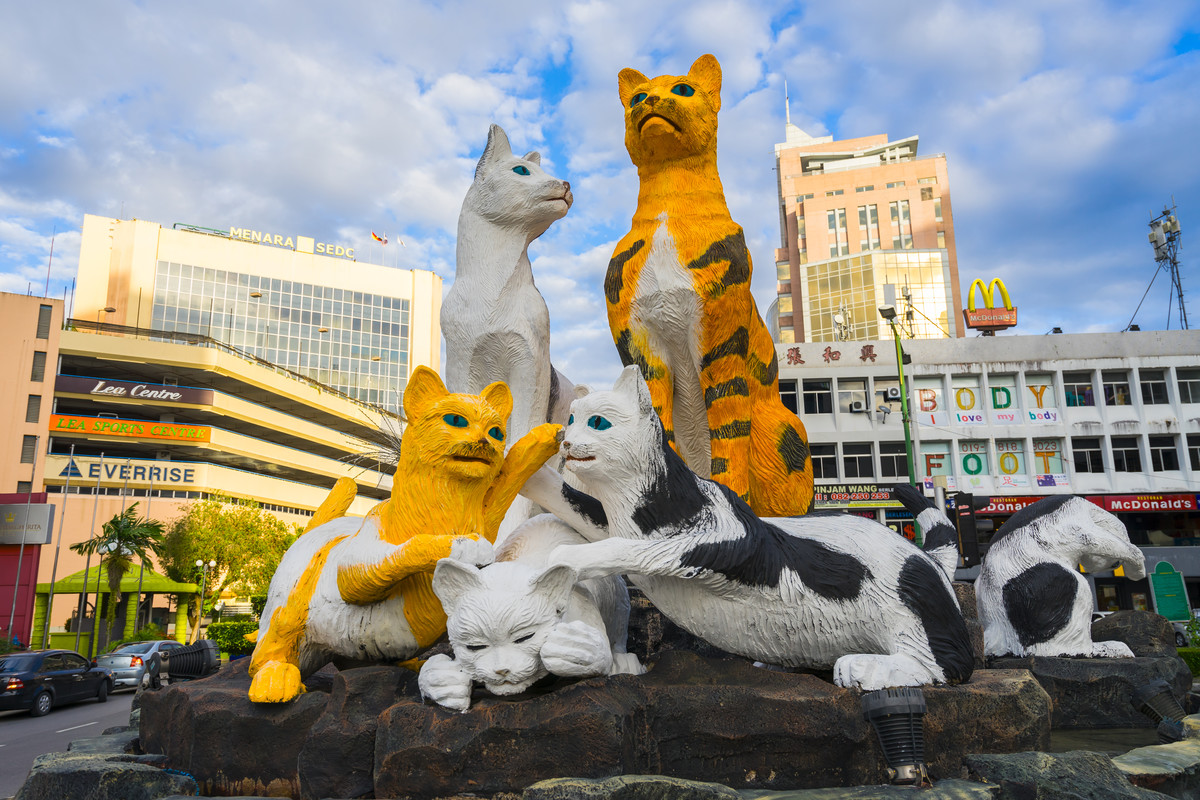
The result is a charming, chilled urban center where dialects, cuisines, architecture and celebrations bleed into one another, while allowing space for each community to honor its individual traditions. And to collectively create their own — it is presumably because the Malay word “kucing” means “cat” that local authorities have kookily dotted roundabouts with towering kitschy statues honoring feline friends, earning Kuching its “City of Cats” moniker.
You can learn about the ebbs and flows of these cultural currents by visiting the Islamic Heritage Museum and Chinese History Museum — just two of around a dozen exhibition spaces in the city (including the twee Cat Museum) — or you can wander through bustling Chinatown or frequent the Top Spot Food Court, a rowdy locals’ hangout sitting incongruously atop a car park and see, and feel, them for yourself.
(Shutterstock)
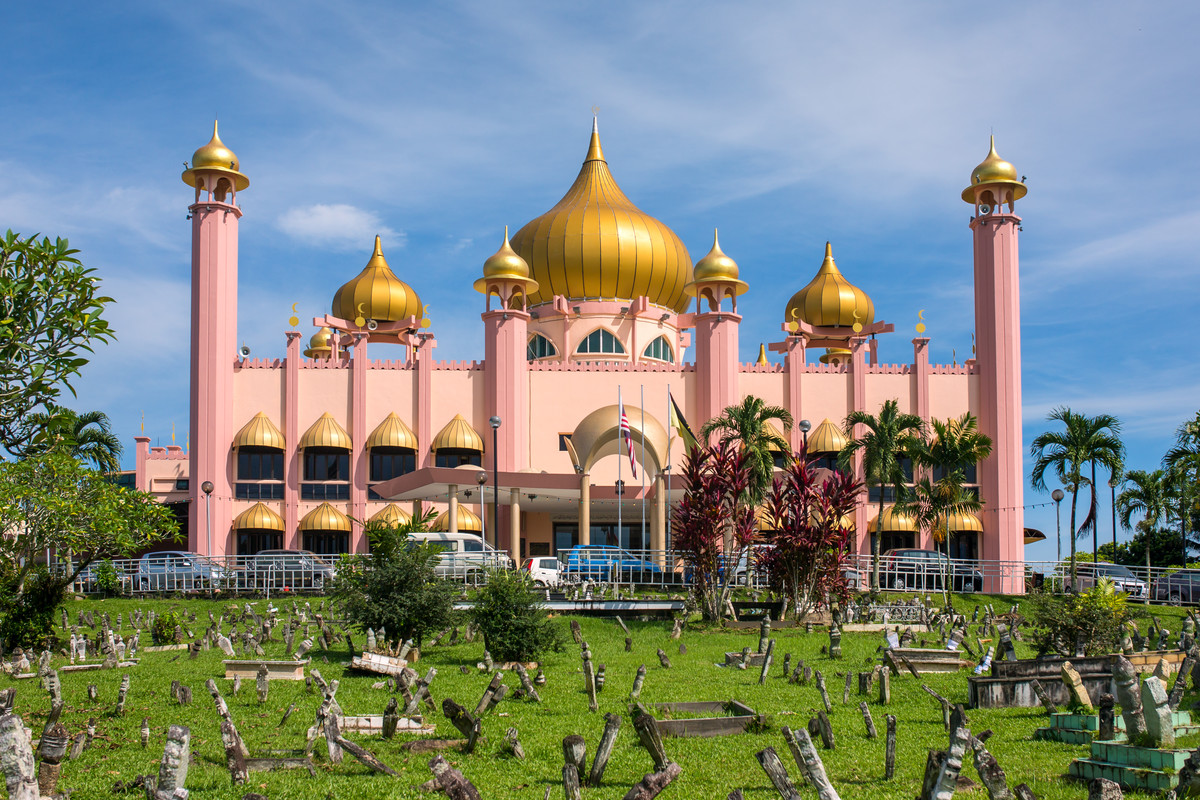
While Sarawak holds no official religion, with 68 percent of Borneo identifying as Muslim food is typically halal and public prayer rooms readily available, while the spirited Al-fresco karaoke showdowns which drift down the Sarawak River halt twice nightly for prayer times.
This body of water splits the city into two distinct halves, each with their own administration and mayor. But it is just a 30-second, one Ringgit ($0.24) ferry ride separating the calmer, quieter northern settlement from the hotels and craft stalls along the southern bank, which electrifies after dark as families gather around the lively food hawkers lining the waterside.
(Shutterstock)
The newest addition to this quaint skyline is the Riverside Majestic Hotel Astana Wing, opening earlier this year to offer comfy five-star rooms for prices as low as $36 a night.
With chilled cafés, smatterings of street art, minimal traffic, a languid pace of life, plus copious live music and cultural events — including the compelling Kuching Waterfront Jazz Festival and the month-long “What About Kuching,” which wraps this year on October 28 — it’s easy to see why travelers passing through get stuck; my three-night stay soon unraveled to a week.
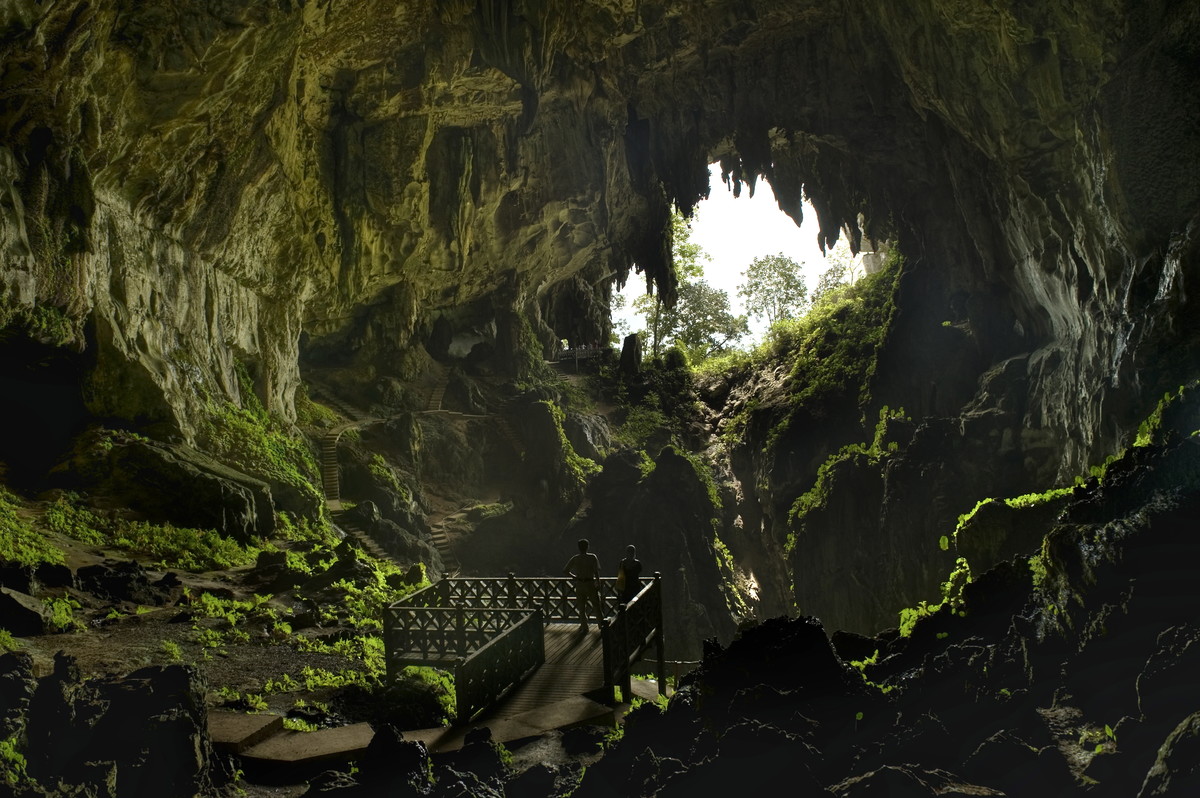
But we all have an excuse. Beyond its easy charms, Kuching rests poised amid a veritable goldmine of natural wonder, with at least five national parks a handy daytrip away. The most famous of which, Bako National Park — home to Bornean bearded pigs, proboscis monkeys, and long-tailed macaques, among others, offers a range of easily marked trails catering for all fitness levels, over a jagged peninsular jutting dramatically into the South China Sea. However, taking a dip was banned some years back following a crocodile scare.
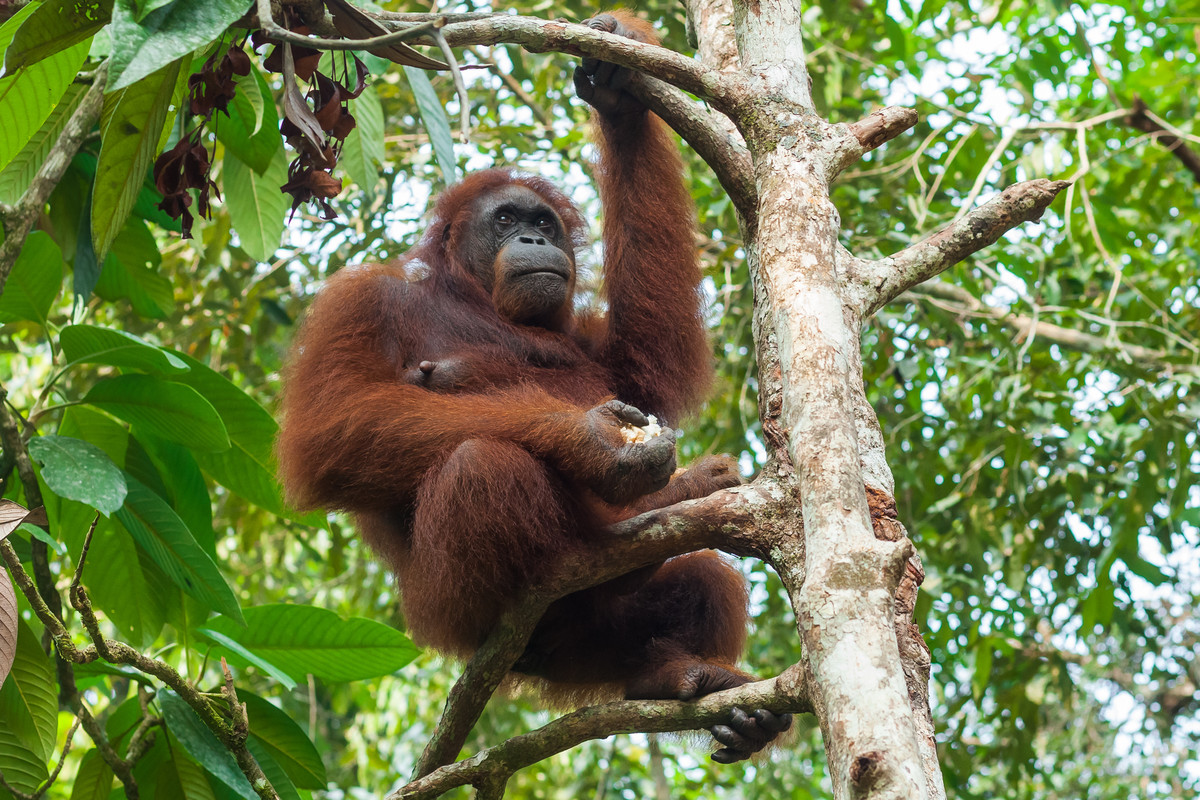
If you make just one trip outside the city though, your destination should surely be Semenggoh Nature Reserve, a laughably easy way to see lumbering, lovable orange orangutans swinging in from jungle trees to line up on cue twice daily for feeding time. Because while Kuching may be on sketchy foundations with its City of Cats claim, Borneo is most definitely the Island of Orangutans.
(Shutterstock)


