PESHAWAR: The government will soon begin construction work on the much-awaited college of Naqeebullah Mehsud in Waziristan.
Muhammad Usman, public relations officer to Ziaullah Bangash, adviser to the KP chief minister on education, said that building the college is in the pipeline. “The funds for the project are likely to be approved in the next Annual Development Program (ADP),” Usman told Arab News.
Naqeebullah Mehsud 27, from the South Waziristan tribal district, was among four suspects killed in an encounter led by police officer Rao Anwar in what was described as “fake police encounter” in Usman Khaskheli Goth, on the outskirts of Karachi, on Jan. 13 this year.
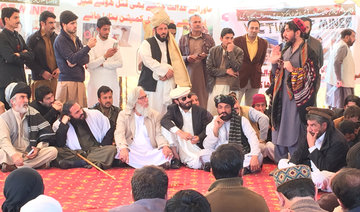
Following the Mehsud killing, his family mobilized demonstrators from tribal districts who held a 10-day sit-in in Islamabad, demanding punishment for the police officer who was allegedly involved in the staged police encounter.
Inspector General of Counter-Terrorism Department (CTD) Dr. Sanaullah Abbasi, who spearheaded a team investigating Naqeeb’s killing, said that “the death of Mehsud was an extrajudicial killing.”
In February this year, following meetings between the demonstrators and senior military officials, the demonstrators ended the sit-in after Amir Muqam, then adviser to prime minister on political affairs, appeared before the protesters with a written agreement to their demands including construction of college in Makeen, a hamlet in South Waziristan tribal district, and to name it after Naqeebullah Mehsud.
That was followed by a visit in March to South Waziristan by a special delegation tasked by then prime minister, Shahid Khaqqan Abbasi, to finalize arrangements for building the college.
That delegation had held meetings with tribal elders and assured them that the prime minister had pledged to build the college in Makin, the hometown of Naqeebullah.
Deputy Director of FATA Development Authority Zarghoon Shah told Arab News that his department is waiting for approval of funds to start work on the project. “We have an estimate of Rs. 392.364 million to build Naqeeb Polytechnic Institute in Makeen, a scenic valley and hometown of the deceased. We have acquired 12.5 acres of land to build the sprawling facility in that tribal region,” Shah said.
Zarghoon Shah added that a feasibility report for the college has already been finalized but a number of projects have been moving slowly because the FATA or the tribal region has been merged with KP.
Noor Rehman, a close relative of Mehsud, said though the government failed to provide the bereaved family with justice, it should now make good on its promise to build an educational institution named after Naqeebullah.
“The government should initiate practical work on the project which will help minimize the scale of grievances among the tribal people,” he said.
“The government should honor its pledge, and start immediately building a college after the name of Naqeebullah,” said Ali Wazir, a lawmaker from South Waziristan tribal region.


![]()

Construction work on ‘Shaheed Naqeeb College’ in tribal region to start soon, officials say
Construction work on ‘Shaheed Naqeeb College’ in tribal region to start soon, officials say

Latest updates


© 2026 SAUDI RESEARCH & PUBLISHING COMPANY, All Rights Reserved And subject to Terms of Use Agreement.