JEDDAH: Madinah Charity Society began the distribution of more than 500,000 meals and 600,000 water bottles to pilgrims visiting the holy city during the post-Hajj season.
Fayez bin Taleb Al-Ahmadi, general supervisor of Madinah Gift Project, said that the total meals to be provided to pilgrims were 1 million, in addition to 1.5 million bottles of water.
After the completion of Hajj, many pilgrims visit sites of historical interest in the two Holy cities.
Dr. Fawaz Al-Dahas, director of the Center for the History of Makkah, said such visits are of cultural significance as they enrich pilgrims’ knowledge. He stressed the need to preserve Makkah’s rich historical value, adding that tourism companies had to share that responsibility.
Researcher Saad Al-Joudi said many people — particularly researchers and students — are very interested in the history of the historical sites of the Kingdom, which is regarded as the heart of the Islamic world and is visited by millions of pilgrims every year during the Hajj season.
Al-Joudi noted that there were dozens of important historic sites in the region.

500,000 meals distributed among pilgrims in Madinah
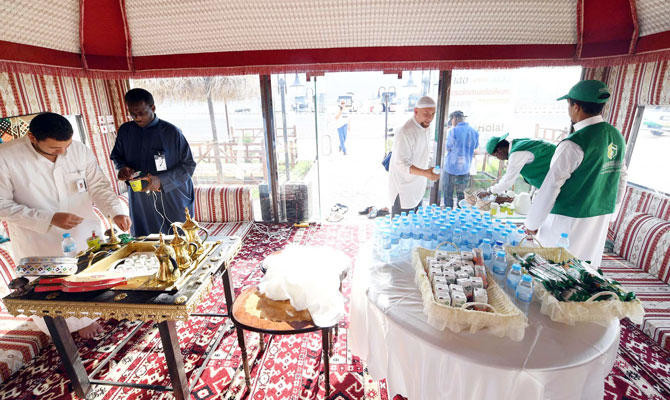
- Significant efforts had been made by government and non-government bodies to serve pilgrims
Economic growth and resilience at heart of 2nd AlUla Emerging Market Economies Conference
- Event on Feb. 8 and 9 will bring together ministers, governors of central banks, policymakers, economic experts and international financial institutions
- Emerging-market economies a ‘pivotal element’ in global economic system due to effect they have on growth and stability, says Saudi Finance Minister Mohammed Al-Jadaan
RIYADH: The second annual AlUla Conference for Emerging Market Economies, which Saudi Arabia will host next week, offers a platform to exchange views on global developments and discuss policies and reforms that support inclusive growth and strengthen economic resilience, the Kingdom’s finance minister said.
The event on Feb. 8 and 9 will bring together finance ministers, governors of central banks and policymakers, alongside economic experts and representatives of international financial institutions.
Organized by the Saudi Ministry of Finance in partnership with the International Monetary Fund, it takes place as emerging-market economies face mounting challenges amid rapid global economic change.
Finance Minister Mohammed Al-Jadaan said the decision to host the conference reflects Saudi Arabia’s ongoing commitment to efforts that support global financial and economic stability, and highlights the growing influence of emerging economies on worldwide growth.
Emerging-market economies represent a “pivotal element” in the global economic system due to the direct impact they have on economic growth and stability, he added.
“The AlUla Conference for Emerging Market Economies provides a unique platform for exchanging views on global economic developments, and discussing policies and reforms that will support inclusive growth and enhance economic resilience, in light of broader international cooperation that contributes to confronting common challenges,” Al-Jadaan said.
Kristalina Georgieva, managing director of the IMF, said the event would help emerging economies deal with growing uncertainty driven by technological change, demographic shifts and geopolitical tensions.
“The AlUla conference provides a vital platform for emerging economies to discuss how they can navigate the risks and embrace the opportunities ahead,” she said.
“In these times of sweeping transformations in the global economy, policymakers face a more challenging and uncertain environment. Countries should work together to strengthen resilience through sound macroeconomic and financial policies.”


